
Articles about the Masters of Photography, Contemporary and Emerging Photographers
Contemporary Photography
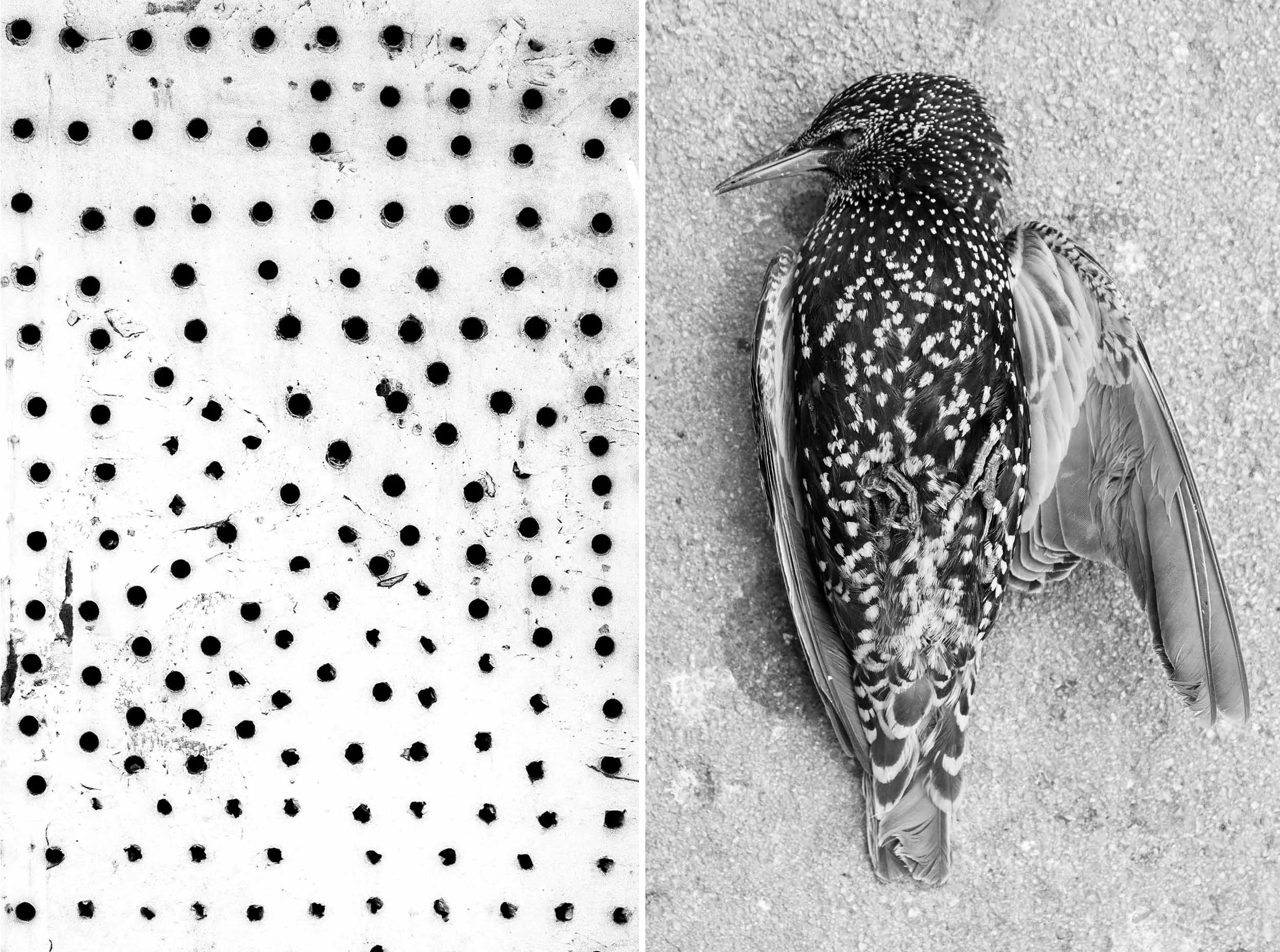
Olson Lamaj is a visual artist and photographer based in Tirana, Albania. He studied Painting at the Academy of Fine Arts in Florence and completed a Master's degree in Artistic Photography at the Brera Academy of Fine Arts in Milan. His artistic practice explores the relationship between image, ideology, and collective memory, focusing on how political, social, and cultural systems construct identities and modes of representation…
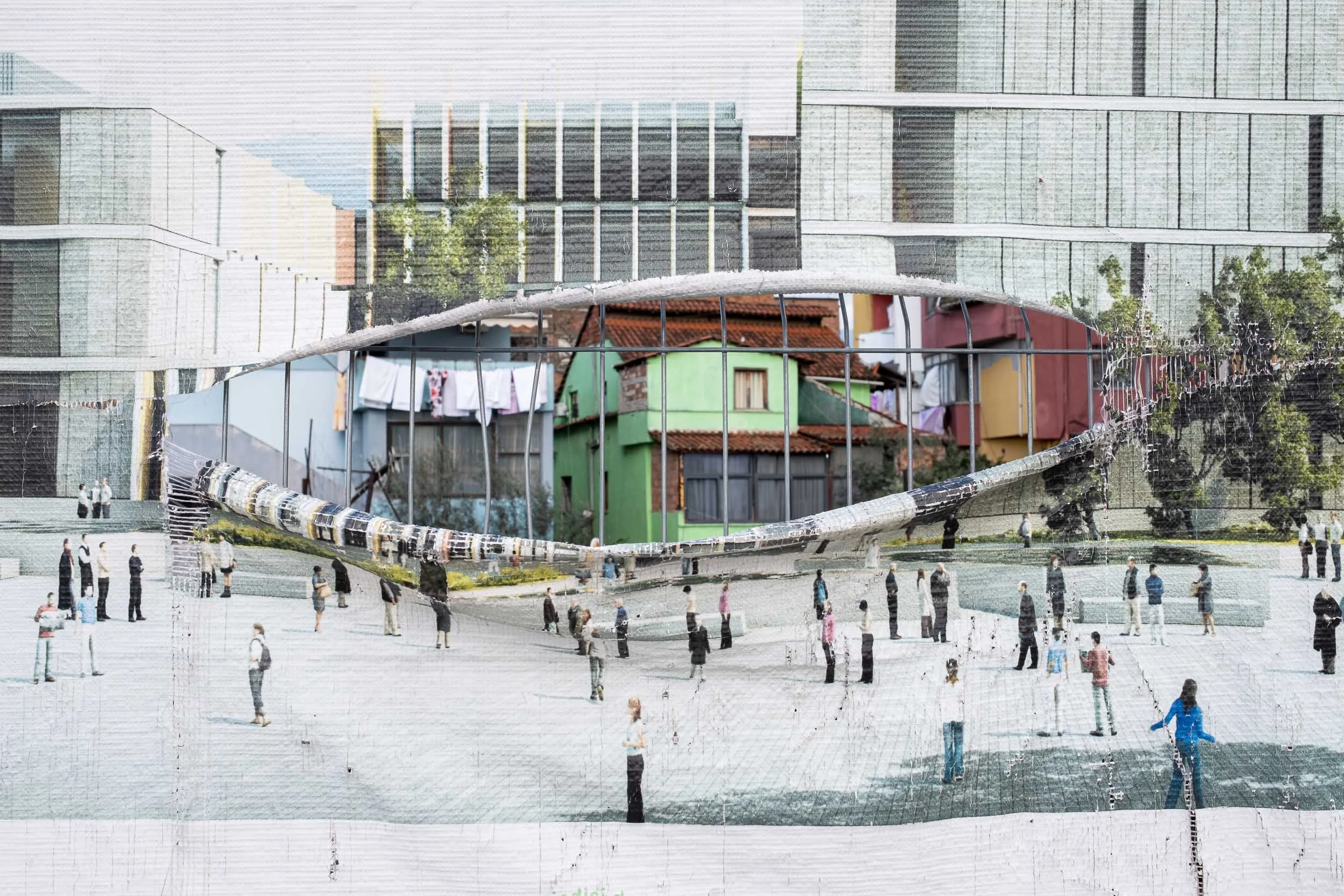
Thomas Krempke is a Swiss photographer whose work moves between urban observation and poetic interpretation. His recent project in Albania, ENDERR (“Dream”), reflects this approach—capturing fragments of urban life, architecture, and transformation through a lens that feels both precise and elusive. In this conversation, we speak with him about his practice, his experience in Albania, and how photography can shape the way we understand cities.
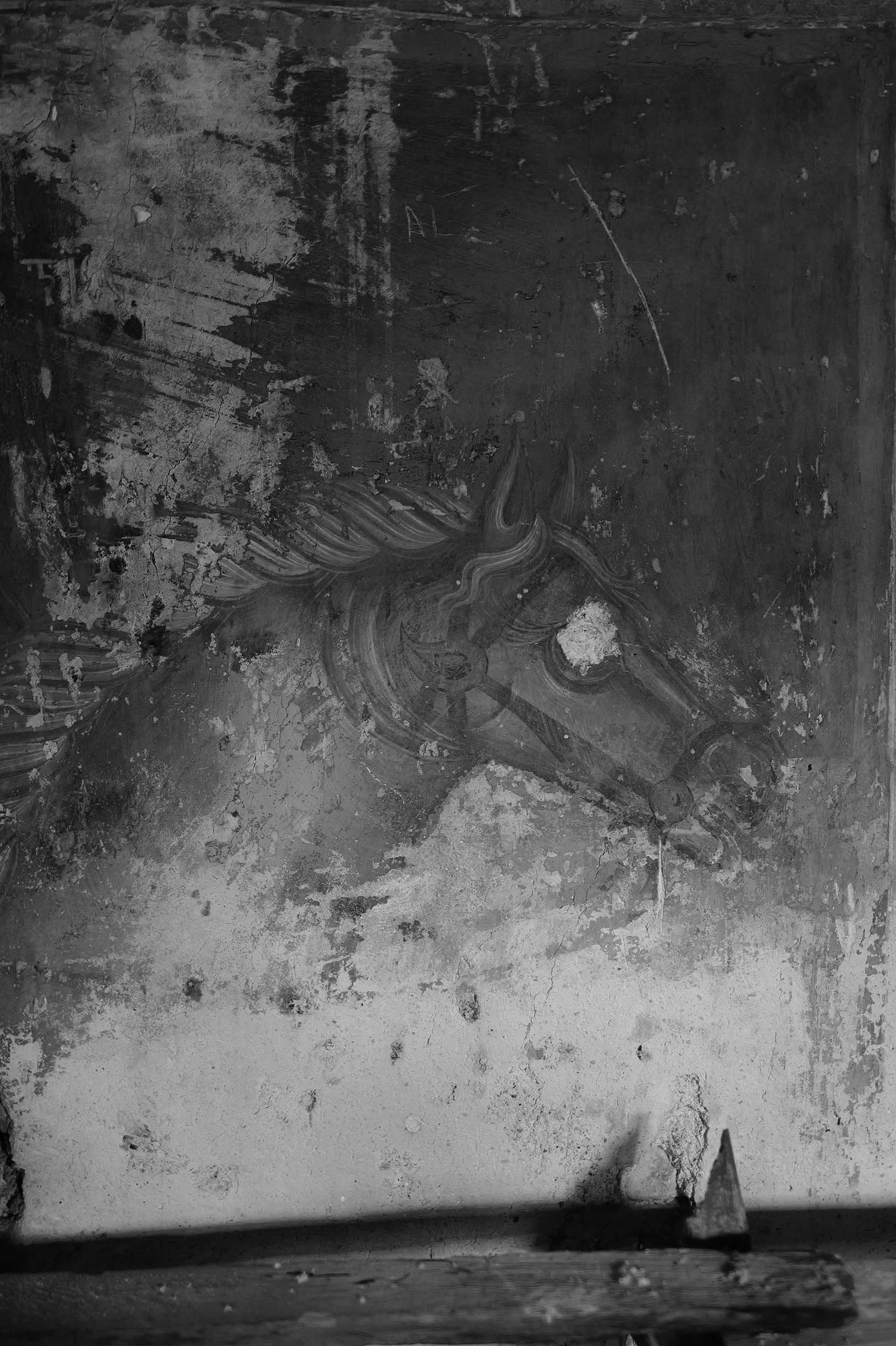
There are places that seem to exist in a different rhythm of time—where the past lingers not as memory, but as a living presence. For photographer and researcher Wandrille Potez, Albania’s Drino Valley is one such place. Tucked between mountains and gorges, the valley shelters a constellation of post-Byzantine churches and monasteries, many of them little known, some almost forgotten. Wandering its paths with a camera in hand, Potez steps into spaces where history and humanity quietly converge, capturing fragments of a world as fragile as it is extraordinary.
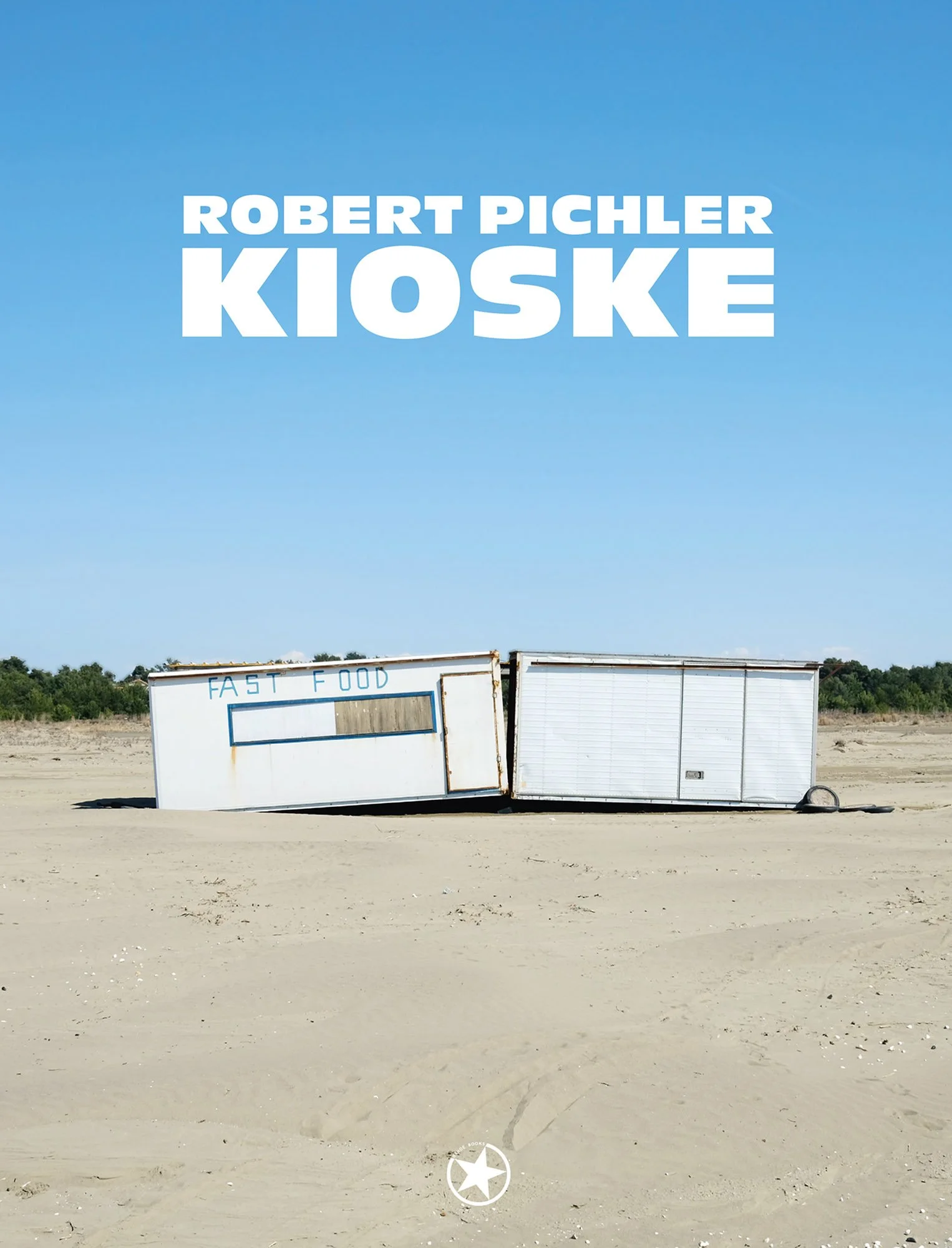
“Kiosks” is the latest project by Austrian photographer Robert Pichler, presented in Tirana in the form of the photo book Kiosks: Temporary Architecture and Social Living Environments on the Albanian Coast, published by Bahoe Books, Wien, in German, Albanian and English language.

Andrea Martino is a young Italian photographer with a background in architecture. Born in Naples in 1996, his hometown shaped his worldview, teaching him to observe space and understand the intricate relationships that are created with it. Each shot represents an attempt to absorb the atmosphere of the place, allowing the context to suggest its stories. Photography thus becomes a form of visual narration that seeks to capture the essence of places and human connections in a delicate balance between art and documentation.

Leonard Qylafi (b. 1980) is an Albanian visual artist, whose practice explores several mediums such as photography, painting, video and music, where the theme of the City and its Architecture occupies a certain role. The Photography and Video Projects that reflect on the transformation of urban spaces are (real) ESTATE, Estate, Whispers & Shadows, Solo Show.

Nick St.Oegger is a documentary photographer whose work explores the relationship between people and places. A quiet American, as he calls himself in his social media, he has been working in Western Balkans since 2013. In Albania, he has a large body of work about a very sensitive issue: the construction of hydropower projects in the rivers of the region known as the “Blue Heart of Europe”, and the impact they have on the rich biodiversity and the unique culture of inhabitants. Here we present the interview that Nick St.Oegger has given to TatìSpace.
Masters of Photography
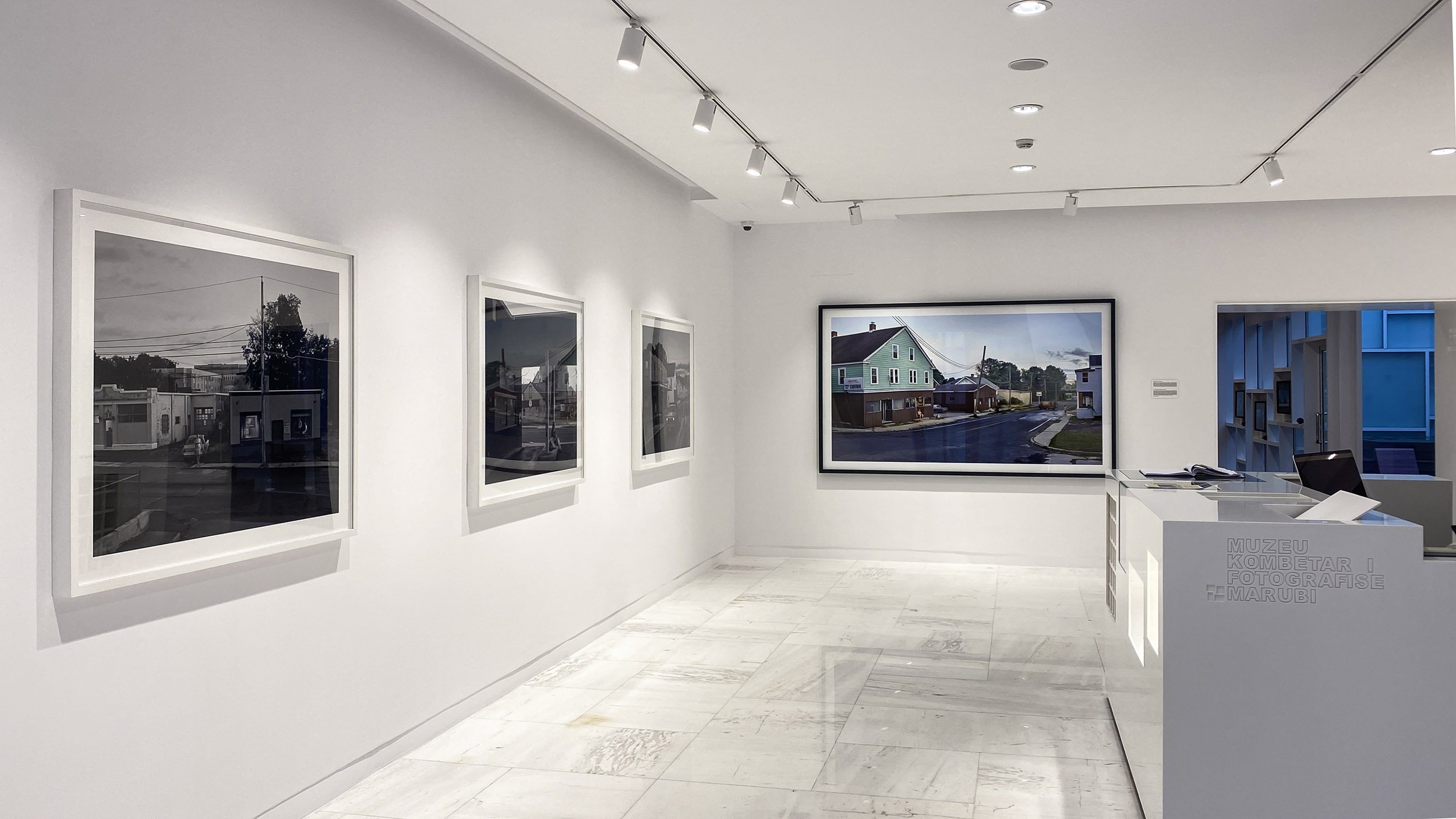
In the Marubi National Museum of Photography in Shkoder, from 20 December 2024 till 16 March 2025, is open the Exhibition "Eveningside" by American photographer Gregory Crewdson, curated by Jean-Charles Vergne. The exhibition project was realized in collaboration with Gallerie d'Italia - Intesa Sanpaolo Museum thanks to the support of the Ministry of Economy, Culture and Innovation.
The exhibition is a great opportunity to take a closer look at the photography of Gregory Crewdson, who is known for his large-format prints of cinematic scenes, where every detail is meticulously thought out and planned in advance. His scenic style and the mysterious mood he brings to his photography make Gregory Crewdson stand out as one of the most important figures in contemporary visual art.

In the late 1960s and early 1970s, a group of photographers emerged with a distinct vision. They aimed their lenses not at the picturesque, natural landscapes that had dominated the photography world for decades, but at the often overlooked and sometimes starkly unattractive transformation of the American landscape by human activities. This movement, known as the New Topographics, represented a significant shift in the way we view the world around us. It focused on the "man-altered landscape," revealing the intersection of humanity and nature in a unique and thought-provoking way.

In the context of the Photography Exhibition launched at Tatì Space with the theme "The City of Women", we are bringing to attention some inspiring figures of female photographers, who have made a valuable contribution in the field of photography, with their professionalism and humanism, photographing the contemporary urban life. Julia Margaret Cameron, Frances Benjamin Johnston, Berenice Abbott, Dorothea Lange, Margaret Bourke-White, Vivian Maier, Diane Arbus, Cindy Sherman dhe Annie Leibovitz.

Saul Leiter was an American painter and photographer known for his photographs of New York City in the late 1940s through the ’60s, and is considered a pioneer of color street photography. Leiter found quiet moments within the urban chaos and portrayed them pictorially. His work has connections to American Abstract Expressionism and the New York School of Photography. His photographs are distinguished by painterly colors, abstract compositions, minimalism, intimacy, and voyeurism…

Eugène Atget is a French photographer, known for photographing the architecture of old Paris in the end of 19th century and beginning of 20th century. He is considered a modernist documentary photographer. Atget created an archive of 5,000 negatives and 10,000 prints, working on several photographic series, such as streets, houses, professions, parks.

Julius Shulman is one of the most famous photographers of mid-20th century architecture in America. He has defined the way we look at Modernism. Shulman photographed the new architecture that was emerging after World War II in South California, especially the metropolitan area of Los Angeles.

Candida Höfer is a german photographer, considered as one of the main figures in contemporary architecture photography. Her subjects are the main public institutions in the absence of human presence; museums without visitors, libraries without readers, concert halls and empty churches.

Henri Cartier-Bresson is a French photographer, one of the most influential figures of the 20th century. He is considered the pioneer of candid street photography, the father of modern photojournalism, who created a new practice and aesthetic in photography, making photojournalism accepted as an art form. His name is associated with the Leica 35mm film camera and the concept of "decisive moment".

Walker Evans is the American photographer who has influenced more than any other the modern documentary photography of the 20th century. With his anti-conformist nature, he rejected the prevailing pictorialist view of artistic photography, supported by the main proponent Alfred Stieglitz, and constructed a new artistic strategy based on the description of common facts in a detailed and poetic manner. Evans has been described as the photographer with the sensibility of a poet and the precision of a surgeon…

W. Eugene Smith was an American photographer, known as the father of photo essay in the American editorial of the '40s and '50s. He created the genre’s model and standards that were followed for a long time. Eugene Smith worked for several magazines of the time such as: Newsweek, Life, and for the agency Magnum as a freelancer.

Berenice Abbott is an American photographer known for documenting the architecture and metropolitan life of New York with all its contrasts in the ’30s of the Great Depression. She photographed with an 8x10 inch camera the new architecture of New York that was emerging, but also the places that were disappearing from development.
Emerging Albanian Photographers
For more than a decade as an urban planner, I have come to understand that the city is more than a built environment—a product of human creativity. It is also the place where people are shaped, where social relationships are formed, and where they learn whether or not to become creative themselves. For nearly two centuries, urban space has been not only the setting in which the modern citizen has emerged, but also the environment that has shaped the way people understand both the world and themselves as social beings.

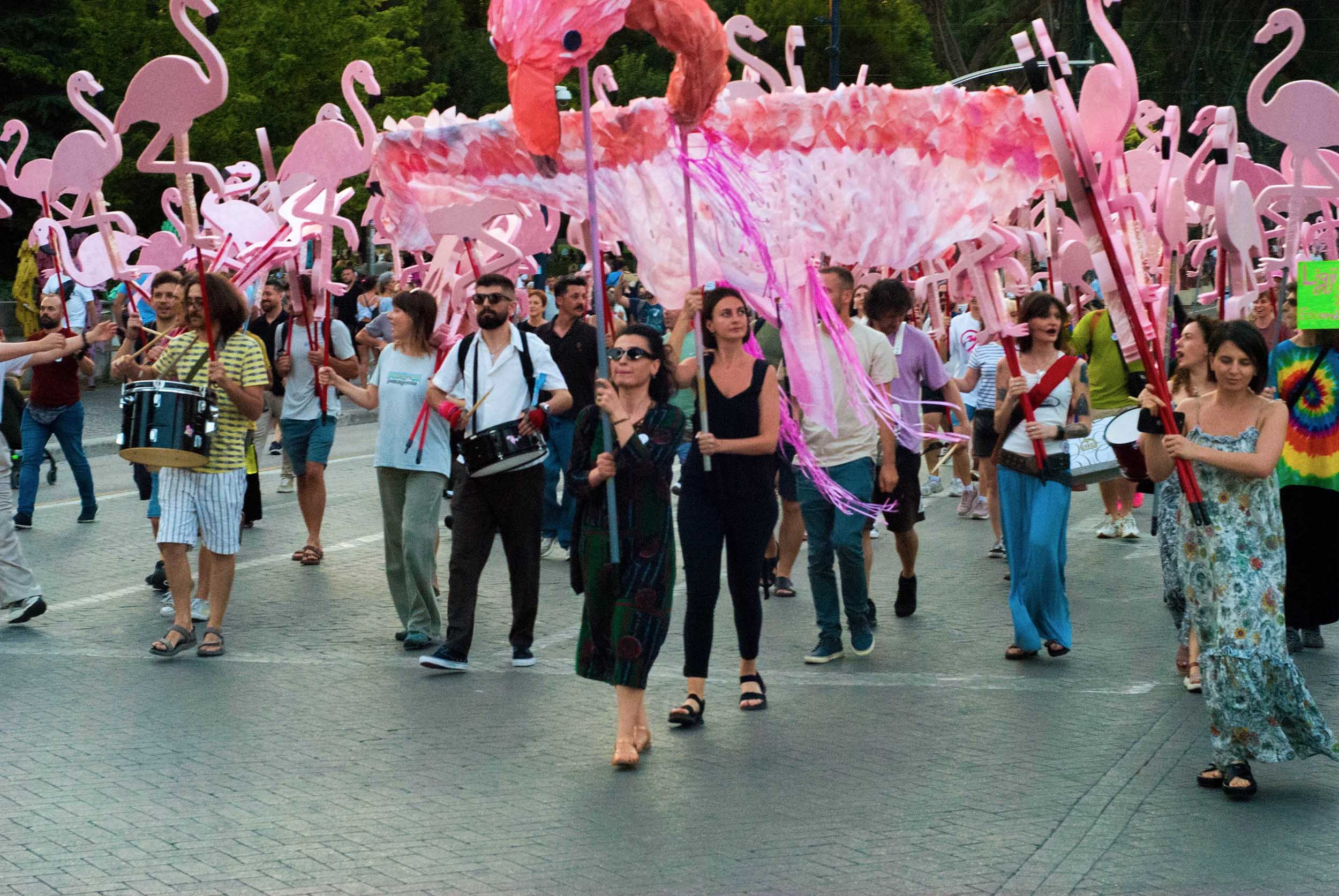
Documenting the Flamingo Revolution. For years, one of the most deeply rooted beliefs in Albanian society has been that Albanians do not unite and rarely stand up for their rights. The Flamingo Revolution challenged that belief. What began as a protest to protect the Zvërnec Protected Area quickly evolved into a peaceful civic movement. Since 31 May 2026, thousands of Albanians have gathered in the streets every day, marching side by side.

In the rubric ‘Albanian Emergent Photographers’ in the field of architecture and urban photography, we bring the young Kosovar photographer Meti Spahiu, who for several years lives and works in Vienna, after his graduation as architect in the Technical Faculty TU WIEN.

Rozafa Shpuza is a poet and a photographer, a uniqueness that creates a connection between two arts. She writes poetry in Gheg dialect, but she is as well productive in the field of photography, mainly in the genre of urban and street photography. Her photos are mostly shot in the streets of her hometown, Shkodra.

At TATÌ SPACE we are opening a new series of blogposts on Albanian emerging photographers in the field of Architectural Photography. Meti Spahiu is a recent graduate architect at the Technical Faculty of Vienna (TU WIEN), who pursues the passion of Architectural Photography. The subject of his photograph are the residential and commercial buildings in Vienna and other European cities.
Protected areas in Albania represent territories of significant natural, ecological, economic, and cultural value, whose conservation and sustainable management are essential for ensuring long-term development. These areas encompass a wide variety of ecosystems, from mountainous regions and forests to wetlands, rivers, lakes, and coastal environments.