
On the Artistic Practice of Olson Lamaj
Olson Lamaj is a visual artist and photographer based in Tirana, Albania. He studied Painting at the Academy of Fine Arts in Florence and completed a Master's degree in Artistic Photography at the Brera Academy of Fine Arts in Milan. His artistic practice explores the relationship between image, ideology, and collective memory, focusing on how political, social, and cultural systems construct identities and modes of representation…
Olson Lamaj
The City as Ideology, the Object as Symptom
© Olson Lamaj, Autoportrait from the series Between Pattern and Shadow
Olson Lamaj is a visual artist and photographer based in Tirana, Albania. He studied Painting at the Academy of Fine Arts in Florence and completed a Master's degree in Artistic Photography at the Brera Academy of Fine Arts in Milan. His artistic practice explores the relationship between image, ideology, and collective memory, focusing on how political, social, and cultural systems construct identities and modes of representation. Photography is the primary medium of his work, which he combines with research, artists' publications, and installation to create narratives that move between documentation and interpretation. In his work, photography functions not merely as a record of reality but as an artistic language capable of producing poetic, ironic, and at times theatrical narratives about everyday urban life.
Lamaj's artistic practice develops alongside his commitment to shaping and promoting the contemporary art scene in Albania. From 2012 to 2017, he co-founded MIZA Gallery, an alternative art space dedicated to supporting emerging artists and fostering a critical platform for contemporary art in Tirana. He is also the founder and editor of Pararoja Publishing House, an independent publishing platform focused on artists' books and the dissemination of visual narratives through zines and limited-edition publications.
Among his best-known projects and exhibitions are Between Pattern and Shadow, Transitioning into Green, Holy Muscle, (Over)Identification, and The Cat Above and the Mouse Below. He is the recipient of the Ardhje Award and has participated in international artist residencies in New York, Vienna, and Tirana. His work has been exhibited in museums, institutions, and galleries throughout Albania and across Europe.
About the Series Between Pattern and Shadow
Between Pattern and Shadow is a photographic series born out of the everyday observation of the city of Tirana. It can be understood as a visual study of the aesthetics of Albania's post-socialist transition—not through major historical events, but through the urban landscape, ordinary objects, and the traces that architecture and everyday life have left upon the city.
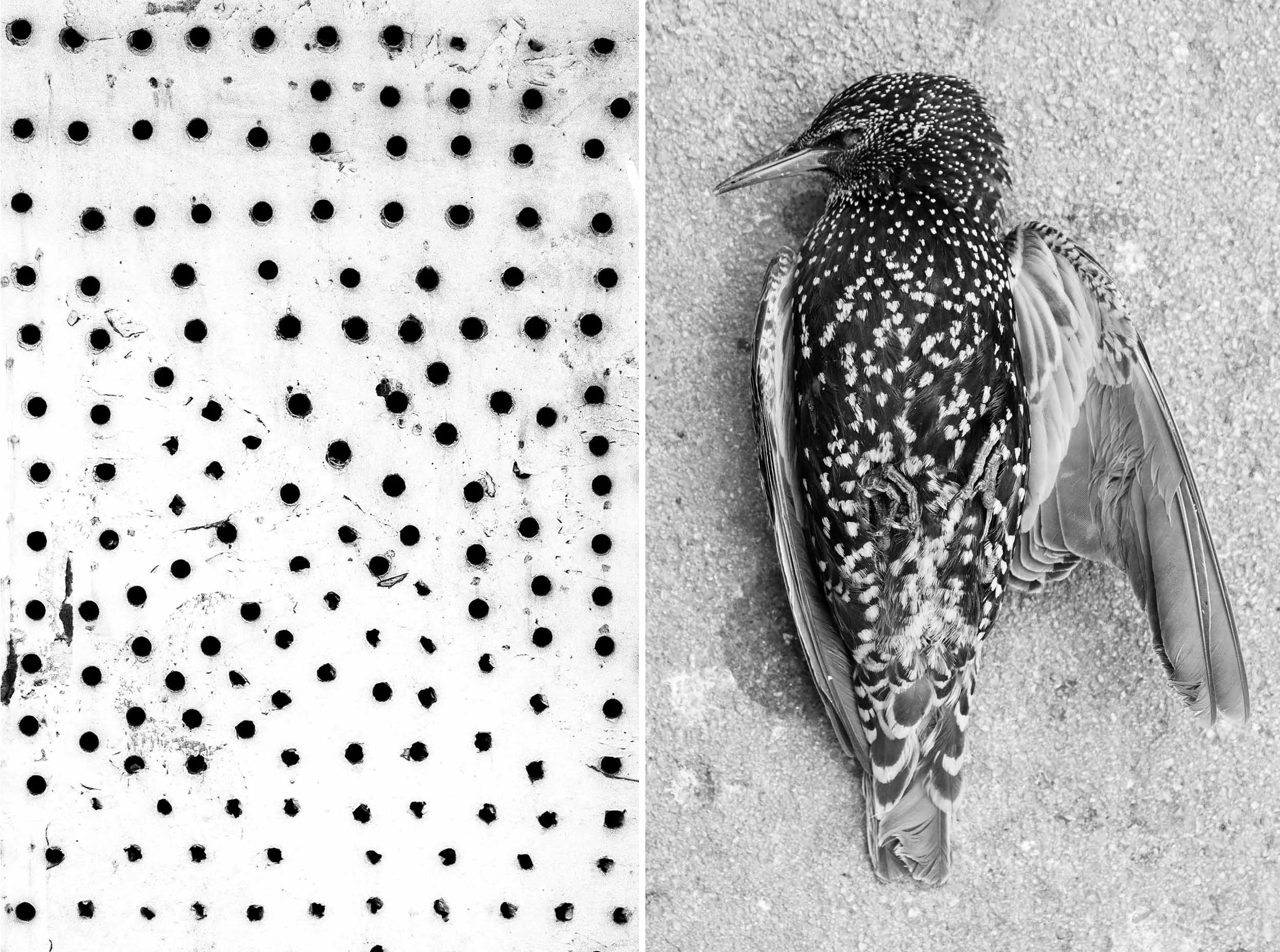
In Lamaj's photographs, the city is not presented as a monumental landscape but as an organism composed of fragments. His attention is drawn to the elements that usually remain outside our field of vision: a plastic chair abandoned on the sidewalk, an improvised window, a crooked fence, a discarded tire, a dead bird lying on the asphalt, or the dense web of electrical cables stretching across building façades. These are not merely ordinary objects; they function as symptoms of a society in transformation. Rather than photographing tourist landmarks or the representative urban spaces of the city centre, Lamaj turns his gaze toward its margins. This approach aligns his practice with a kind of archaeology of the present, where the most commonplace objects become material evidence of the ideologies that continue to shape everyday life.
The Albania that emerged from the post-socialist transition did not produce a coherent Western modernity, but rather an urban landscape composed of historical layers, informal construction, architectural improvisation, and the remnants of a brutalist legacy. It is precisely this contradictory terrain that constitutes the material of Lamaj's photographs. Within this urban chaos, he seeks to uncover an everyday aesthetic, suggesting that chance, improvisation, and imperfection can themselves generate a visual language with a distinct identity.
In this sense, the city is not portrayed through heroic landscapes or romantic notions of national identity, but through fragments of contemporary Albanian reality. Post-socialist capitalism intertwines with nationalist symbolism: eagles, stars, and patriotic iconography coexist alongside unfinished roads, exposed concrete, and informal construction, producing a landscape in which the contradictions of transition become unmistakably visible.
His compositions are calm, frontal, and carefully controlled. This distance is not intended to suggest neutrality; rather, it establishes a particular mode of reading. Objects are photographed as though they were archaeological artefacts—material witnesses to a historical period that continues to generate new forms of urban life. Lamaj is particularly interested in the ways urban elements produce accidental visual rhythms: electrical cables trace abstract compositions, shadows interrupt façades, while plastic, metal, and concrete establish unexpected formal relationships.
Photography here operates not simply as a means of recording reality, but as an analytical tool through which the urban landscape can be read as a cultural and ideological structure.
The title itself, Between Pattern and Shadow, encapsulates this relationship. "Pattern" refers not only to the graphic arrangements that emerge across the photographic surface, but also to the invisible political, economic, and cultural structures that organise urban life. "Shadow," by contrast, represents everything that escapes planning: improvisation, chance, memory, and those spaces where systems lose control.
Between Pattern and Shadow is ultimately more than a photographic series about Tirana. It is a reflection on how photography can read the city as a cultural text, where every object, every surface, and every trace contains invisible histories. Lamaj does not photograph the city simply to show what Tirana looks like; he photographs it to understand how history, politics, and ideology continue to manifest themselves upon its surface. In this sense, the urban landscape is not merely the backdrop to social life, but the material form through which history continues to be written.
Interview with Olson Lamaj
Alketa Misja for Tatì Space: Hello Mr. Lamaj! Thank you very much for accepting the invitation to be interviewed by Tatì Space and sharing your thoughts about your work with our readers.
In your series Between Pattern and Shadow, you repeatedly return to the everyday fragments of the city. What draws you to these urban details, and how do you understand the relationship between Albania's post-socialist transition and the aesthetic produced by the city?
Olson Lamaj: For years, I have made it a habit that whenever I leave home, I take my camera with me—even when I'm not sure I'll use it. This constant routine, combined with an attentiveness to the materiality of the city, has gradually allowed me to build a personal archive of the urban landscape in its everyday condition.
What has always interested me is not the city as a finished image, nor architecture as an isolated object, but the way the city is produced through small interventions, improvisations, and everyday gestures. Within these fragments I have found an unexpected aesthetic, where the old and the new are not in clear opposition but coexist in an irregular and often contradictory way.
In this sense, transition is not merely a historical backdrop but an ongoing condition of the city itself, continuously generating new visual forms—often unexpected, yet deeply revealing of the way we experience the spaces we inhabit.
Tatì Space: Cables, plastic, fences, concrete, stray animals, and temporary structures frequently appear in your photographs as central elements of the image. Rather than remaining incidental details of the urban landscape, they can be read as signs of a broader social and ideological reality. What do these ordinary objects represent for you, and why do you think they are important to understanding post-socialist Albania?
Olson Lamaj: These urban objects are, in a way, the raw material from which I construct my photographs. Cables, concrete, plastic, fences, and temporary structures are not simply accidental features of the city; I see them as traces of the way it has been built and continues to transform. They constitute a kind of visual matter through which one can read not only the city's physical form, but also its social and historical condition.
At the same time, stray animals—birds and dogs in particular—play a very important role in my work. For me, they are equal inhabitants of the city, inseparable from its existence. I often feel a sense of empathy towards them, as though, in a quiet way, I recognize something of myself in their presence—in the way they move, adapt, and negotiate the urban environment.
There is something profoundly genuine in this coexistence between nature and the city, even when it unfolds under difficult conditions. In a way, these figures embody a quiet resilience and an ability to find their place within urban chaos. That sensitivity, that direct relationship with them, often becomes part of the way I observe and photograph the city.
Tatì Space: Your compositions are often frontal, calm, and marked by a noticeable emotional distance. At the same time, many of your photographs create graphic rhythms and abstract relationships between form, shadow, and texture. To what extent do you see photography as a document of social reality, and to what extent as a formal or abstract visual structure?
Olson Lamaj: I believe this way of photographing is directly connected to my artistic education. Having studied painting and coming from a visual arts background has led me to think constantly in terms of composition. There is a natural need for me to organize the elements within the frame with precision, often pursuing a certain kind of compositional "perfection."
When I stand before a subject, I frequently change my point of view until every element within the frame functions as part of a single visual structure. It is a highly intuitive process, yet at the same time a very controlled one—a kind of dialogue between myself and the subject.
In this sense, photography, for me, comes close to constructing a painting. Urban elements such as cables, wires, or architectural structures often appear to me as brushstrokes within an informal painting, where the city itself becomes an open canvas.
Tatì Space: Patriotic symbols, advertisements, kitsch objects, and traces of urban decay often coexist in your work, creating a subtle sense of humour and absurdity. These images can be read as reflections on the ways consumerism and national identity have become intertwined in post-socialist Albania. Do you see post-socialist consumerism as a new form of visual ideology, and what role does irony play in the construction of your images?
Olson Lamaj: Political and social concerns are not simply thematic layers in my work; they are structural conditions that shape it. In the Albanian context, where politics does not function merely as a background but as a regime of everyday life, urban space itself becomes a field in which ideologies are constantly materialized through objects, remnants, and built forms.
My practice seeks to read the city as an open archive of transition, where past and present are not separated in a linear way but coexist as overlapping layers. The post-socialist landscape does not produce a new homogeneous order, but rather an economy of fragments: abandoned structures, unfinished infrastructure, and signs of late capitalism that continuously intervene upon one another. Within this entanglement, the ordinary object is never neutral; it functions as a symptom of a historical and ideological system in constant transformation.
In this sense, what is often perceived as urban chaos is not the absence of order, but a new form of visual rationality, where ideology is no longer articulated through official statements but through the materiality of everyday life. Humour and irony, in this context, do not serve as aesthetic relief but as mechanisms of critical distance, making the internal contradictions of this visual regime visible.
Tatì Space: Your practice seems less interested in constructing linear narratives than in examining how power, memory, and culture become materialized within urban space and everyday objects. Do you see photography as a tool capable of revealing the invisible social, political, and cultural structures of a society?
Olson Lamaj: Yes, fundamentally that is precisely what my photography attempts to do: to read and make visible the structures that usually remain invisible in everyday life. I am not interested in photography as a straightforward record of reality, but as a means of analyzing it.
Within urban space, power, memory, and culture rarely appear in explicit or narrative forms. Instead, they materialize through dispersed, often modest manifestations: objects, architectural interventions, the organization of space, and the ways in which that space is occupied and used. Photography allows me to read these layers as a kind of open text.
In this sense, the image is not simply a representation of reality, but a mode of thinking—an instrument through which reality can be understood by reading its visual traces.
Tatì Space: Thank you, Olson, for sharing your thoughts and reflections with us. We wish you every success with your future artistic projects
Thomas Krempke — Seeing the City Between Reality and Dream
Thomas Krempke is a Swiss photographer whose work moves between urban observation and poetic interpretation. His recent project in Albania, ENDERR (“Dream”), reflects this approach—capturing fragments of urban life, architecture, and transformation through a lens that feels both precise and elusive. In this conversation, we speak with him about his practice, his experience in Albania, and how photography can shape the way we understand cities.
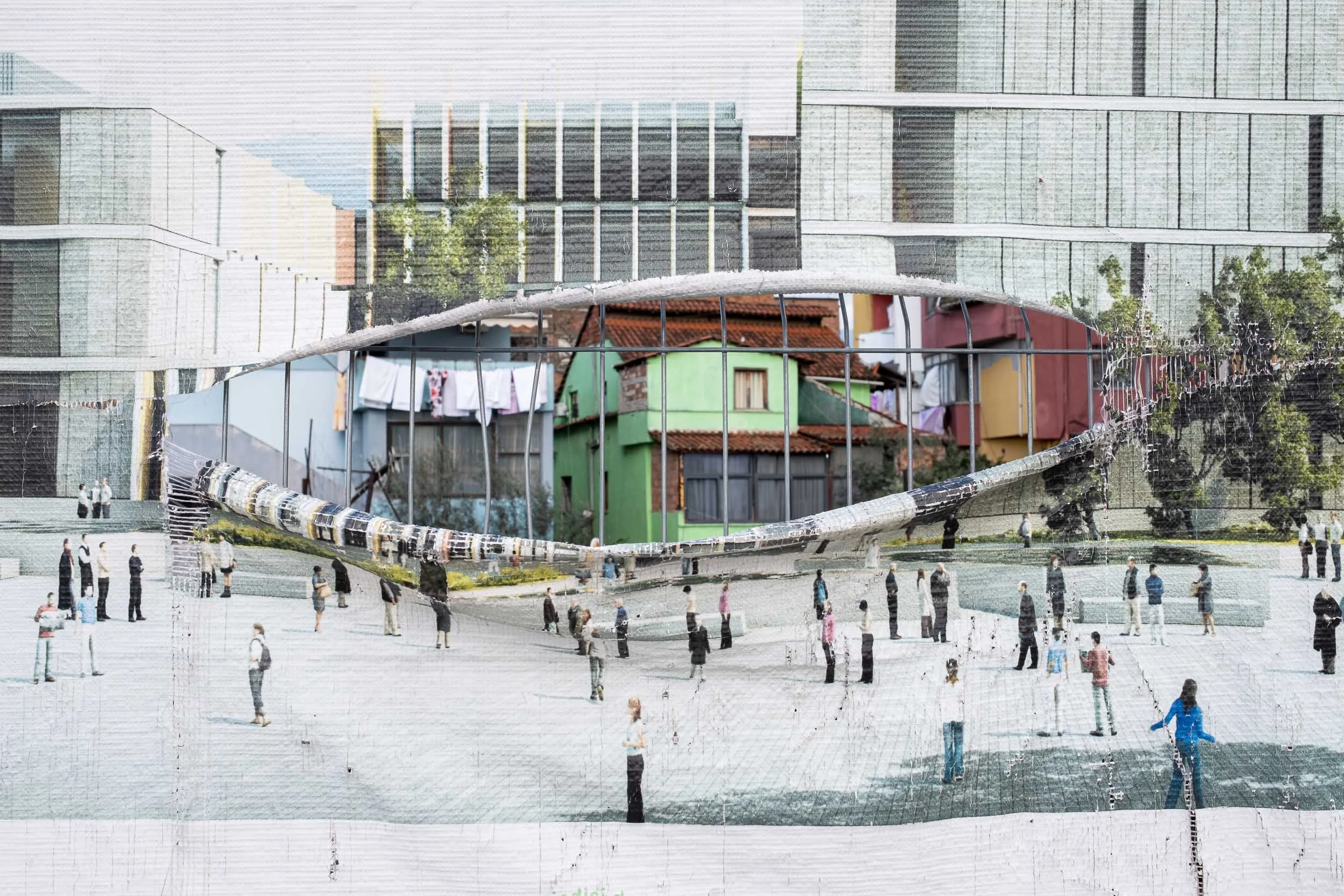
© Thomas Krempke, Tirana New Boulevard, 2020
There are cities you can read clearly—and others that unfold slowly, somewhere between presence and perception. In Albania, the urban landscape often feels suspended between past and future, between rapid transformation and unfinished narratives. It is precisely within this in-between condition that Thomas Krempke positions his gaze.
A Swiss photographer with a distinct sensitivity to atmosphere and spatial ambiguity, Krempke does not simply document the city—he reframes it. His images invite us to pause, to question what we see, and to consider how architecture is experienced not only as form, but as mood, memory, and projection.
His latest project, ËNDËRR (“Dream”), developed in Albania, moves along this delicate line between the real and the imagined. Through fragments of streets, buildings, and everyday moments, the work constructs a quiet, introspective portrait of a country in flux.
We spoke with him about his photographic approach, his experience in Albania, and how images can reshape the way we understand urban space.
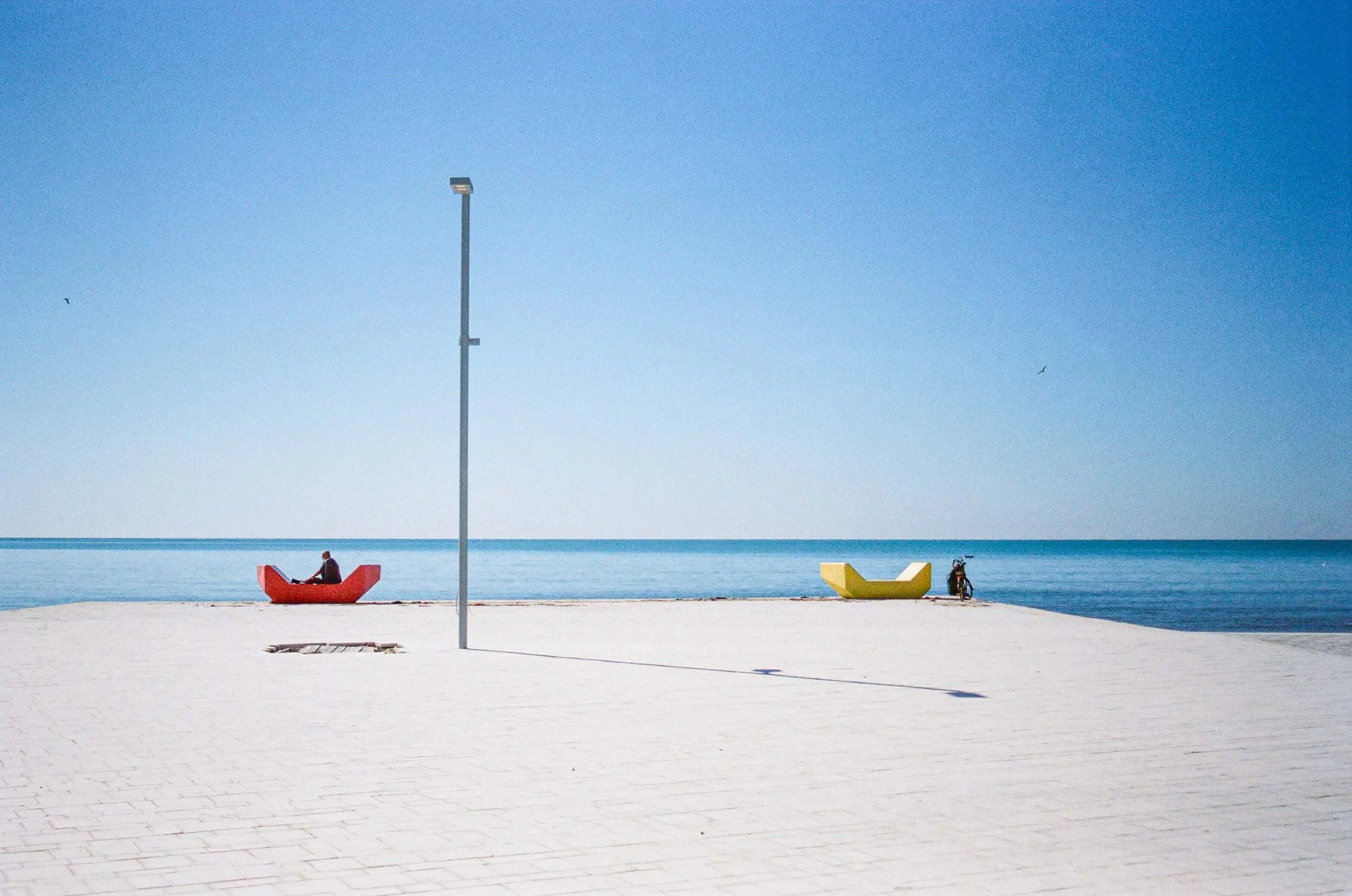
© Thomas Krempke, Durres 2020
Alketa Misja for Tatì Space: Hello Mr.Thomas! First of all, thank you very much for accepting the invitation to be interviewed by Tatì Space and sharing your work with our readers. Can you please tell us more about yourself? How did your journey into photography begin, and what drew you to urban and architectural subjects?
Your work lies between urban observation and poetic interpretation. You create visual narratives that go beyond simple documentation, inviting viewers to experience the city as an emotional landscape. How do you approach this tension between reality and representation in your images?
Thomas Krempke: I began making films at the age of 16 with a short film. At 22, I started studying Literature for two years, and then I attended Art School for Photography in Zurich from 1979 to 1983, as it was the closest field to cinematography, for which there was no school at the time. I have always been interested in places—where people live and how they live.
In 1980, I made a film with co-authors about house squatting in Zurich, during the 80-es movement of young artists for more cultural spaces in city. For the next 40 years, I made documentary films until 2008, when I returned to photography.
I began my first photography project, The Whispering of Things, as a photographic diary, but after two or three years I realized it had the potential to be developed more seriously, and it eventually became a photobook in 2016. The book is a diary of perception—how I perceive, what my gaze is, and what it means to look. There are no portraits in this work.
I started making portraits for the project Ëndërr, as I wanted from the beginning to include people. I attended a workshop in Arles with the well-known photographer Yann Rabanier to learn portraiture. I was always afraid of photographing people, but now I take pleasure in it.
As in all my projects, I do not aim to be too realistic. I want people to see reality differently after experiencing my photographs. It is all about perception.
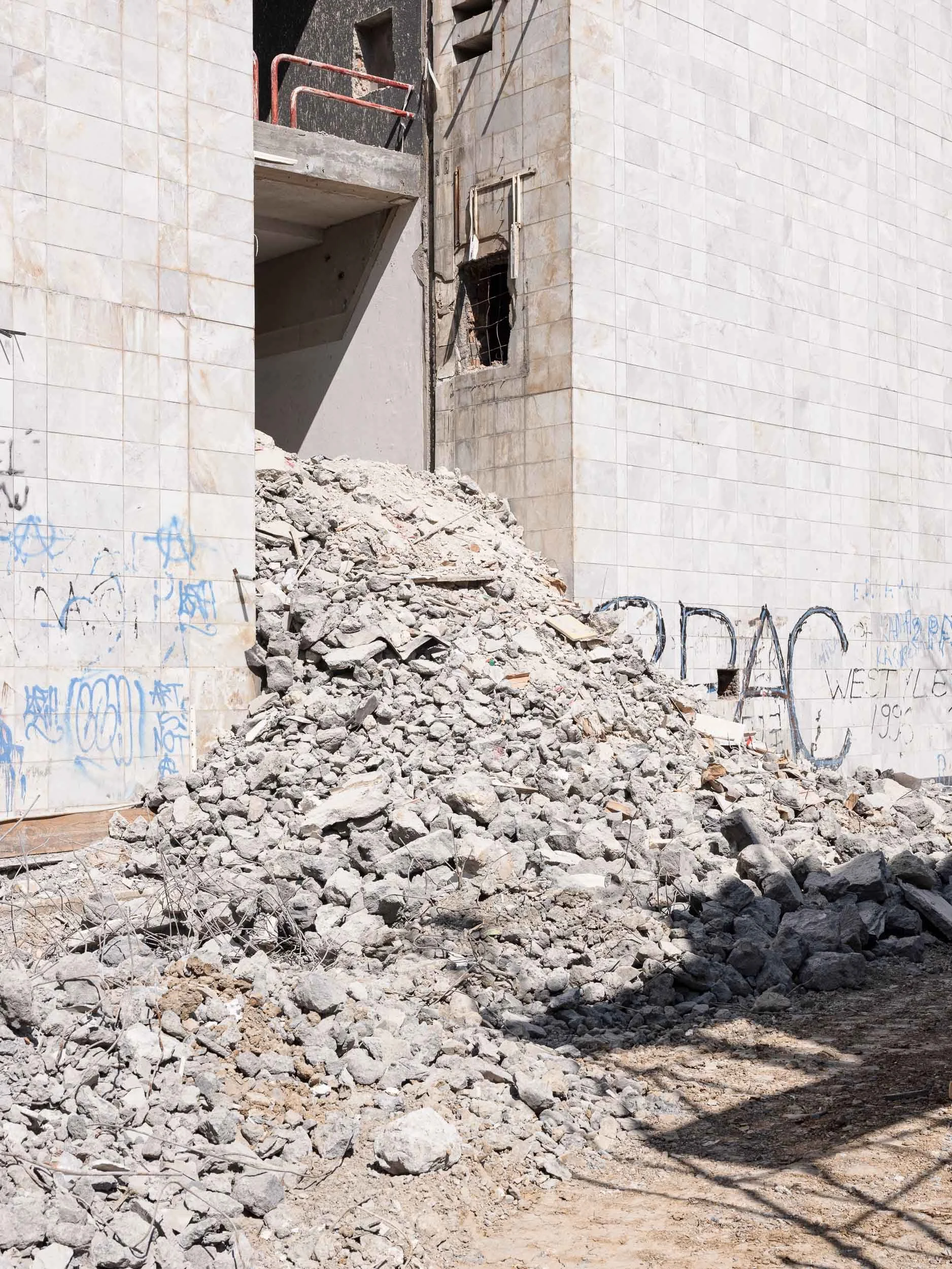
©Thomas Krempke, Piramida of Dictator, Tirana 2022
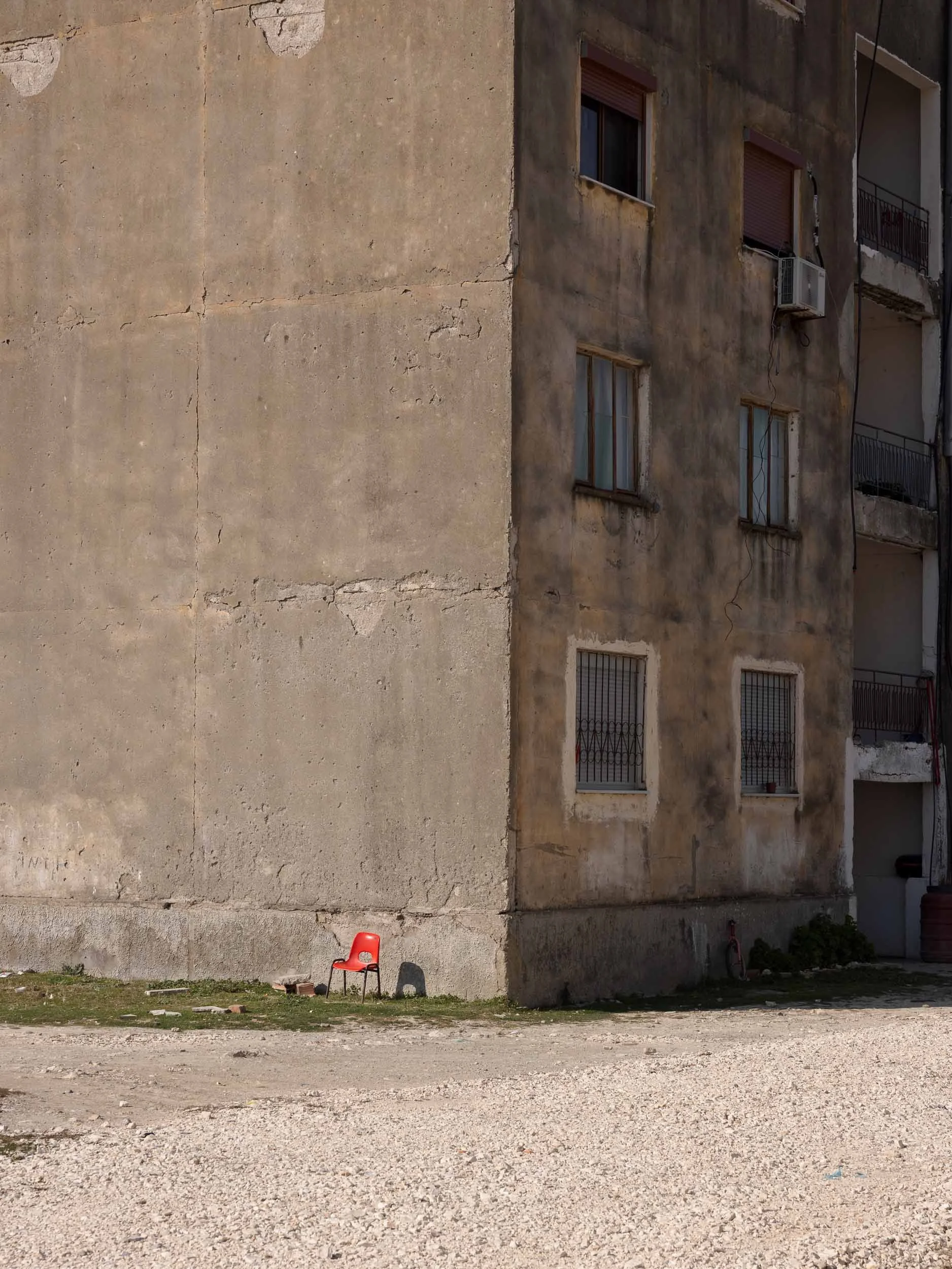
©Thomas Krempke, Adriatik 2022
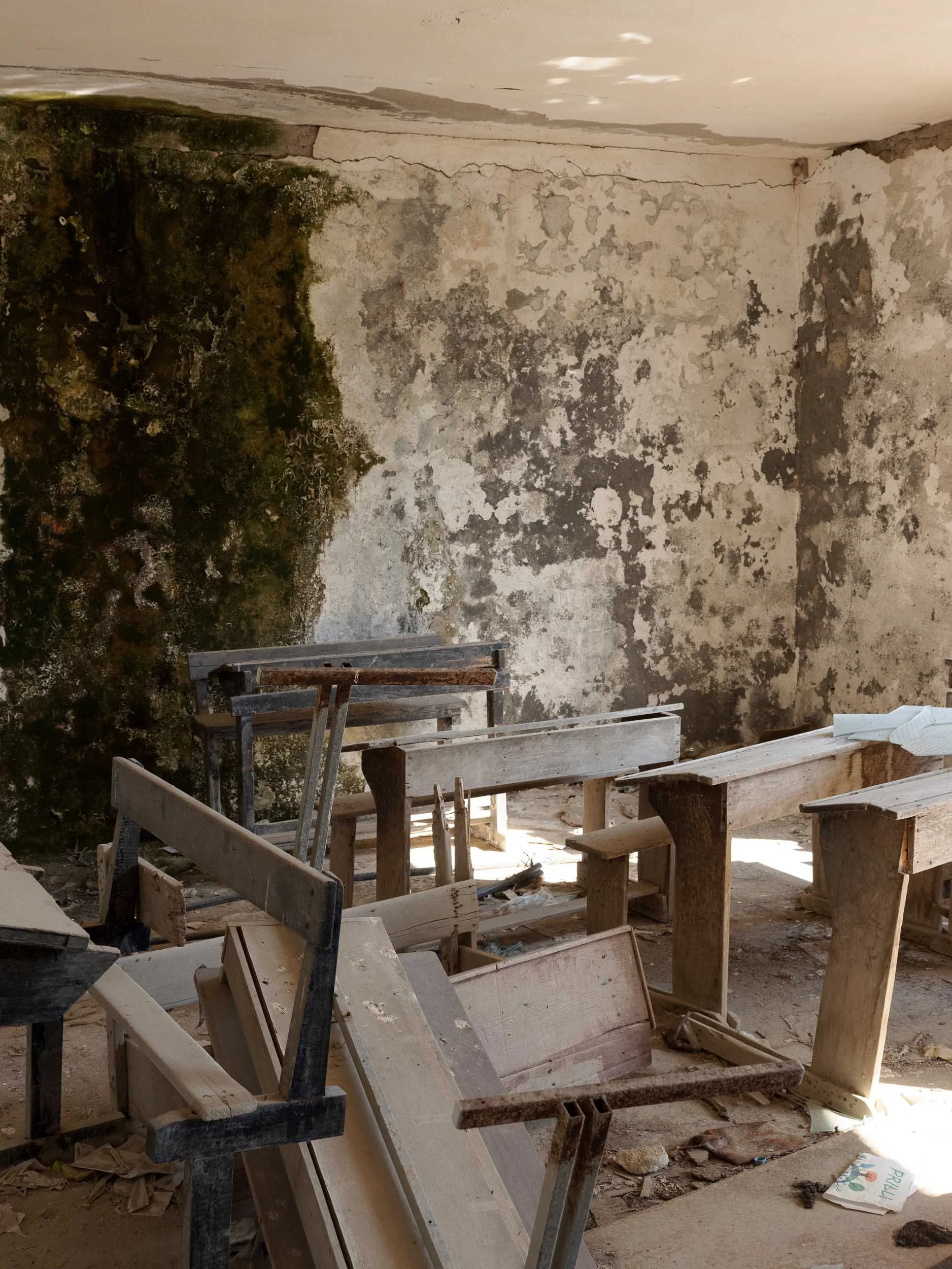
©Thomas Krempke, Adriatik School 2022
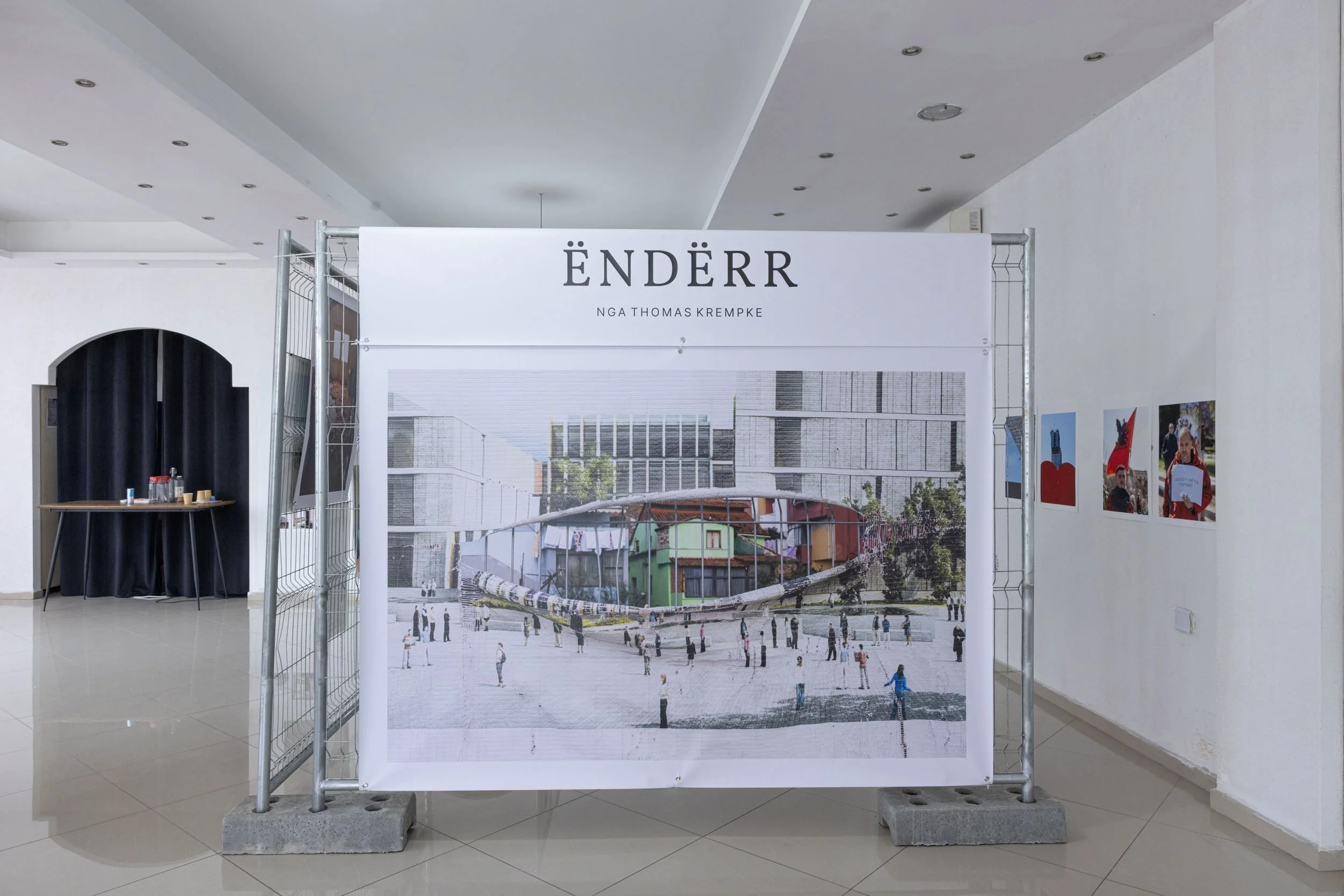
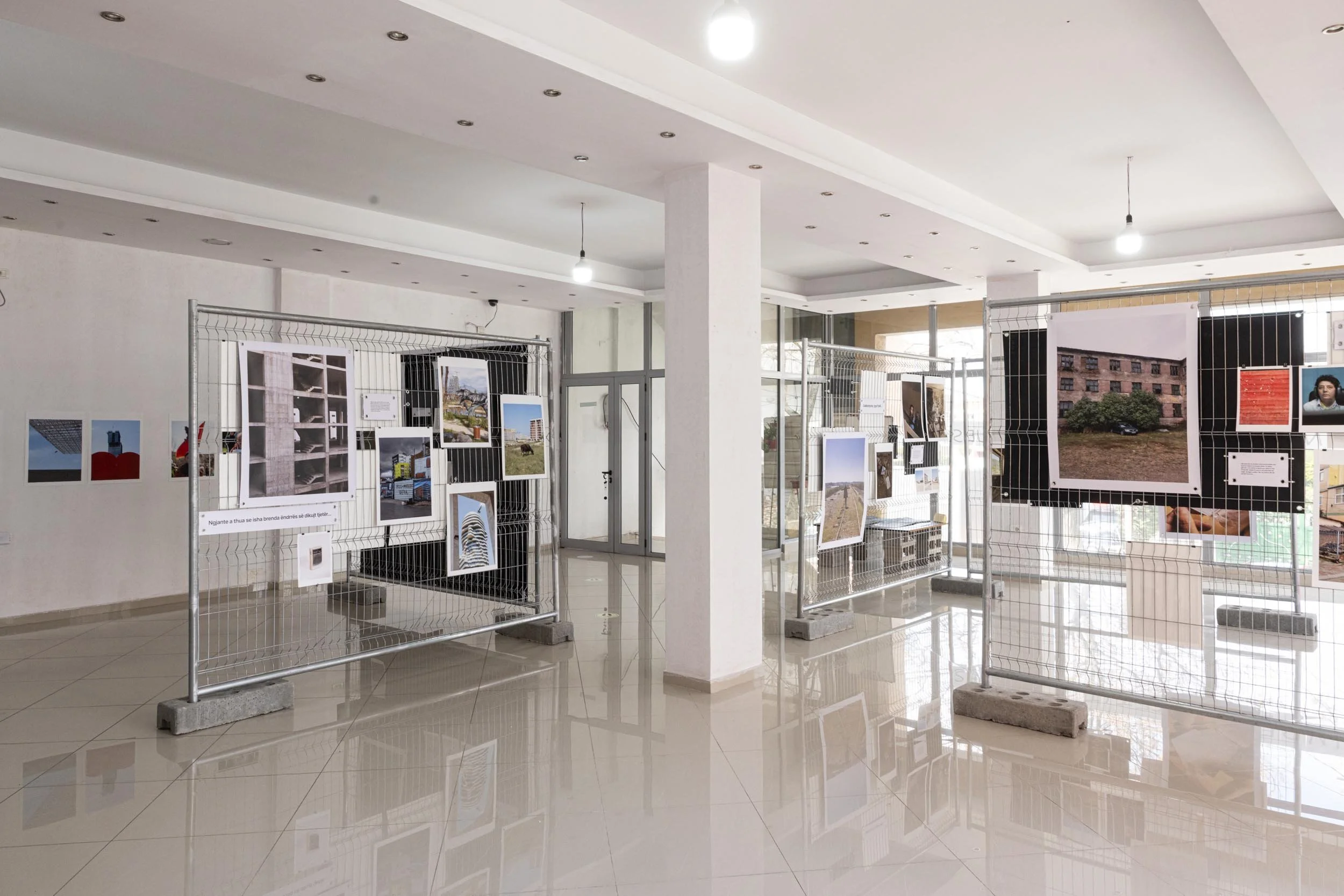
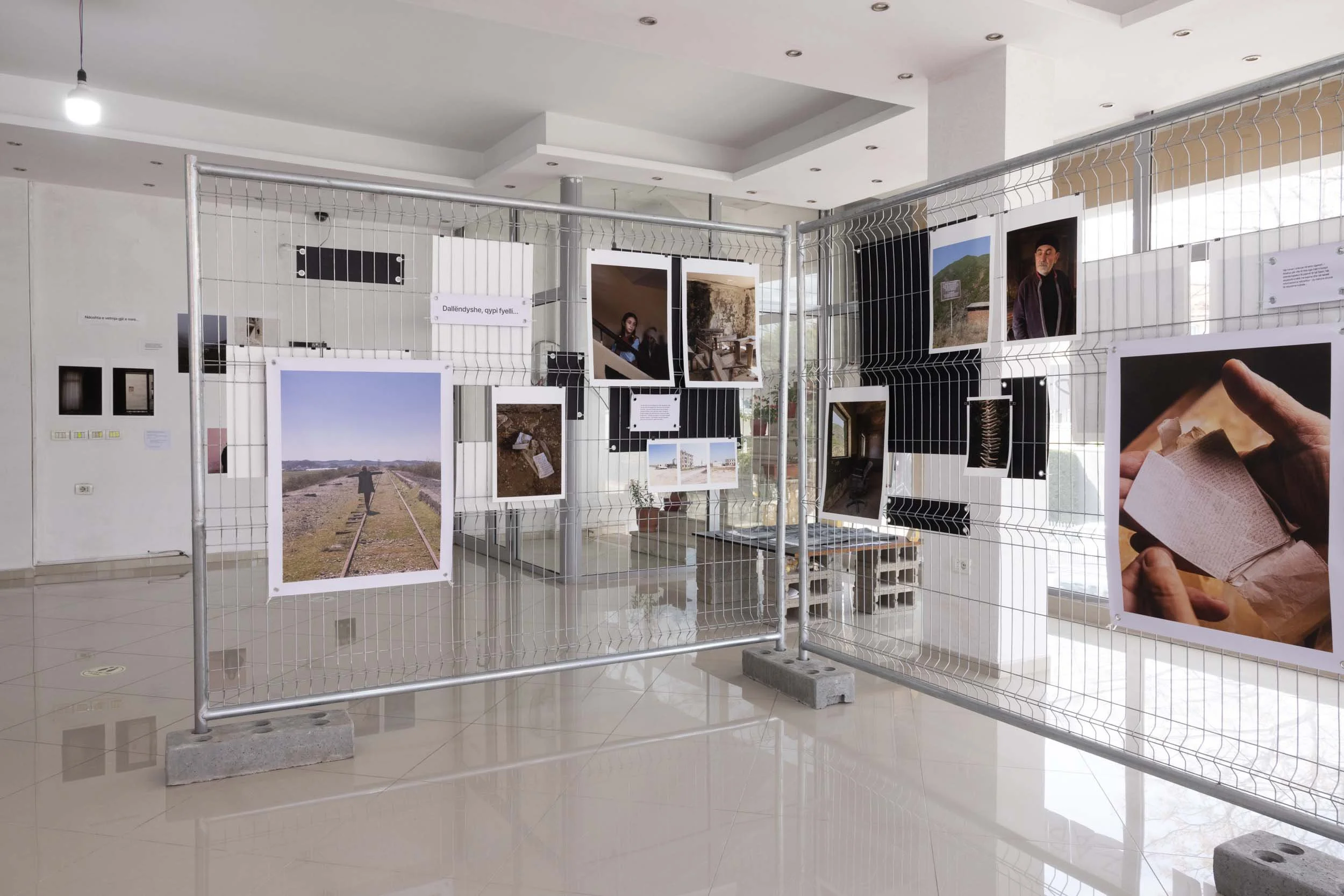
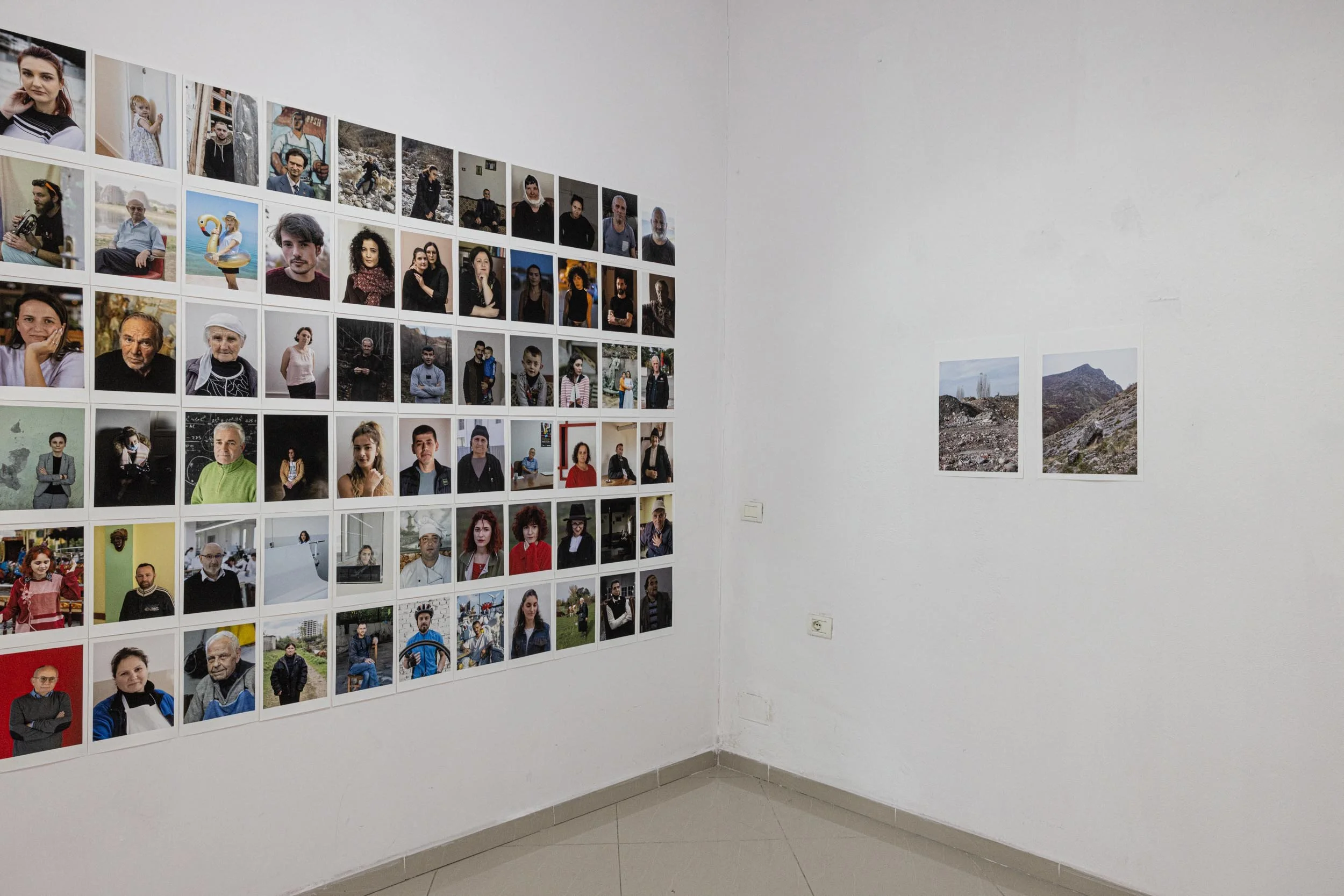
Tatì Space: From 5 years now you are photographing in Albania. Your recent project ËNDËRR was presented in the exhibition at Grupi ATA in Kamza, Tirana from March 26- April 16, 2026. What was the starting point or impulse behind this project?
The title ËNDËRR (dream) suggests a subjective or poetic layer—how does this idea translate into your visual language? What kind of spaces or urban conditions were you most interested in capturing in this series?
Thomas Krempke: The project on Albania began with my first visit in 2017. I was fascinated from the very beginning. What captured my interest was how the contrasts and contradictions of society are highly visible in the urban fabric. It is a post-communist society in transformation, but in some respects different from other Eastern European countries. Albania was very closed during the regime, and its openness to democracy and capitalism happened very quickly—almost like an explosion—which makes these contrasts and contradictions more visible than in other countries.
I began photographing during my second visit in 2019. I walked extensively through the city and was amazed by its chaotic development. For me, this was particularly interesting, because the houses and places seem to have stories to tell. There is the Boulevard and the Center, but the more you go out in periphery, the planning disappears.
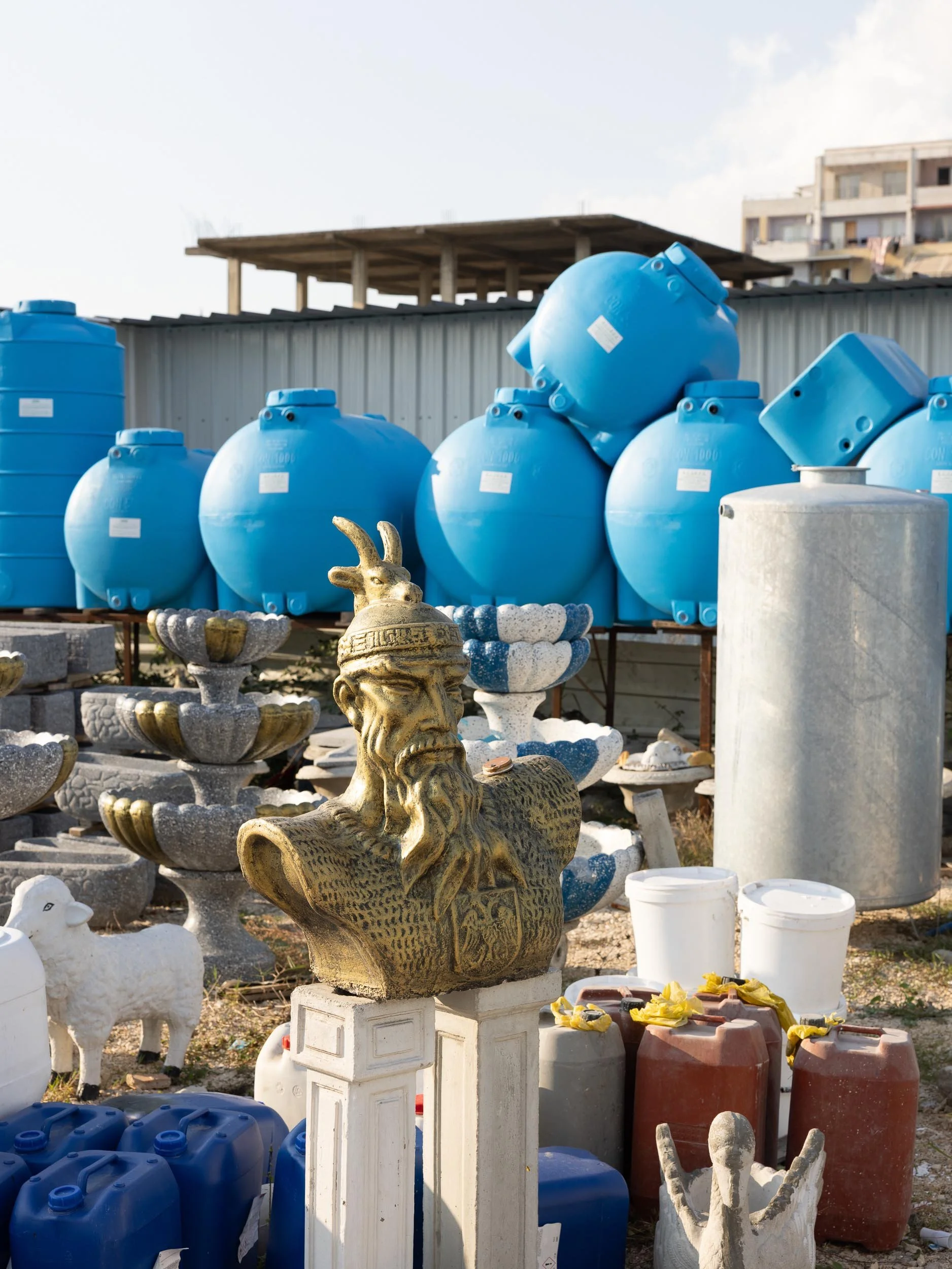
©Thomas Krempke, Kamza 2021
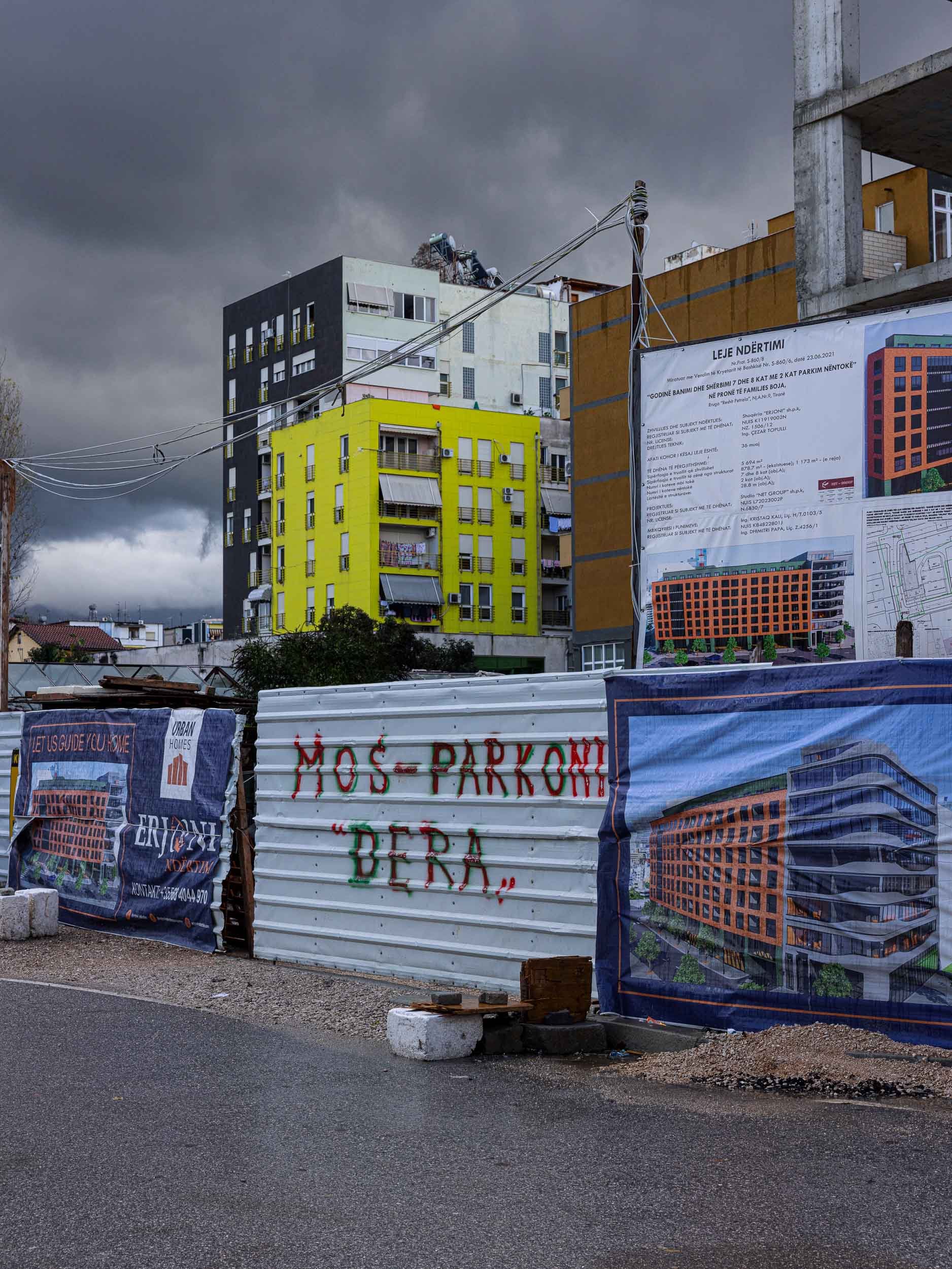
©Thomas Krempke, Tirana New Constructions 2022
The first part of the project was exhibited in 2022 under the title “Shi bie në Tiranë” (It’s raining in Tirana) at Gallery Kriens. In 2023, part of the project was exhibited under the title “Today–Yesterday–After Tomorrow” at Galerie am Platz, Eglisau, Switzerland. However, the title of the photographic project has remained the same from the beginning: ËNDERR (Dream). It is exhibited under its original name for the first time here in Albania, at the premises of Group ATA in Kamza. The exhibition is supported by Group ATA and the Swiss Embassy in Tirana, to whom I am very grateful.
The title refers to the Albanian dream of finding fortune and happiness—either as an emigrant abroad or in the capital, Tirana. At the same time, it reflects the opposite dream of Central Europeans searching for an undiscovered, “authentic” tourist destination. What fascinated me was how these two dreams intersect in a place that no one quite knows how to locate. This is what I wanted to convey through my photographs from the very beginning.
During my research on Albania, I also noticed the word “dream” recurring everywhere—in novels, poems, and song lyrics—accompanying me like a leitmotif. I therefore decided it was a very fitting title for the project.
Interestingly, I have always been drawn to dreams. I dream frequently at night, and for a time I kept journals in which I wrote them down. I no longer do this. Instead, I photograph situations that feel contradictory, like dreams—where old and new, finished and unfinished, all come together in a non-rational way, such as in the image of the unfinished hotel in Golem with white columns.
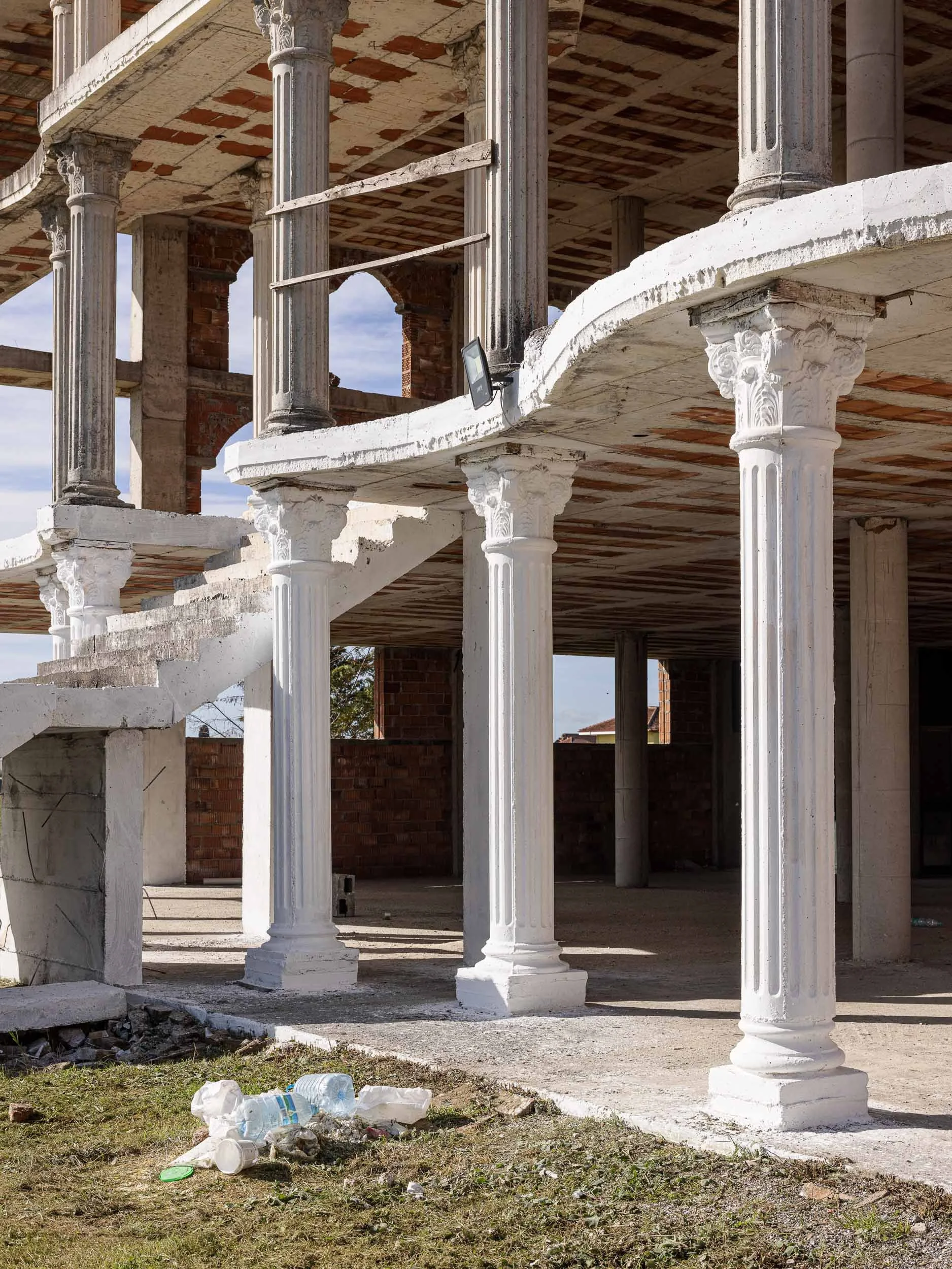
©Thomas Krempke, White Colomns, Golem 2024
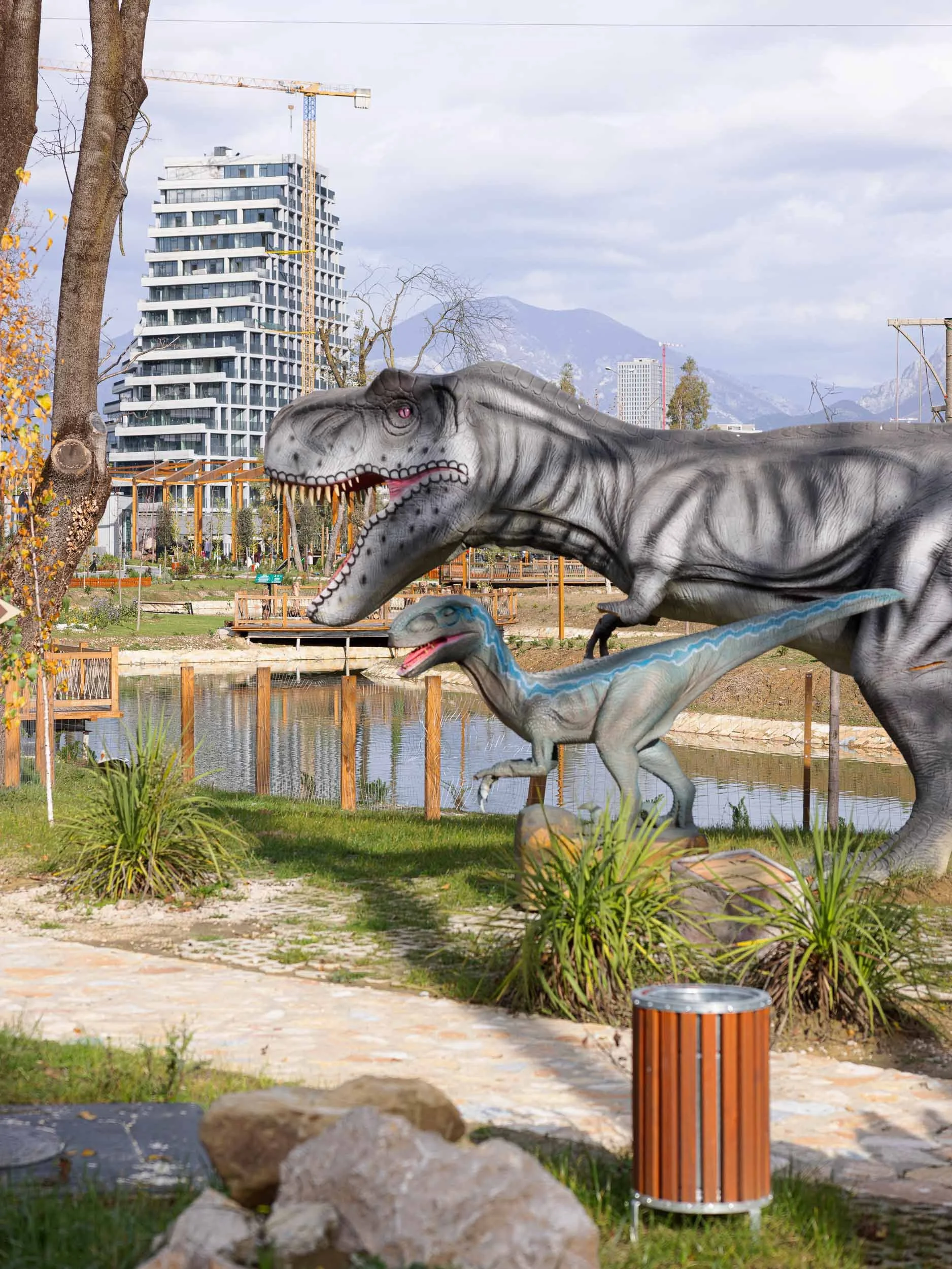
©Thomas Krempke, Tirana Zoo, 2022
Tatì Space: In your images appear different elements like informality, rapid development, layered histories, the past and the future both competing for supremacy in a place that is striving to live in the present (quoting you). Did you encounter specific urban phenomena that influenced your way of seeing or framing?
One of the poems that you have chosen for the Exhibition, that I like very much, is “Ënderr” of Visar Zhiti, written in 1982 during his political imprisonment in the infamous Spaçi prison. How does the idea of “dream” shape the way you see and photograph the people and places? How do you see the role of photography in shaping memory and understanding of urban space?
Thomas Krempke: The project is about individual dreams—about people who build their own dreams in their country. From the beginning, I wanted to make portraits of different people. I did not want to focus on immigration; it is an easy subject, and many others have already explored it. I was more interested in meeting people who have chosen to build a life here, often facing many difficulties.
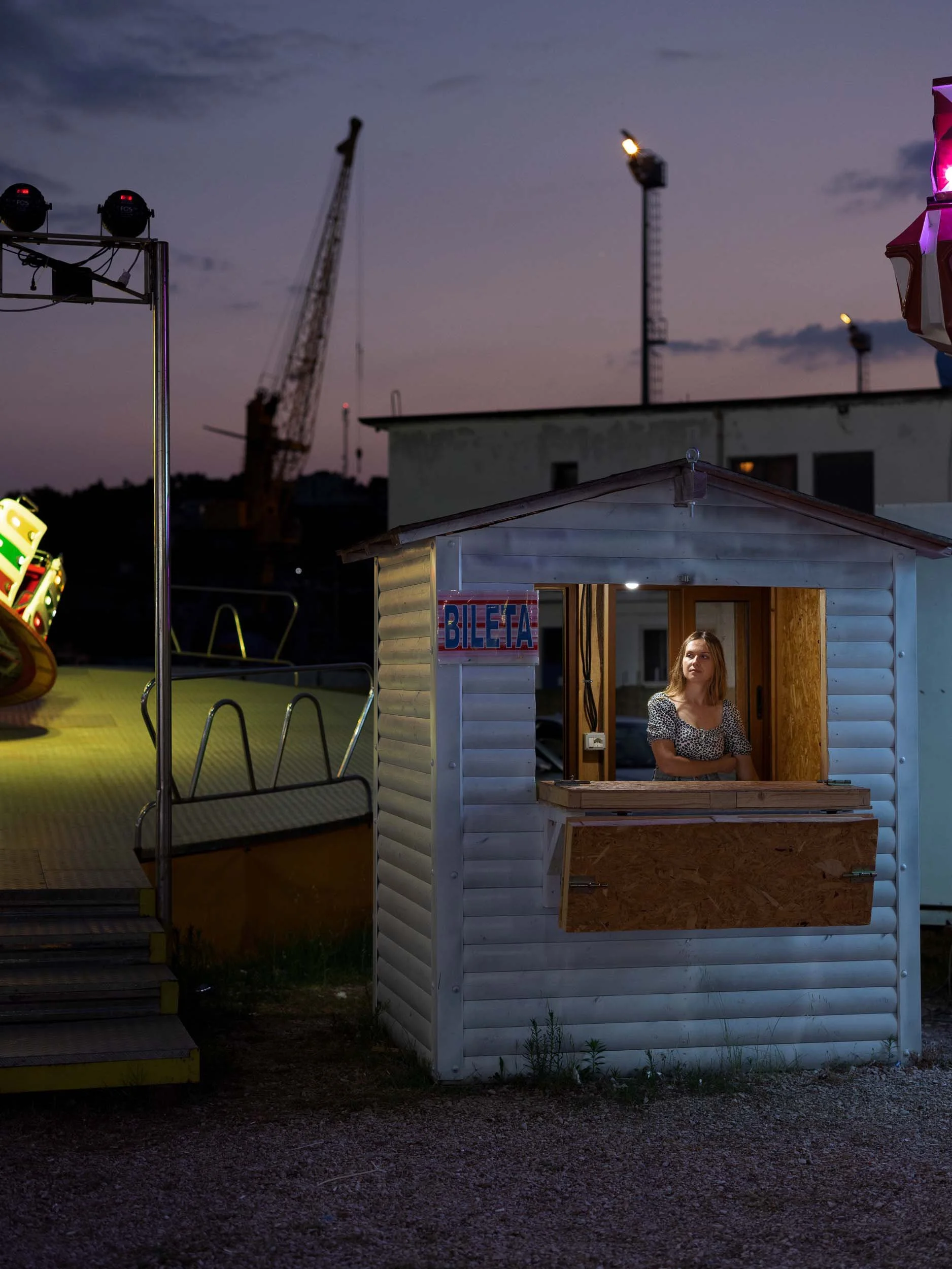
©Thomas Krempke, Shengjin Theme Park, 2021
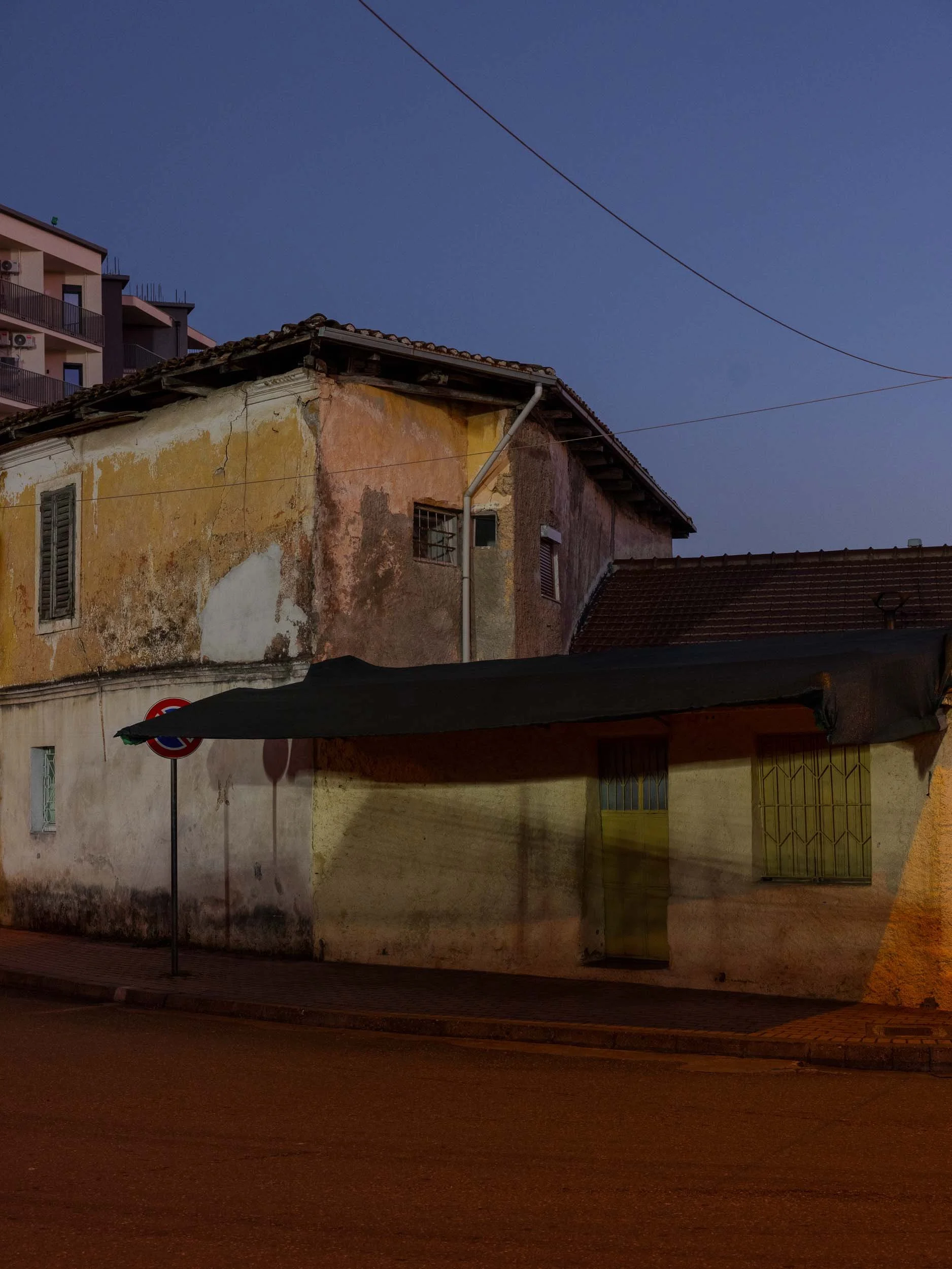
©Thomas Krempke, Shkodra 2024
While accompanying activists in their work, they showed me places such as Tropoja, Zall Gjocaj, Kamza and Bathore. The project “Tirana Riverside” in Lagja 5 Maji was probably the most important one, which I followed for quite some time. However, I was not there as a photojournalist. For my project, it is very important not to be too realistic or naturalistic. I want viewers to see reality differently after encountering my photographs. As in the book The Whispering of Things, I continue to explore the idea of perception—what it means to look and to perceive.
In some way, photographing in Albania has changed my way of seeing, because it is the first time I have worked on such an extensive project over five years. I have visited 16 times, and altogether I have spent more than one year. I have never immersed myself so deeply in a project in another country before. Now I look more precisely. Albania has become like a mirror, changing the way I see my own country.
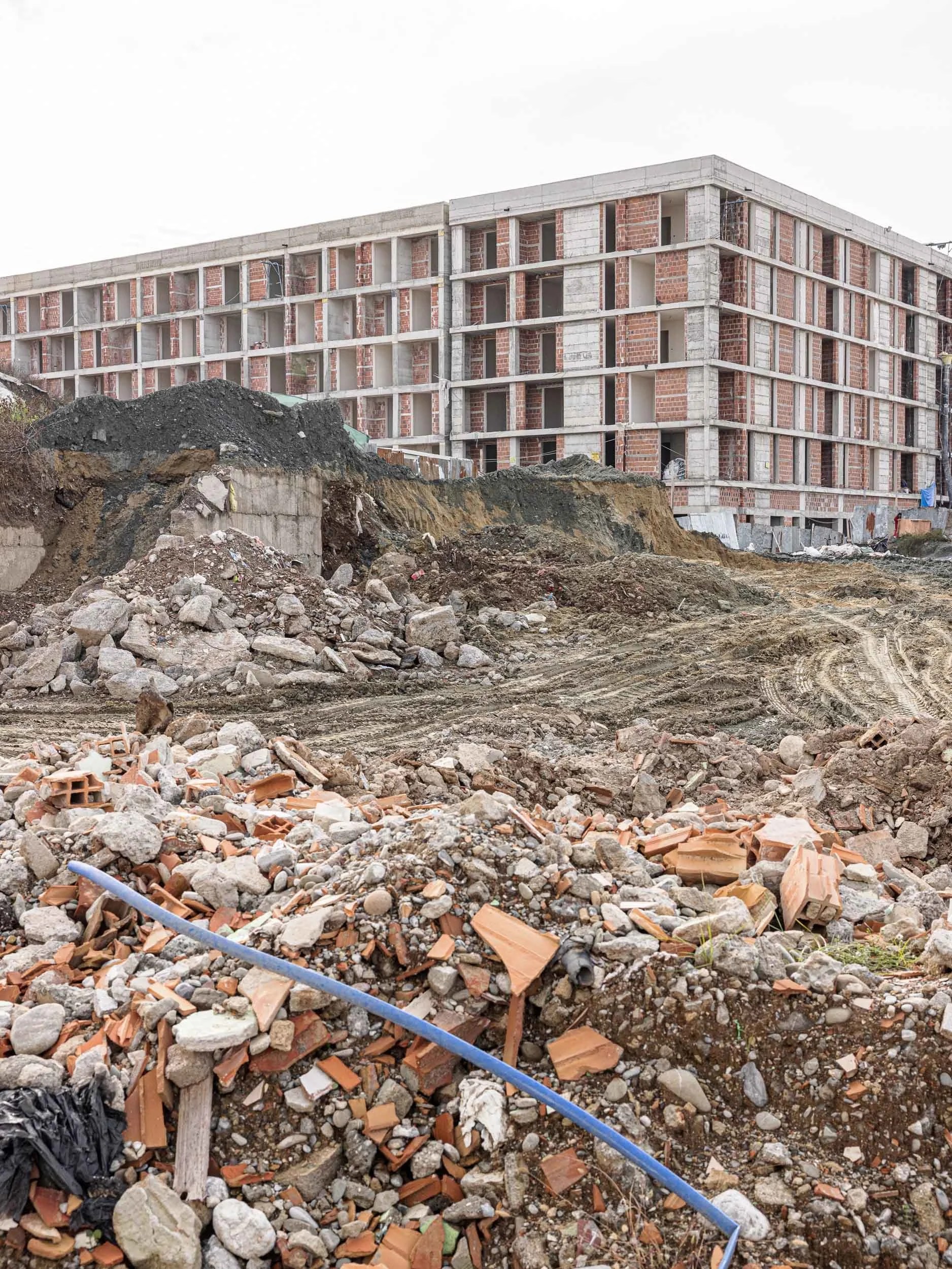
©Thomas Krempke, New Constructions “Tirana Riverside” Project in 5 Maji Neighborhood, Tirana 2022
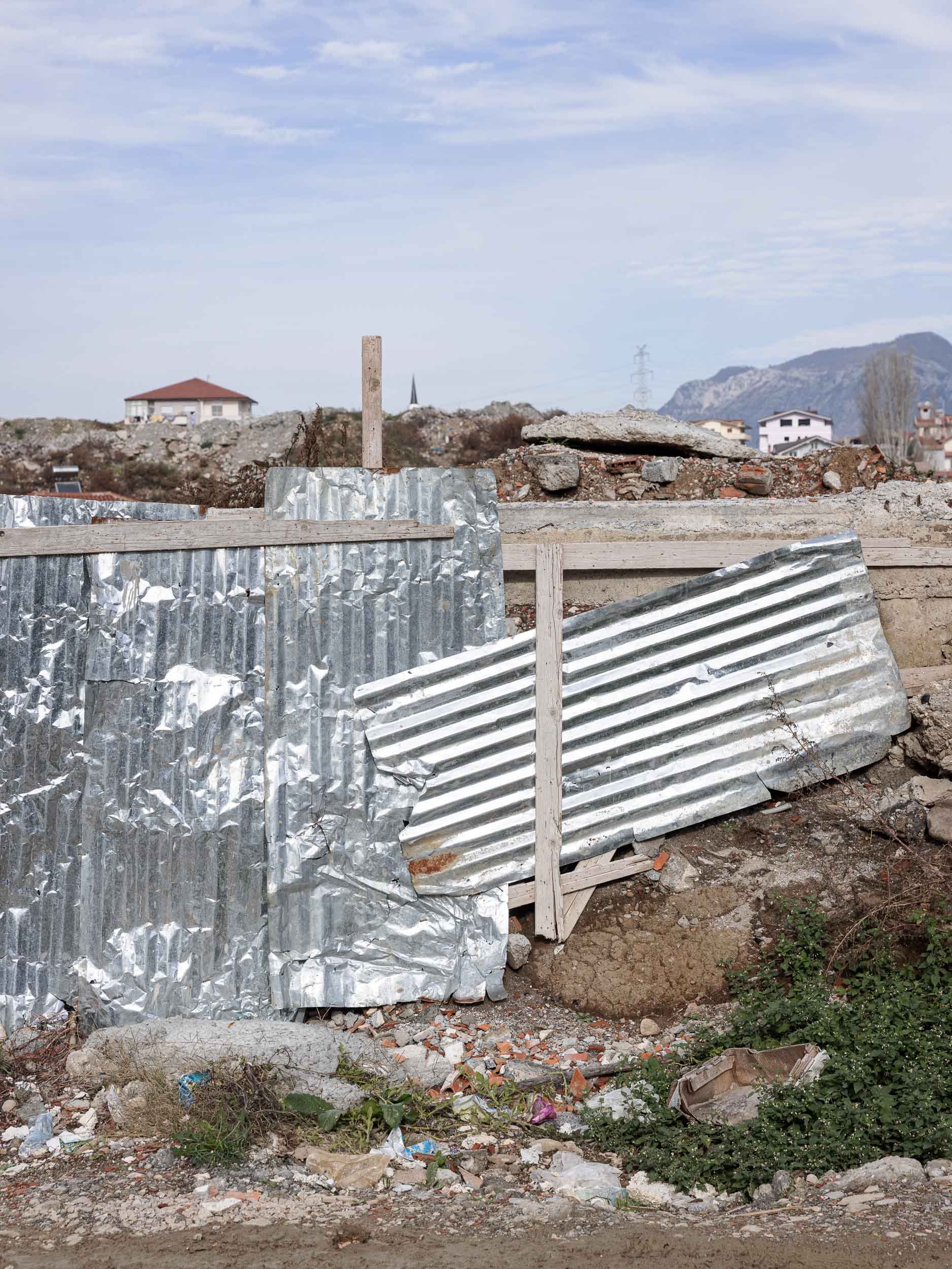
Demolition of informal housing in 5 Maji Neighborhood Tirana 2022
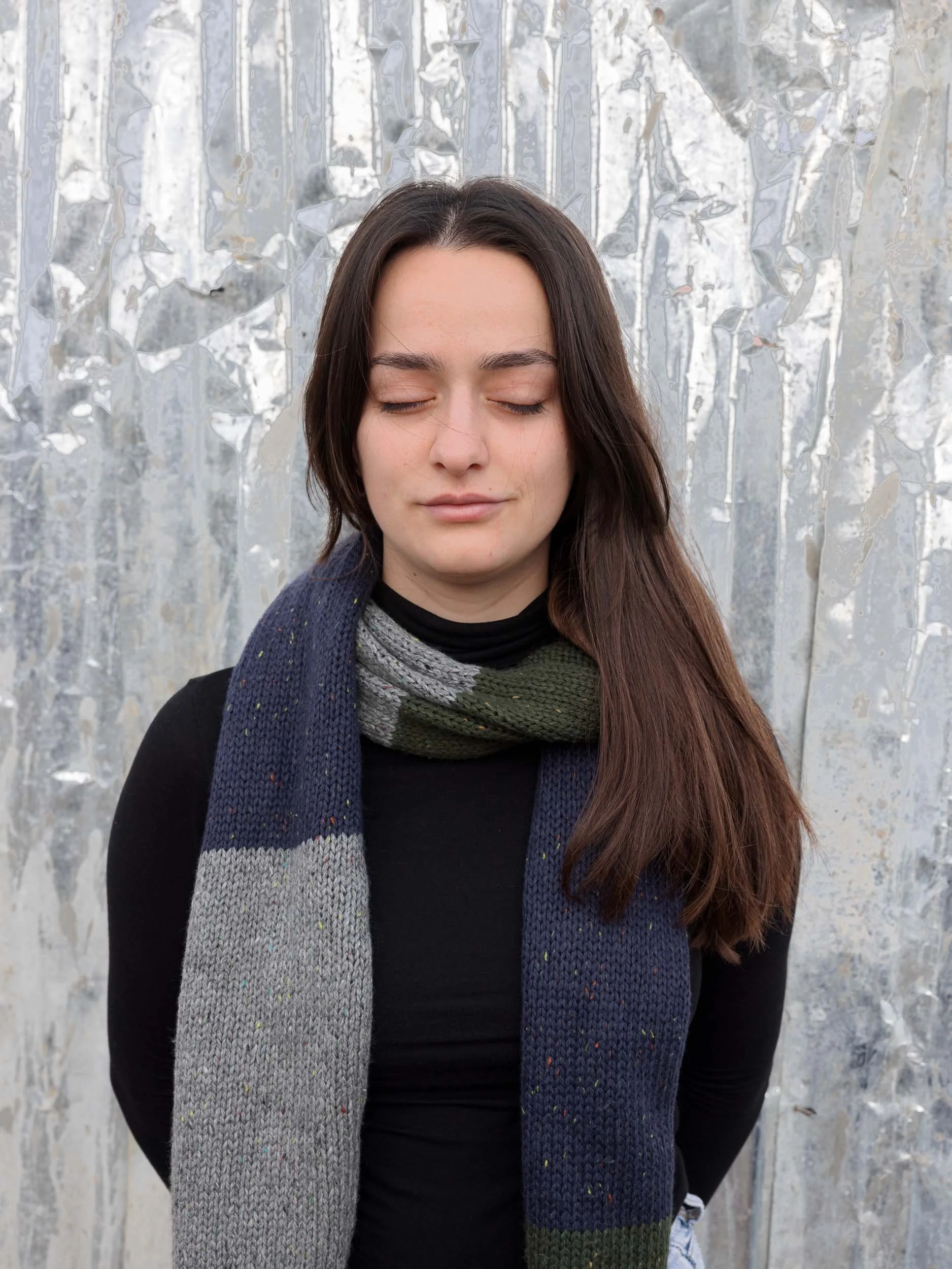
Sidorela, Portrait of Activist in 5 Maji Neighborhood, Tirana 2022
Tatì Space: What projects are you currently working on, or planning for the near future? Are there other cities or contexts you are interested in exploring next?
Finally, what advice would you give to young photographers who are interested in urban and architectural photography? How can they develop a critical voice rather than just a technical skillset?
Thomas Krempke: I want to publish the book ËNDËRR. For the past year, I have been working on completing the book, both in terms of photographs and text, and I hope to find a good editor. I am also planning a small project, which I hope to develop with a young musician, focused on the theme of perception of time.
In terms of urban themes, I would like to create a small project in my own city, approaching it with a new way of seeing, similar to the perspective I developed in Albania.
My advice for young photographers would be to look and to walk—and to use books and photobooks as a source of inspiration.
TatìSpace: Thank you very much for the interview, and I hope to see more of your work about Albania.
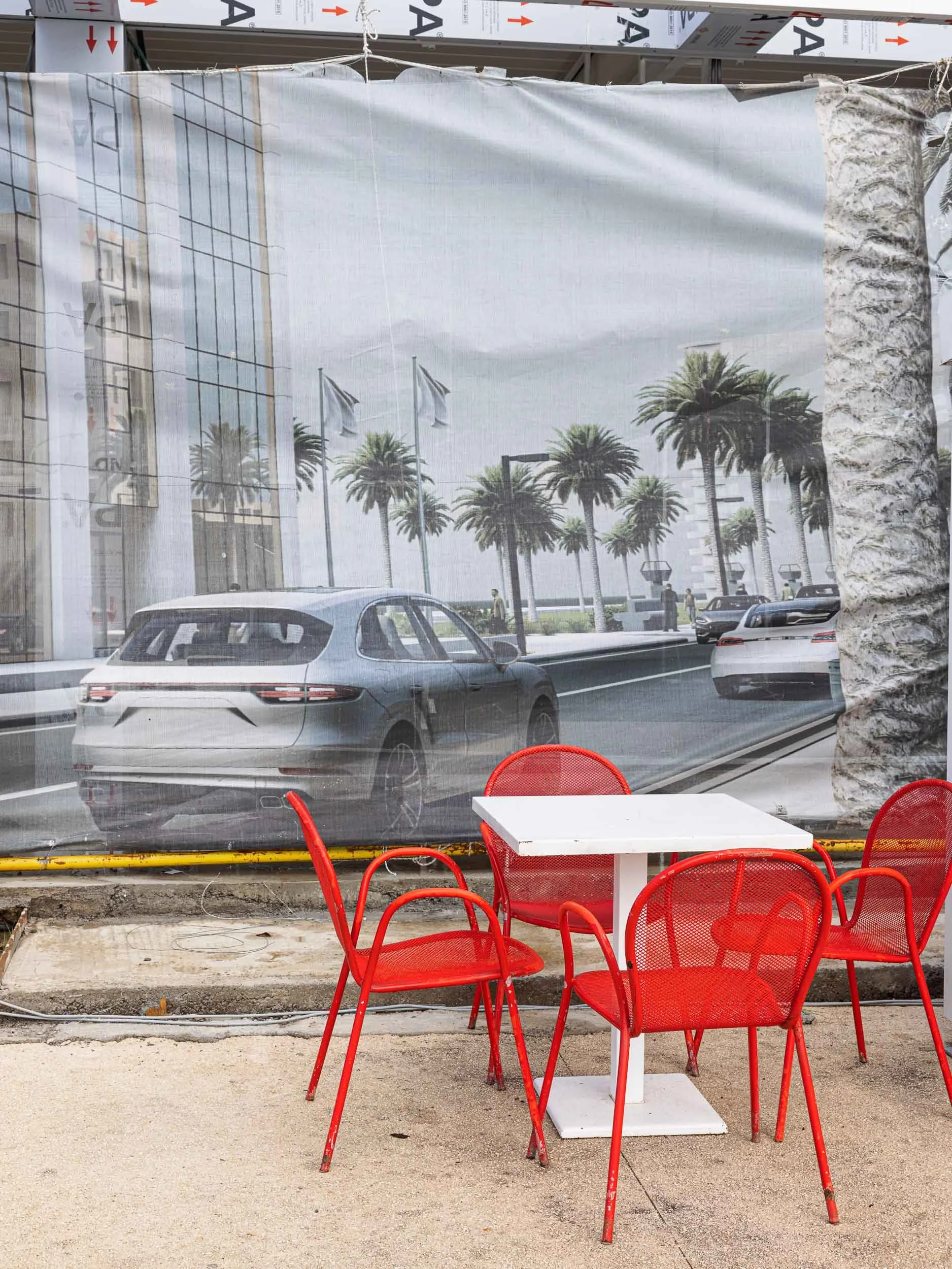
©Thomas Krempke, Durres Albania 2022
Exhibition ENDERR, at Grupi ATA in Kamza, Tirana from March 26- April 16, 2026

Leonard Qylafi
Leonard Qylafi (b. 1980) is an Albanian visual artist, whose practice explores several mediums such as photography, painting, video and music, where the theme of the City and its Architecture occupies a certain role. The Photography and Video Projects that reflect on the transformation of urban spaces are (real) ESTATE, Estate, Whispers & Shadows, Solo Show.
Leonard Qylafi (b. 1980) is an Albanian visual artist, whose practice explores several mediums such as photography, painting, video and music, where the theme of the City and its Architecture occupies a certain role. The Photography and Video Projects that reflect on the transformation of urban spaces are (real) ESTATE, Estate, Whispers & Shadows, Solo Show. Deeply linked with personal experience, Leonardi's artworks are a process of research and meditation between subjects and mediums. Since his graduation from the Academy of Fine Arts in Tirana, the Atelie of Painting 2003, Leonard Qylafi has been present in the local and international art scene. During the last years his works have been shown in several galleries and international events, such as: Centre de création contemporane, Olivier Debré, Tours-France (2021); Belvedere 21 Vienna, Austria (2019); NiMAC Cyprus (2018); National Gallery Tirana, Albania (2017); MuCEM, Marseilles, Izolyatsia, Kiev in (2016); The 55th October Salon, Belgrade (2014); Künstlerhaus Bethanien, Berlin and Kunst Raum Riehen Basel/Switzerland (2012); MODEM Centre for Modern and Contemporary Arts, Debrecen, Hungary (2011); TICAB-Tirana International Biennial of Contemporary Art, Bjcm- XIII Biennal of young artists from Europe and Mediterranean, Puglia, Italy and ISCP- New York /USA in (2009) among other places. His work is published internationally and is collected by; The Albanian National Gallery of Art, MuCEM- Musée des Civilisations de l'Europe et de la Méditerranée, Marseille; Contemporary Art museum Belvedere 21, Vienna, video collection and several private collections. In 2017, Leonard Qylafi represented Albania in the 57th edition of the Venice Biennale, with the multidisciplinary project "Occcurrence in the Present Tense" curated by Vanessa Joan Müller. I am very pleased that Leonardi accepted to be interviewed for Tatì Space and talk about his projects in regarding Architecture and Urban Photography.
Alketa Misja for Tatì Space: Hello Leonard. You are a visual artist who explores several mediums, among them Photography and Video. What is the place Photography occupy in your artistic practice? How did you become interested in Urban and Architecture Photography?
Leonard Qylafi: My interest in photography came when I was studying at the Academy of Arts, in the painting atelie. Until then I had an art school education, focusing on drawing and painting. Photography was new to me and took time to master technically and use as a medium for special projects. What I can say is that it has had a huge impact on my practice as an artist either directly or indirectly and remains present in my work. Mainly, special projects that I have realized in photography have always been solutions started from a conceptual approach. In the case of urban photography, it has naturally been part of projects that focuse on urban transformations.
Tatì Space: What is your approach, in respect to Architecture and Urban Photography? You have several projects about the new construction in a rapidly growing city like Tirana. What is the idea, the concept behind these works?
Leonard Qylafi: I have been dealing with urban photography mainly in function of the artistic projects that I have developed. Around 2007-2011, urban space has taken an important place in my projects. The (Real) Estate and Estate projects are based entirely on photography, even though Estate is a photo animation turned into a video. Other projects always with the same theme have been in the form of videos such as Private Show or Whispers&Shadows. In each of them, a special aspect of the relationship we have with the space we live in is addressed, and in particular the idea of change and memory in relation to what we call Polis or city, as a complex entity and an expression of the culture and worldview of human society.
Tatì Space: How do you see the artistic scene in Albania in relation to Urban Photography? (if you can share an opinion). The photo can provoke a thought or nurture a discussion about city's problems. In this sense, what advice can you give to young photographers who want to explore urban and architecture photography?
Leonard Qylafi: Looking at the artistic scene in a general view, I can say that unfortunately there is a total lack of spaces, structures that are necessary for the promotion and exposure of art as a whole and of course contemporary photography. This makes it difficult to recognize and introduce new artist-photographers. The other part that makes it even more difficult, in the case of photography in particular, is its massification as a practice with the development of technology. It would be necessary to create special structures with a focus on photography. Regarding urban and architectural photography, I can say that Tirana today is a very rich subject to explore. I would suggest young photographers to see it as a unique opportunity on which to build their research either in terms of the city as a subject or architecture in particular.
Tatì Space: Thank you Leonard, We wish you all the best for your artistic plans and projects.
Below we give a summary of Leonard Qylafi's works, with regard to Urban and Architecture Photography, focused on theme of City and construction developments.
(real) ESTATE


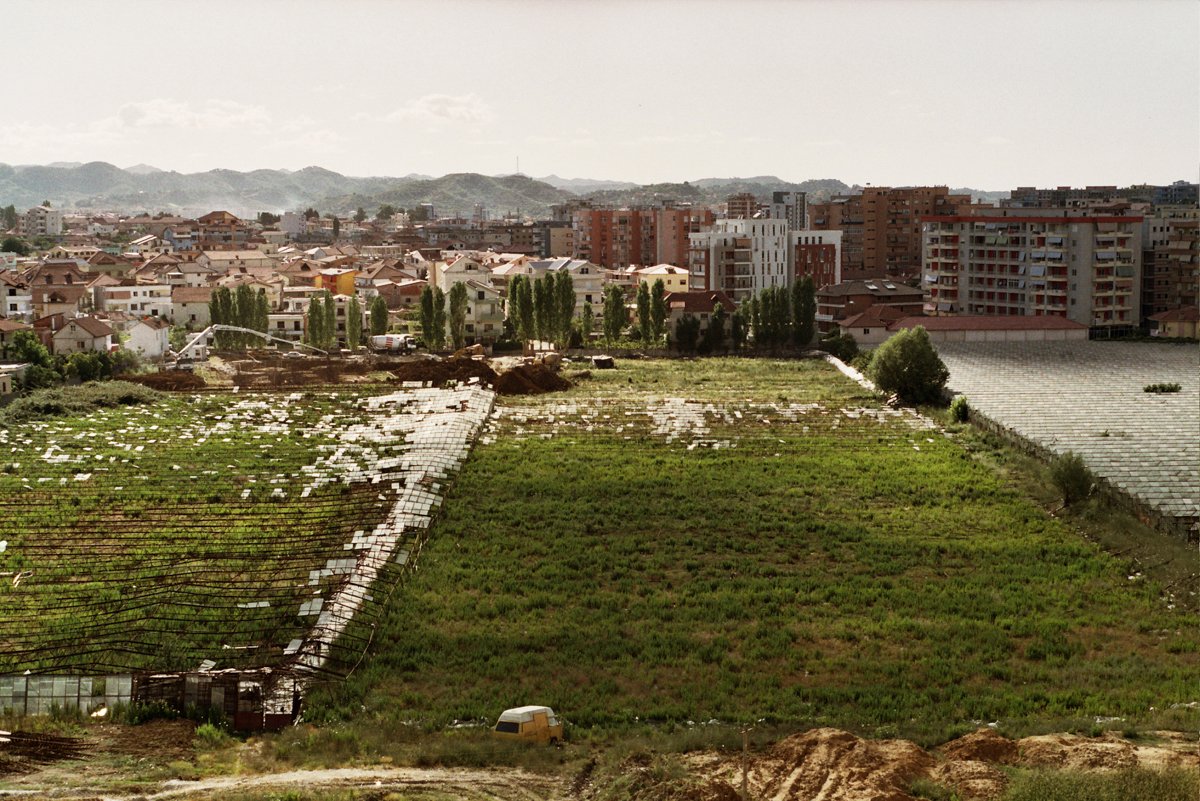
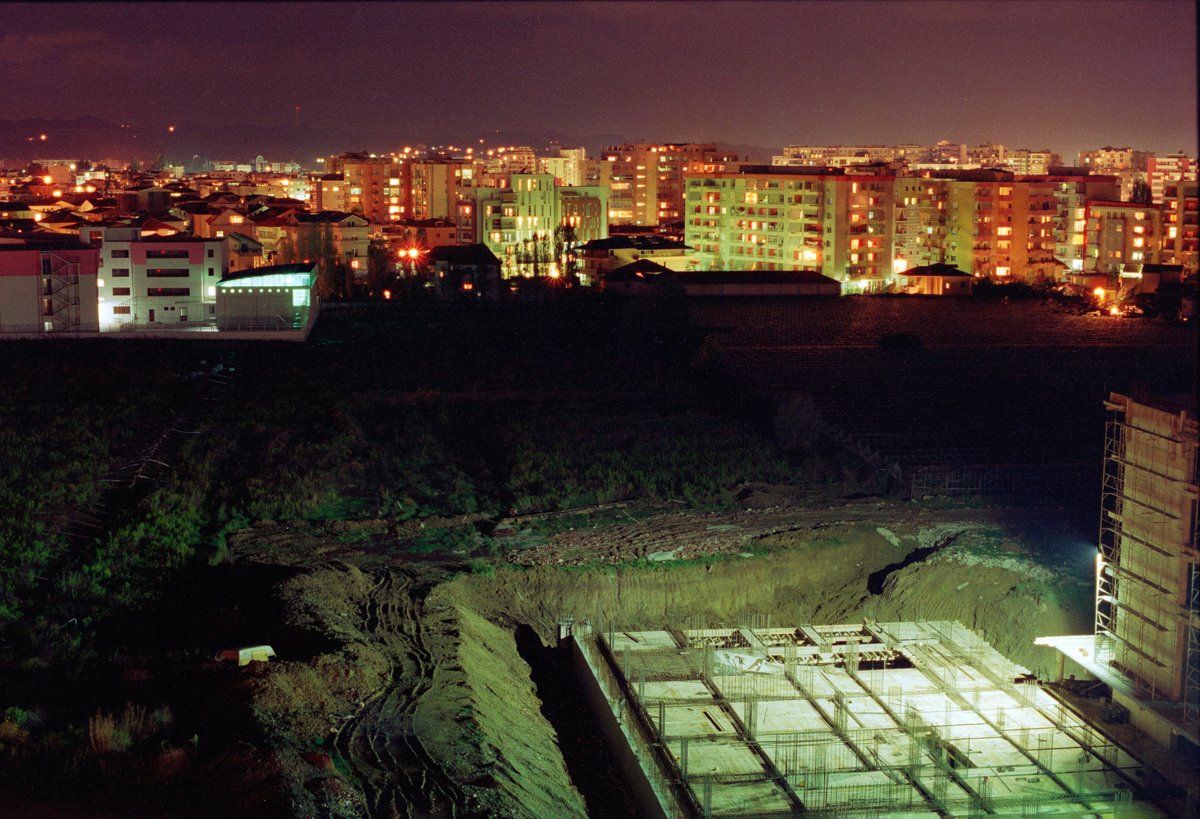
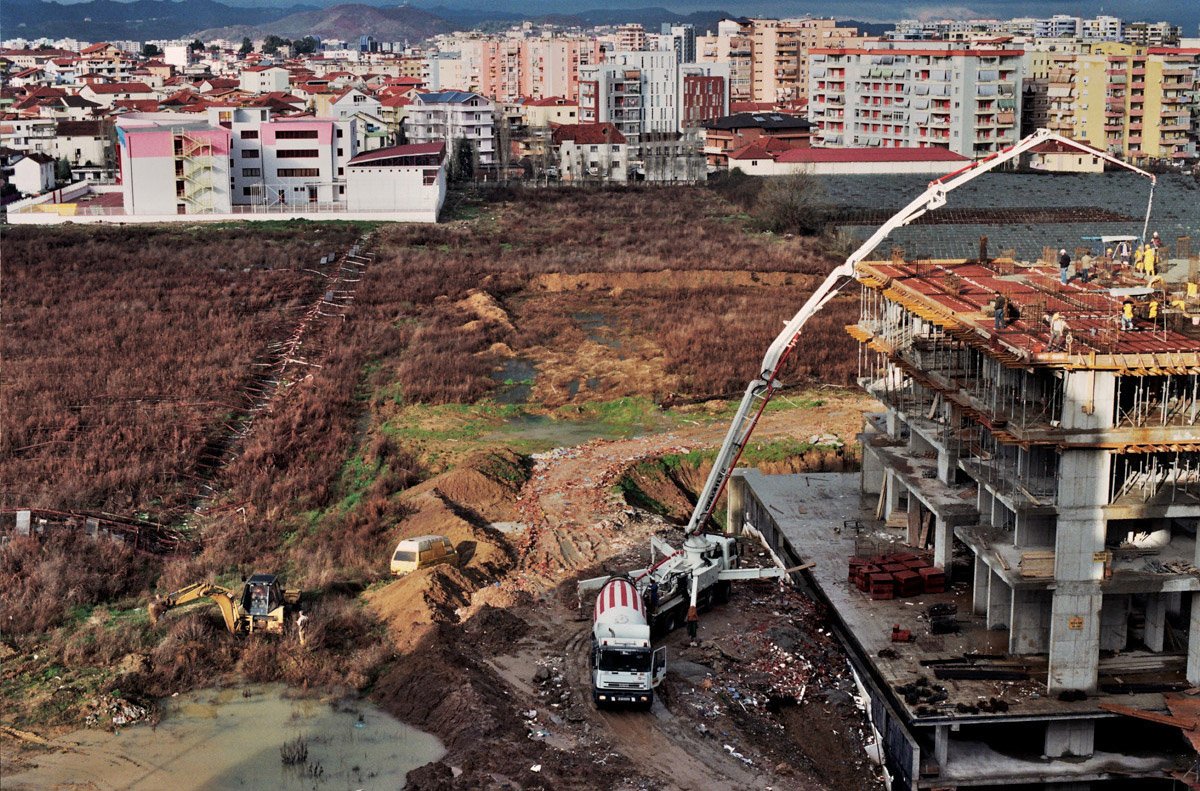
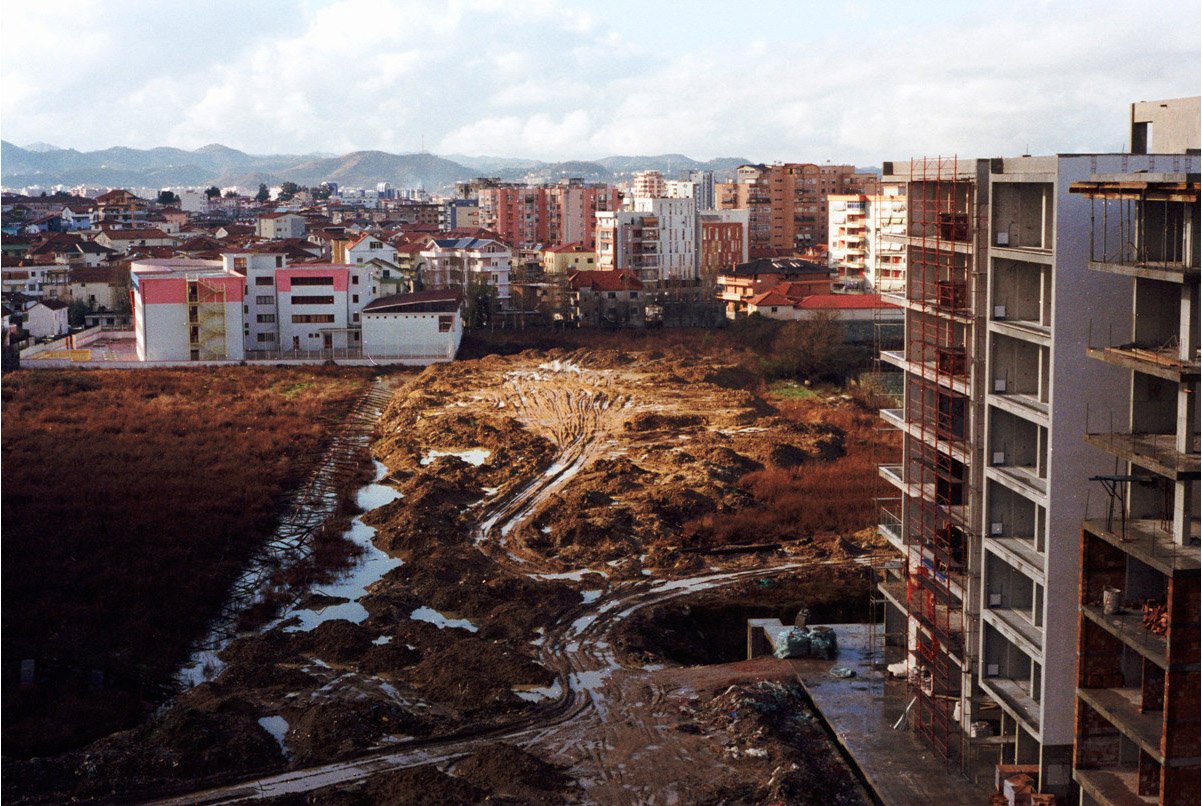
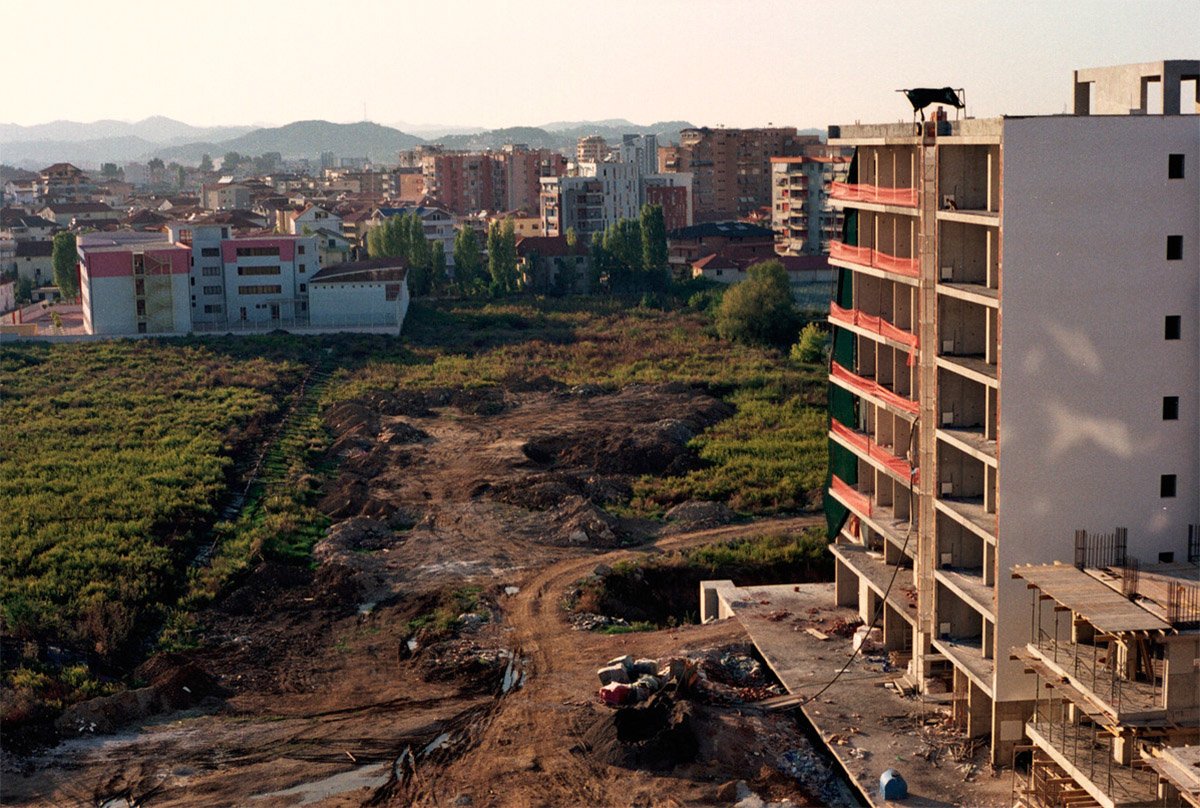
(real) ESTATE, courtesy of Leonard Qylafi
The series of photographs were developed within a three year period and together with the video works Estate and Whispers & Shadows reflect on the transformation of the urban space in Tirana. In this particular project that was the starting point of my research on this topic the documentary style of photography plays the role of the critical awarnes of how the space is transformed. How a different ecomomic and political system overlapes a previous one. The greenhouse use to exist in suburb of Tirana during the communist regime and now is in a middle of a new neighborhood . This masive transformation more than having a shocking effects rises the question of how much do we participate as people living in a city. Do we decide how this city should be shaped to fit our needs ? Unfortunately the people don't play any role but the spectator.
Whispers & Shadows / 2011 / Video installation / Standard Pal 4:3 aspect with sound / 5:24 min/sec

Fragment from the Video installation “Whispers & Shadows” / 2011 / Standard Pal 4:3 aspect with sound / 5:24 min/sec. courtesy of Leonard Qylafi
The ambiance of the site introduces the viewer with the happening; constructions machines excavating in the ground covered by the darkness of the night. Their loud noises give place to a female voice reading selected text by Aristotle’s Politics. The verses which speak about Polis and the sense of living together sound utopia in the today machine-like model of urban centre where the role of the public seems to get eclipsed somehow. The ideal of living together, sharing the goods and the space sounds like millenniums away indeed, once the noise of the machines is firmly back.
ESTATE / 2007 / Video installation / Full HD (no sound) / 8:58 min/sec
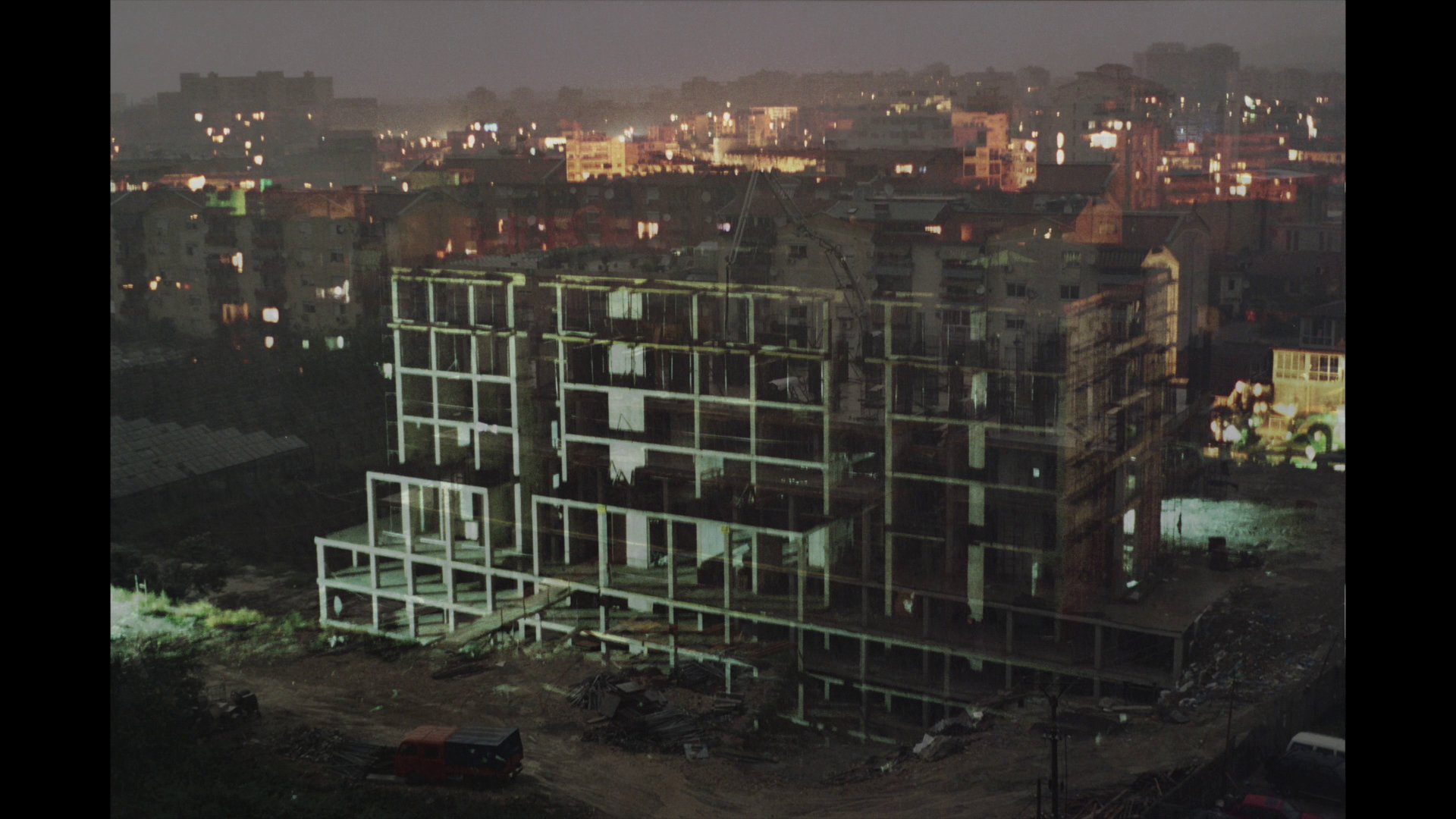
Fragment from the Video installation ESTATE / 2007 , Full HD (no sound) / 8:58 min/sec courtesy of Leonard Qylafi
The silent animation lump numerous photographs making this way notes of the construction process of a massive building. The perceptive aspect of the process becomes a key element of the work. The physical time of a two year process of construction is concentrated in nine minutes of animation but it does so by challenging the viewer attention with an apparently freeze look.
Private show / 2006 / Video installation / Standard Pal 4:3 / Music by Leonard Qylafi / 3:19 min/sec
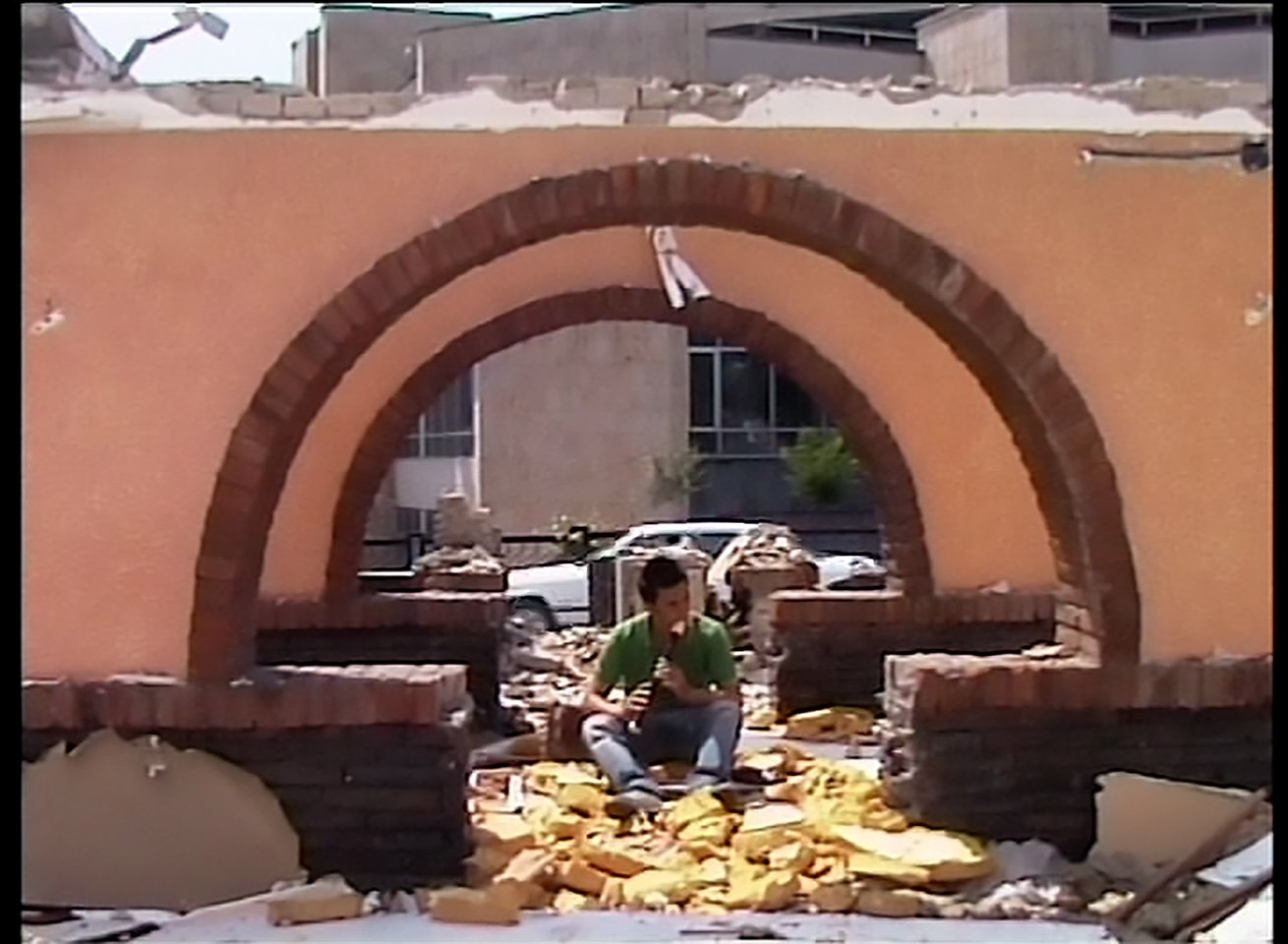
Fragment from the Video installation “ Private show”, 2006, Standard Pal 4:3 / Music by Leonard Qylafi / 3:19 min/sec. courtesy of Leonard Qylafi
The relations we have with places is very complex and somehow impossible to describe in words. In Tirana where I live is very usual to see buildings demolished for building new ones. This violent transformation impacts the life of people living in the city. When you see that a building that you know is demolished the kind of shock you experience can not be described. This was also the case with the building that becomes the stage of my performance. I go there and play a short music piece I have composed as a memoriam to the relation I use to have with that place
To see more about author’s work on his website: www.leonardqylafi.com