

Henri Cartier-Bresson
Henri Cartier-Bresson is a French photographer, one of the most influential figures of the 20th century. He is considered the pioneer of candid street photography, the father of modern photojournalism, who created a new practice and aesthetic in photography, making photojournalism accepted as an art form. His name is associated with the Leica 35mm film camera and the concept of "decisive moment".
Henri Cartier-Bresson
(France 1908-2003)

Portrait Henri Cartier-Bresson with his camera Leica M3, © Jane Bown, Paris 1957
Henri Cartier-Bresson is a French photographer, one of the most influential figures of the 20th century. He is considered the pioneer of candid street photography, the father of modern photojournalism, who created a new practice and aesthetic in photography, making photojournalism accepted as an art form. His name is associated with the Leica 35mm film camera and the concept of "decisive moment". Nowadays where we are surrounded by a sea of images, when we shoot digitally and download thousands of photographs in social media, the legacy of Henry Cartier-Bresson not only isn’t outdated, but radher it teaches us about the ethics and technique of photography. Henri Cartier-Bresson was considered “a responsible artist, responsible to his craft and to his society” (L.K)
He is the avant-garde artist, the young rebel, the wildlife hunter in Africa, the former prisoner in Nazi camps, the photojournalist of the main events after the World War II, the co-founder of Magnum photo agency, a figure who revolutionized the photographic image. And yet he remained a silent figure, preferring to stay anonymous and not to give interviews. He was the person who stood behind the camera waiting for the perfect moment to appair, who carefully craft the shot, and preferred to immerse in the environment he was going to photograph. In the student revolts in Paris in 1968, despite the turbulent events, witnesses say that Bresson shot at a rate of 4 photos per hour. As he says 'I'm not interested in photography, I am interested in people'. For nearly half a century he photographed the major events of 20th century; the Spanish Civil War, the end of World War II, Gandhi a few minutes before his assassination in 1948, the first days of the communist regime in China in 1949, Indonesia emerging from colonialism, etc. He was the first Western photographer to be allowed to photograph in Soviet Union during the Cold War. Bresson's merit is that he created beautiful and poetic images, which portray the importance of place and time. As he says: "My goal was to express the essence of a phenomenon in a single image" which synthesizes his idea of decisive moment

© Henri Cartier-Bresson, Heeres, France 1932

© Henri Cartier-Bresson, Behind the Gare St.Lazare, Paris France, 1932

© Henri Cartier-Bresson, “Inside the sliding doors of the bullfight arena” Valencia Spain, 1933
Beginnings in Photography
Henri Cartier-Bresson started photography in 1931, when he bought the new Leica 35mm film camera, that accompanied him for nearly half a century. He belongs to the first generation of European photographers who explored the creative potential of small handheld camera. For Bresson - "Photography is an instant drawing, and the secret is to forget you are carrying a camera." His initial desire was to become a painter, (after refusing the family's request to continue the tradition of the family textile business). The main influences in his visual formation, which were expressed later in his photography, were the formal geometry of Renaissance painting and the serendipity of Surrealism, together with a strong adventure spirit. Influenced by the school of the cubist painter Lohte, Henry developed an interest in classical painting with strict mathematical proportions. He later said that everything he knew about photography he had learned from Lohte. For Bresson, the search for geometric order in the composition in viewfinder was an immense joy and a main criteria in his photographic process. He never croped the photos but insisted that they be presented as he had shot them, even with the black frame of the negative development. "You shoot properly while it's there", thus reinforcing the idea that the photo should be shot properly in the moment of its composition in the viewfinder. In this way Henri Cartier-Bresson helped the credibility of the photojournalism, untouched by editing.

© Henri Cartier-Bresson, “Two children in the narrow sunlight streets” Seville Spain, 1933

© Henri Cartier-Bresson, A group of people in front of a wall filled with small windows, Madrid Spain, 1933
The second influence in Bresson's photography comes from a less rational movement such as Surrealism, with which he came in contact in his youth during meetings with the leading figures of the movement at "Cafe de la Place Blanche" in Paris. From Surrealism he adopted the philosophy of spontaneous, chance and intuition. " For me the camera is a sketch book, an instrument of intuition and spontaneity, instant master, which in visual terms, asks and decides simultaneously" For Henri Cartier-Bresson, the Leica 35mm film camera with 50 mm lens, was the most appropriate instrument to express his artistic creativity. While Bresson was looking for the spontaneous, his compositions are not the product of serendipity, but he carefully chooses the stage and wait until all the elements appear in the viewfinder, so to fix in the film the decisive moment.

@ Henri Cartier-Bresson, “A group of children play amongst rubble” Seville Spain, 1933

© Henri Cartier-Bresson, “Sunday on the banks of River Seine” France 1938
Although his photographs reflect an event or historical moment, they are independent artistic entities. Seeking beauty in ordinary things, he associated art with photojournalism. His first photographs belong to the period 1932-1935 during his travels to Italy, Spain, Morocco, Mexico, which were presented in several photographic exhibitions. The photographs of this period are considered to be the best of Bresson and the history of modern photography inspired by Surrealism.

© Henri Cartier-Bresson, Coronation of King George VI, London England, 12 May 1937.
Bresson in cinematography
During his stay in New York in 1935, Bresson met Paul Strand who encouraged him to pursue cinematography. Between 1936 and 1939 he worked as an assistant of French director Jean Renoir in the production of Une Partie de Campagne (A Day in the Country) and La Règle du Jeu (The Rules of the Game). In 1937 Bresson produced the first documentary on medical aid in the Spanish Civil War entitled Return to Life. Although Bresson did not belong to any political party, his anti-fascist orientation led him to work for the left-wing newspaper Ce Soir where he met other photojournalists with similar interests, such as Robert Capa and David "Chim" Seymour, with whom he founded after war the Magnum photo agency. With the start of World War II in 1939, Bresson joined the Army unit for film and photography. In 1940 he was captured by the Germans and imprisoned in forced labor camps. After two unsuccessful escape attempts, he managed to escape a third time, after which time he worked illegally. After the war, Bresson returned to cinematography with the direction of the film La Retour, on the return of war displaced persons. Bresson returns to cinematography in the late ’60s with Impressions of California (1969) and Southern Exposures (1971). As he states, Bresson quit making films because he was not attracted to the direction of actors and the lack of spontaneity. But from the cinematography he learned the narrative and the expressive moment. Bresson is credited with influencing the development of the cinema verite genre.

© Henri Cartier-Bresson, “Downtown Manhattan NewYork” USA 1947
Bresson in Magnum
After Bresson's exhibition at MOMA New York in 1946 and his trip to America which concludes with a photo book, Bresson undertakes to pursue the profession of photojournalist following the advice of Robert Capas, who understood the importance of this profession in post-war society. Together with Robert Capa, David Seymour, George Rodger, he founded in 1947 the first cooperative photography agency Magnum. The organization provided the newspapers and magazines the coverage of major events by the most talented photojournalists, preserving the author rights and freedom of choice. Under the aegis of Magnum, Bresson photographed major events in India, China, Indonesia, Egypt. These photographs were published in the form of several books between 1952 and 1956. The best known of these is the one published in 1952 entitled "Images à la sauvette", translated into English "The decisive moment", which refers to Bresson's main idea on photography – “the elusive instant when, with brilliant clarity, the appearance of the subject reveals in its essence the significance of the event of which it is a part, the most telling organization of forms”.

© Henri Cartier-Bresson, “Refugees exercising in the camp to drive away lethargy and despair” Punjab India, 1947
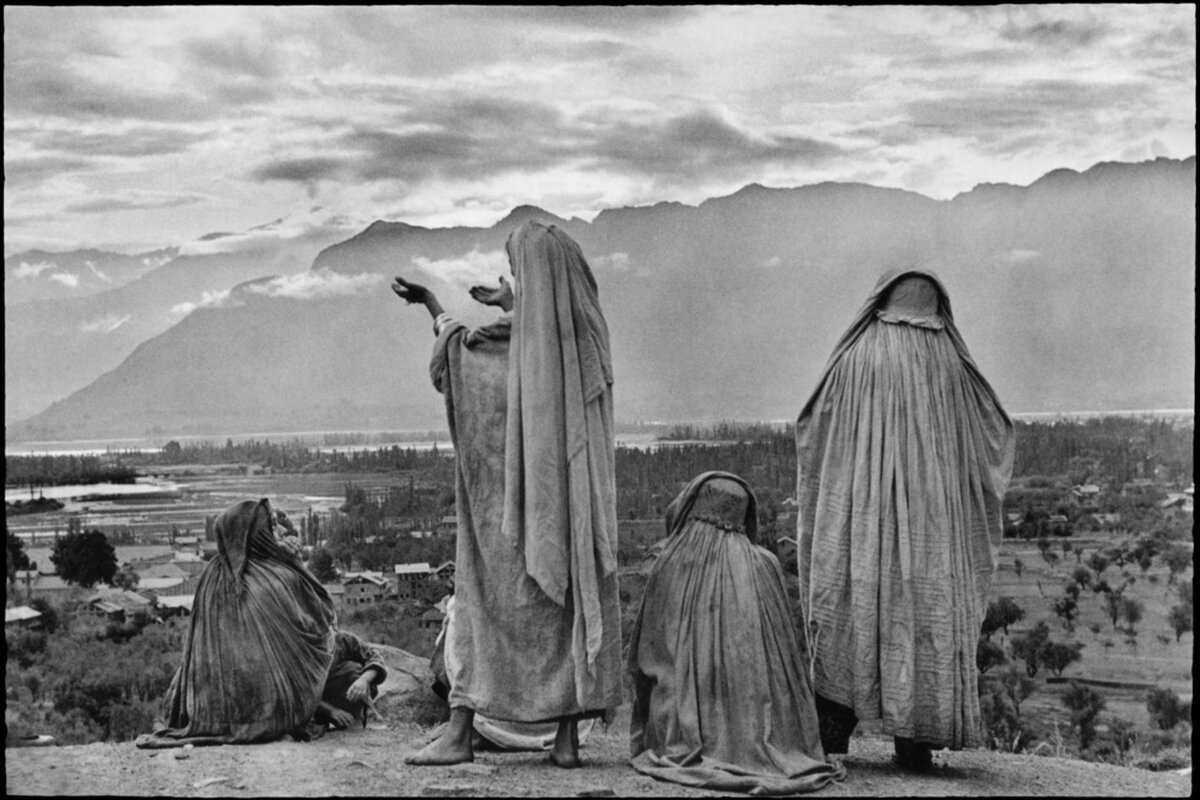
© Henri Cartier-Bresson, “Muslim women praying toward the sun rising behind the Himalayas” Kashmir India, 1948

© Henri Cartier-Bresson, Crowds reaching into the train carrying Gandhi’s ashes hoping to pay the last tribute to their leader Delhi India 1948
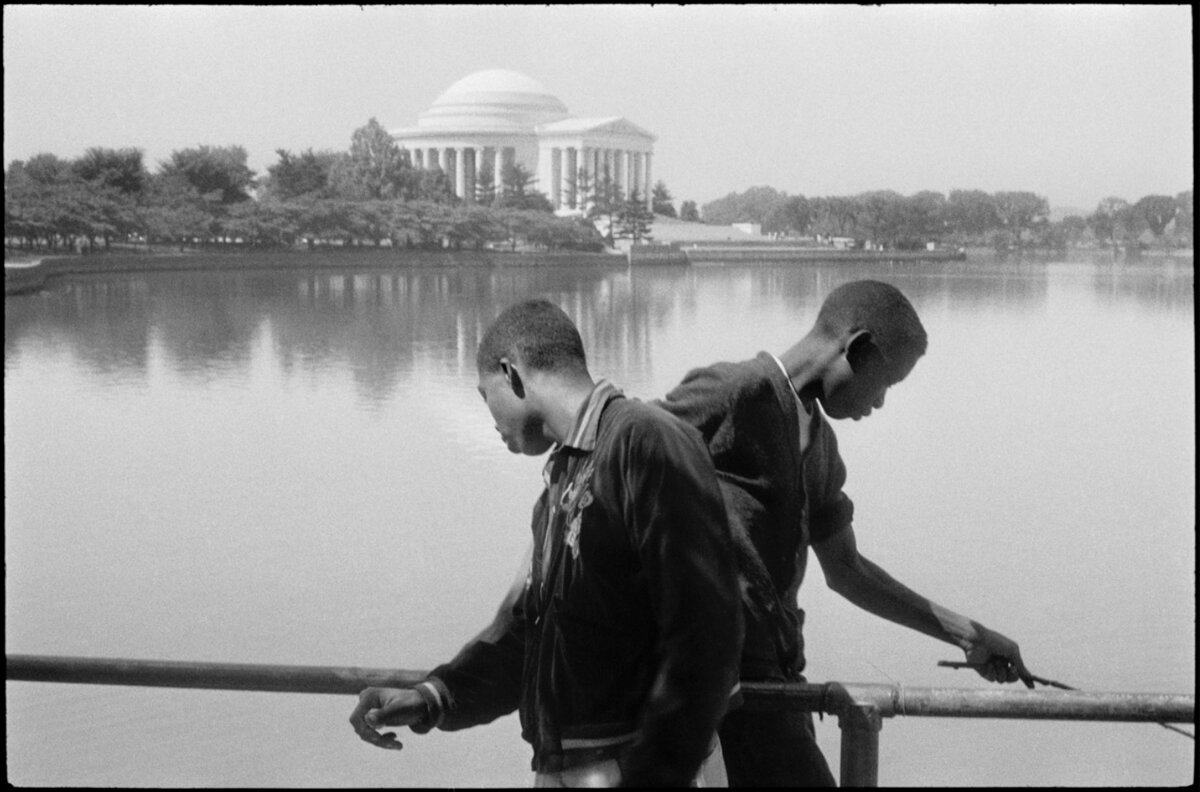
© Henri Cartier-Bresson, Washington DC, USA, 1957.

© Henri Cartier-Bresson, “Sale of gold in the Last Days of Koumintang, Shangai” China 1949

© Henri Cartier-Bresson, “Elementary School, Moscow USSR” 1954
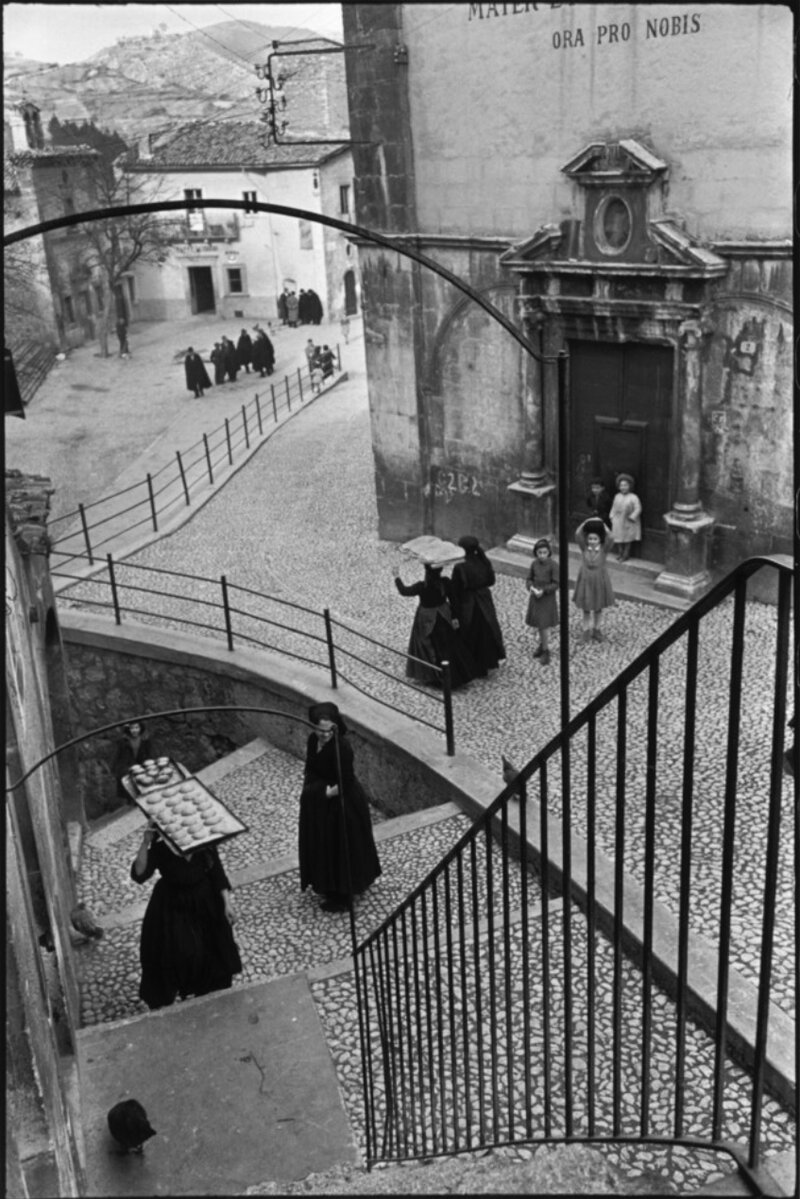
© Henri Cartier-Bresson, Scanno Abruzzo, Italy 1951

© Henri Cartier-Bresson, Rue Mouffetard, Paris 1954
Between 1963-1965 Bresson photographed in Cuba, Mexico, India. His later books are France (1971), The Face of Asia (1972), About Russia (1974). With his nomadic spirit he witnessed after World War II the major events as the transition of powers. He photographed ordinary people with the same importance that he photographed famous figures of art and politics.

© Henri Cartier-Bresson, Cyclades Greece 1961

© Henri Cartier-Bresson, Berlin 1963

© Henri Cartier-Bresson, Berlin Wall, 1963

© Henri Cartier-Bresson, Prizren 1965
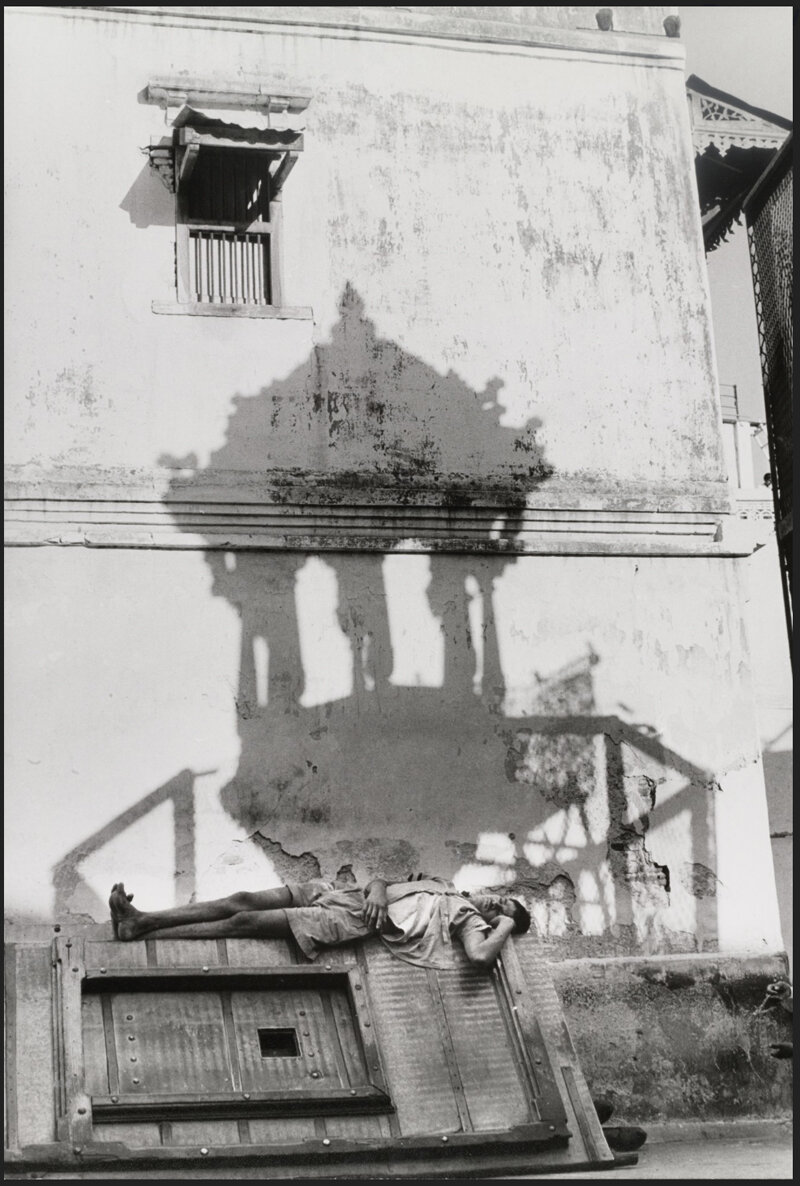
© Henri Cartier-Bresson. Ahmadabad India, 1966

© Henri Cartier-Bresson, “Funeral Ritual, Tokyo Japan” 1965

© Henri Cartier-Bresson, Brie France, 1968

© Henri Cartier-Bresson, “Simiane la Rotonde” France 1969
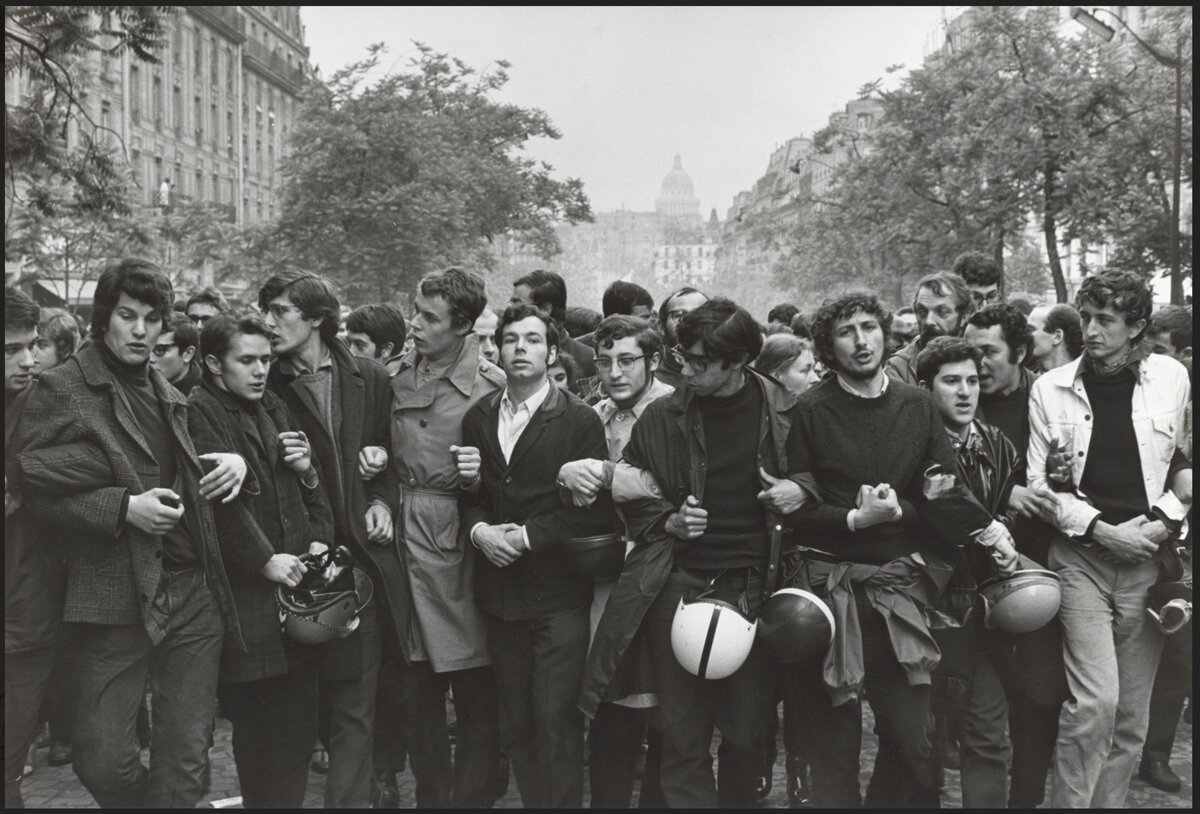
© Henri Cartier-Bresson, Student Demostration, Paris, June 1968.
In the early ‘70s, Bresson left photography and dedicated himself to painting. In 2003, Bresson co-founded the Henri Cartier-Bresson Foundation with his wife Martin Franck, a Magnum photographer, and their daughter. The Bresson negatives are owned by the Foundation and agency Magnum. He left a legacy of nearly half a million negatives, shot over a period of 70 years.
Links:
Magnum Agency
https://www.magnumphotos.com/photographer/henri-cartier-bresson/
Foundation Henri Cartier-Bresson
https://www.henricartierbresson.org/en/hcb/
Selected Books by Henri Cartier-Bresson


Photography Exhibition MY CITY 2020
Online Photography Exhibition MY CITY 2020
Tatì Space presents the first Online Photo Exhibition, with the theme MY CITY. We are pleased that to our open invitation have been answered many authors, of different professions, nationalities and ages, photographers, architects, urban planners, students, writers, artists from Albania, Kosovo, USA, Spain, Italy, etc. The CITY, this complex and multidimensional organism, offers different ways of interpretation. For some authors, it is the city of contemporary architecture, compositions, colors and pleasing aesthetics. For some others, it is the city where modernity coexists in harmony with the long tradition of construction. On the contrary, for local architects and urban planners, this desired harmony does not exist in the Albanian urban scape, but the new "screams, violates, disdain". For some authors, the city is a place of melancholy and meditation. Some of the participating photos were taken during Covid19, that put the professionals and artists in new challenges and questions. We hope that the viewers will enjoy the photographs of the exhibition, and find in them pieces of their own city. We thank all the participating photographers, and wish to meet them again at the upcoming events of TatìSpace.
Author: Sokol Mitrojorgji
Title: “Contact”
Place: Tirana, Albania
Description: Visual focal points in the urban environment that create diverse experiences of the built environment.
© Sokol Mitrojorgji “Contact”
Author: Sabina Darova
Title: “Hand in hand”
Place: Asti, Italy
Description: I have lived for 26 years in Italy, in the city of Asti, where tradition goes hand in hand with the new. The city preserves the Roman walls, alleys and buildings from the XII century, as new. He cares for and protects them with much love. This is the message I want to convey in this exhibition.
© SabinaDarova “Të Kapur Për Dore”
Author: Rozafa Shpuza
Title: “Water Solitude”
Place: Shkodra Lake, Albania
Description: During the winter Shkodra was flooded by heavy rains. The photo was shot in Shiroka; a table and a lonely chair, immersed in the waters of the lake, as if to remind us that we are powerless in the face of the whims of nature.
© Rozafa Shpuza “Water Solitude”
Author: Dardan Vukaj
Title: “The Stage”
Place: National Theater, Tirana, Albania
Description: The photo was taken during the demolition of the National Theater Building. The destruction started on the night of May 17, the manifestation of powerlessness that many times citizens fail to defend their own city.
© Dardan Vukaj “The Stage”
Author: Alketa Misja
Title “In front of Pyramid”
Place: Tirana, Albania
Alketa Misja is an architect urban planner and photographer from Albania. She uses Photography as a tool to investigate different forms and outcomes of urban transformations.
website: www.alketamisja.com , Facebook, Instagram, Vimeo

© Alketa Misja “In front of Pyramid”
Authore: Doriana Musaj
Title: “Overlapping city”
Place: Tirana, Albania
Description: Residents and buildings in Tirana, in conflict between them, for the free urban space, that is running out.
© Dorina Musaj “Overlapping City”
Author: Reald Keta
Title: “Magic City”
Place: Tirana, near ETC, Albania
Description: In the photo is shown the former parking lot near the ETC, during a heavy rain flood. The image is upside down.
© Reald Keta “Magic City”
Author: Evis Cerga
Title 1: “There are flowers even in bunker”
Title 2: “Kur hiqen Maskat”
Place: Tirana, Albania
Evis Cerga is a translator, author of short stories book "Friendship Road". Evis uses photography as inspiration for her stories. She is a blogger at Shqiptarja.com
© Evis Cerga “There are flowers even in bunker”
© Evis Cerga “Kur Hiqen Maskat”
Author: Milicent Fambrough
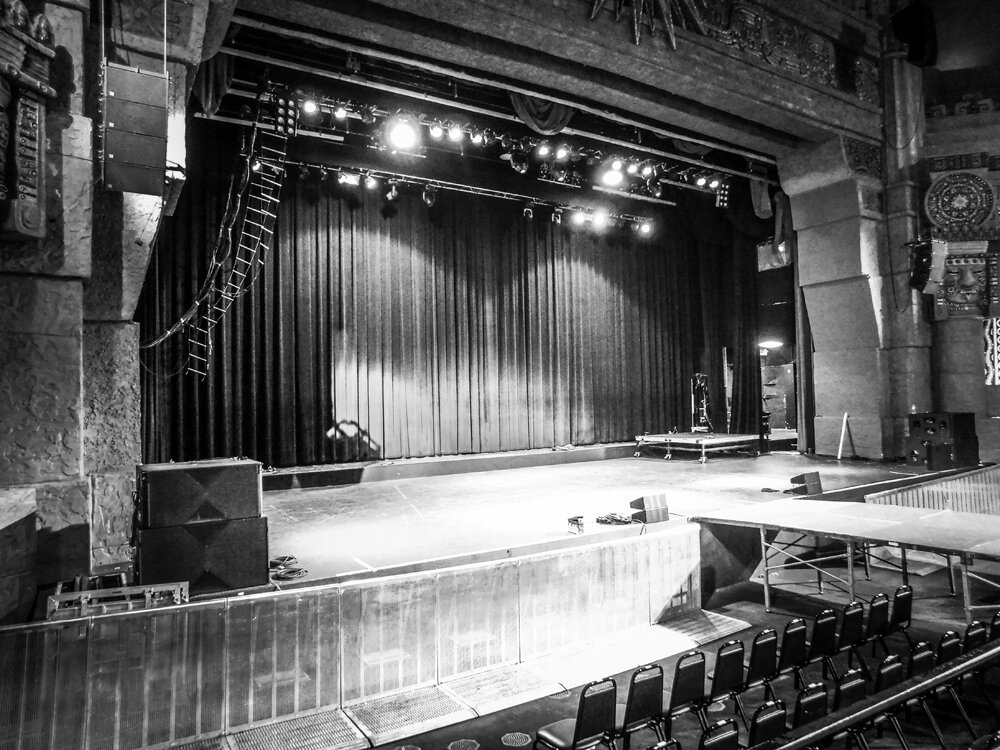
Title 1: “Aztec Theatre”
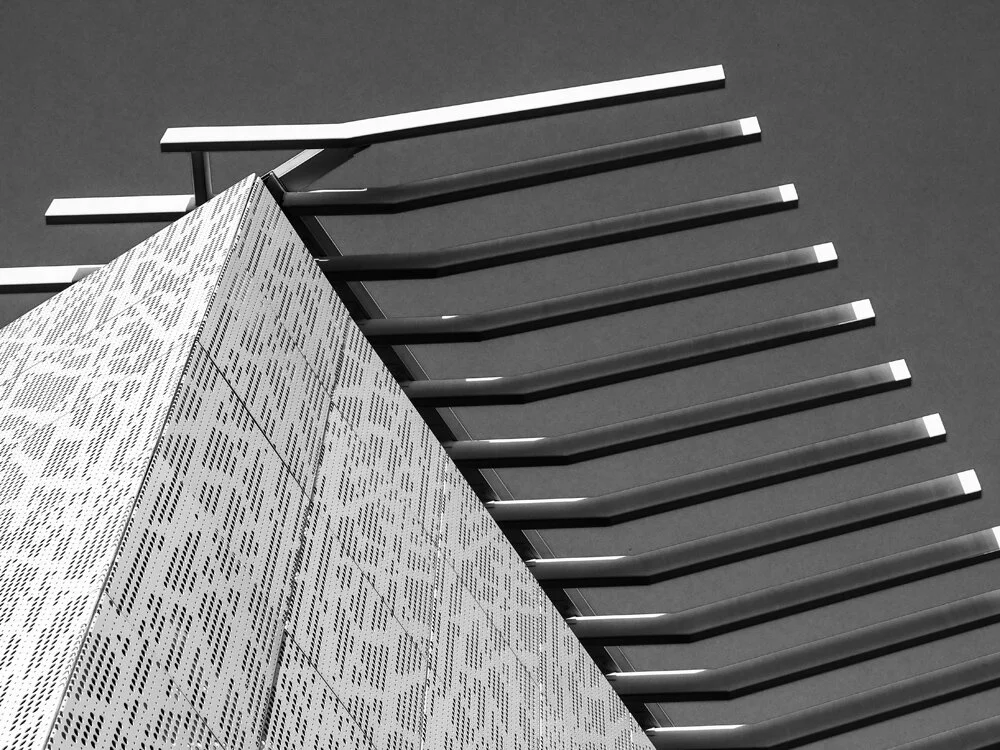
Title 2: “Convention center”
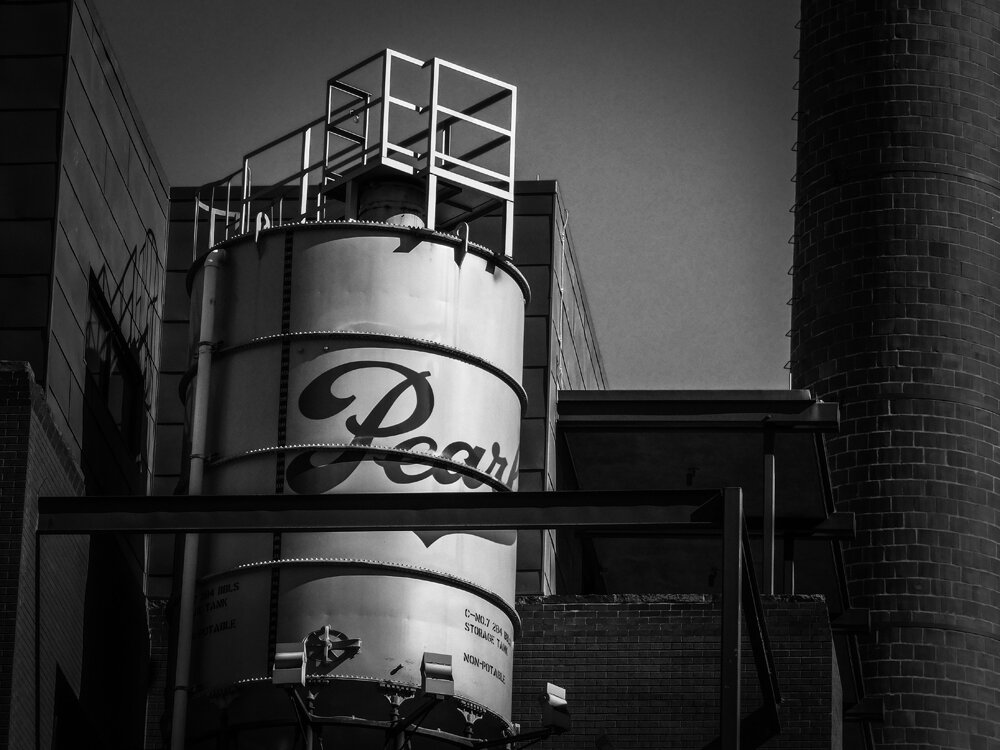
Title 3: “Pearl Brewery”
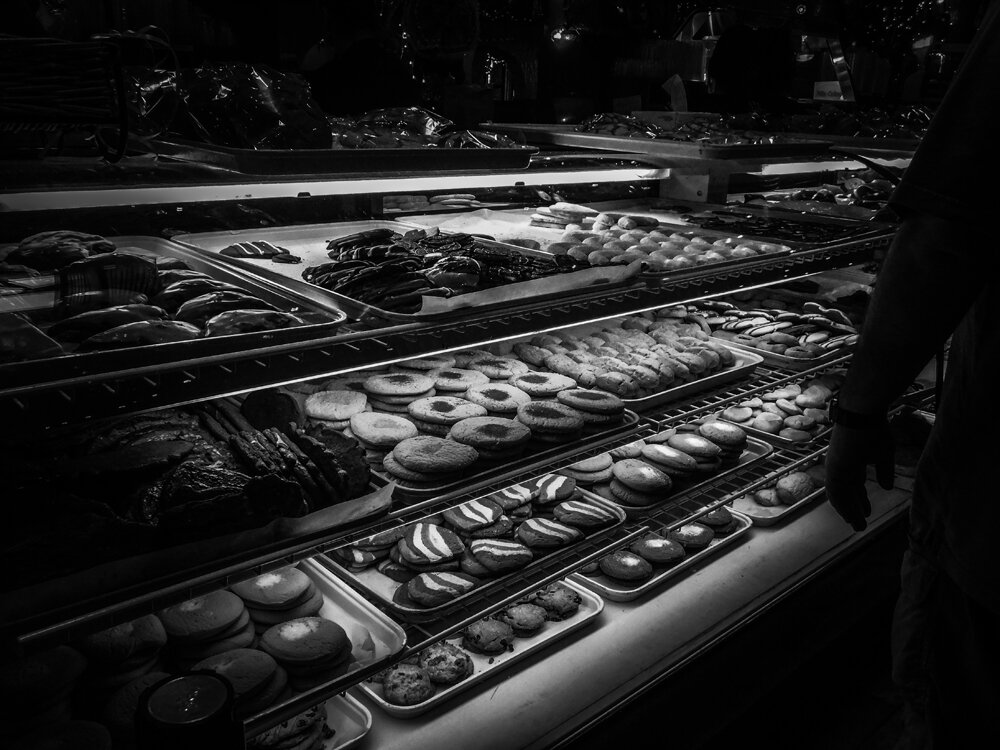
Titlei 4: “The Bakery”
Place: San Antonio Texas, USA
Description: I am a contemporary artist and writer from San Antonio Texas. These are all popular landmarks in my hometown San Antonio. We are friendly people. We talk to neighbors and help others in need. I love my city.
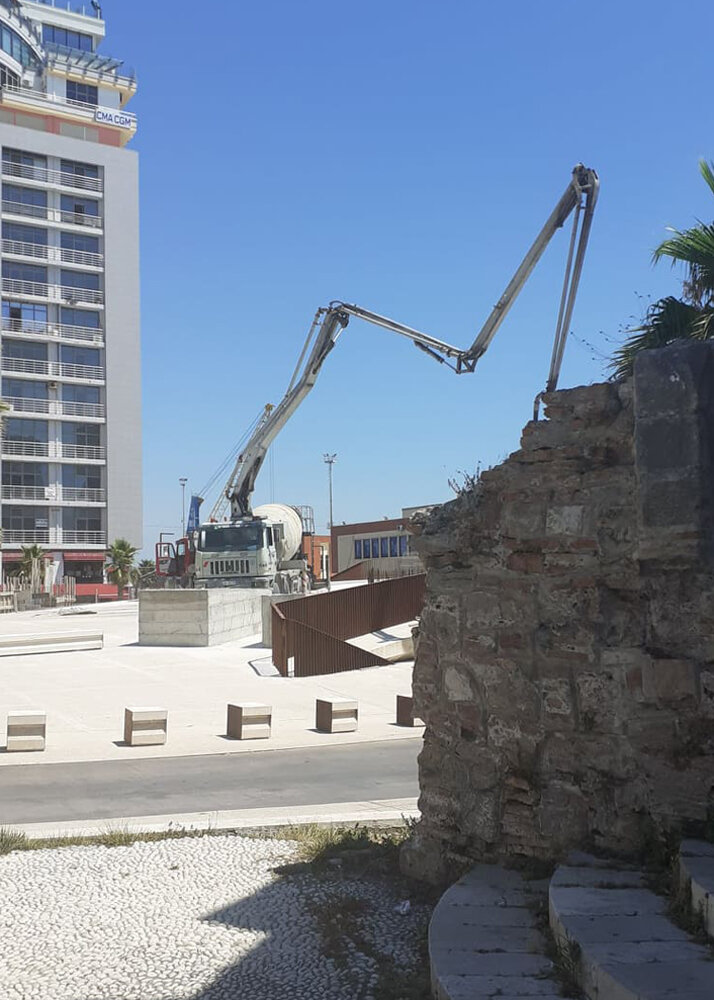
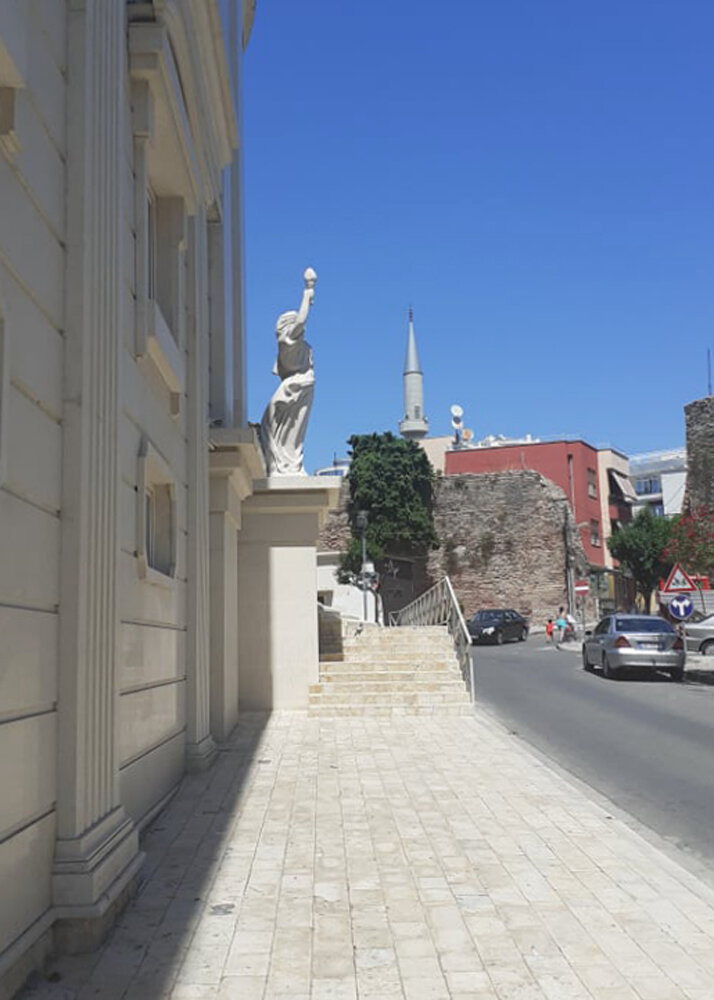
Author: Loreta Çapeli
Title 1: “2000 Years of Urban Stratification”
Title 2: “Threat”
Title 3: “Competition”
Place: Durres, Albania
Description: The City reflects urban stratification, but often the new screams, violates, disdain.
Loreta Çapeli is an architect, lecturer in the History of Architecture, at the Faculty of Architecture and Urbanism of the Polytechnic University, Tirana.

© Albert Cmeta “Evening over the City”
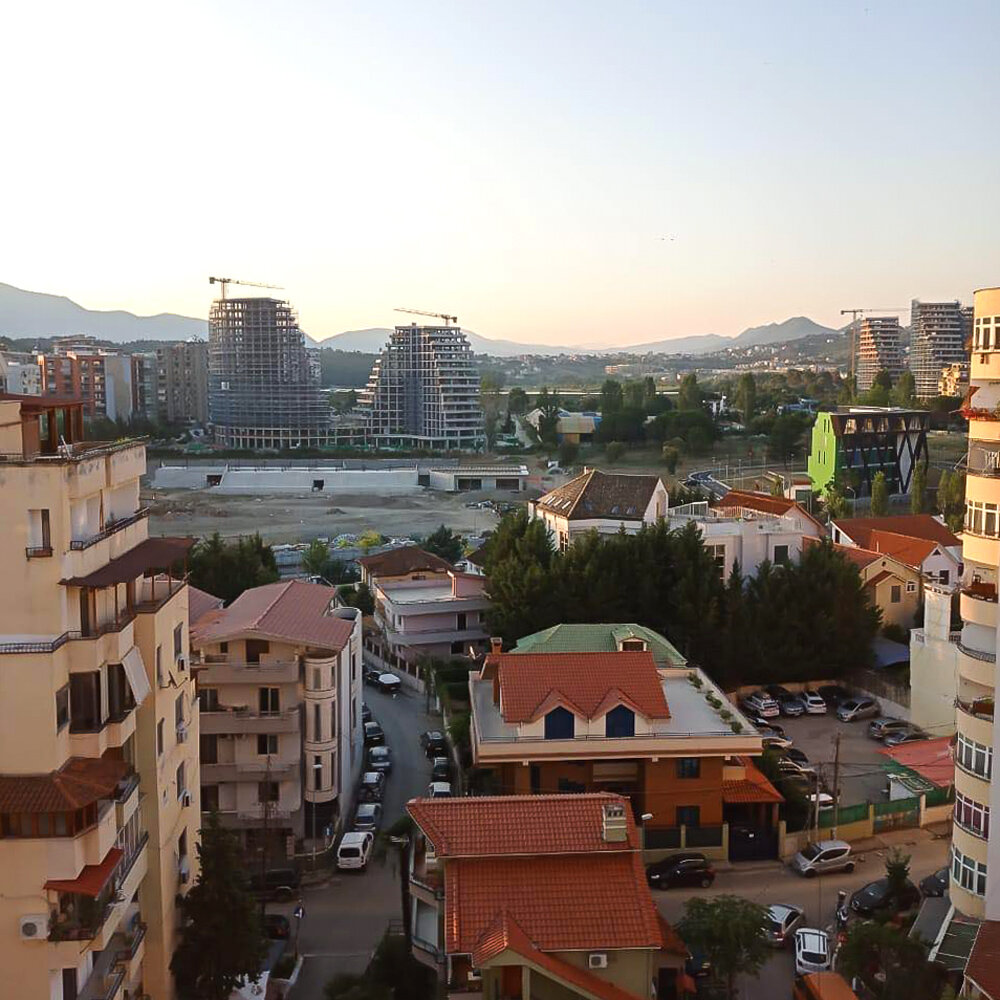
Author: Miranda Haxhi
Title: “Day and Night”
Place Tirana, Albania
Description: The photos were taken from the window of my house during carantine days. The contrast between uncontrolled cement, and the beautiful natural landscape that surrounds Tirana, remains the challenge of Tirana's urban development.
Miranda is an architect urban planner, she has worked at the National Institute of Urban Planning with City and Coastal Development plans.

Author: Vllasi Foto
Title: "The opposite summer"
Place: Independence Square, Vlora, Albania
Description: It was supposed to be a holiday, but the weather did not agree…luckily I had the camera with me.
© Vllasi Foto “The Opposite Summer”
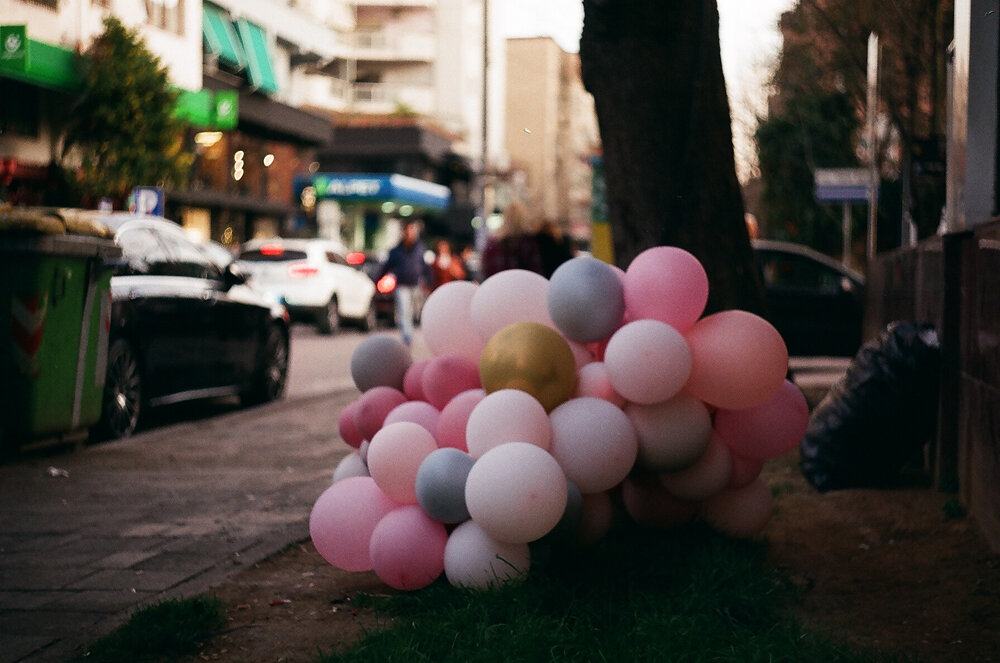
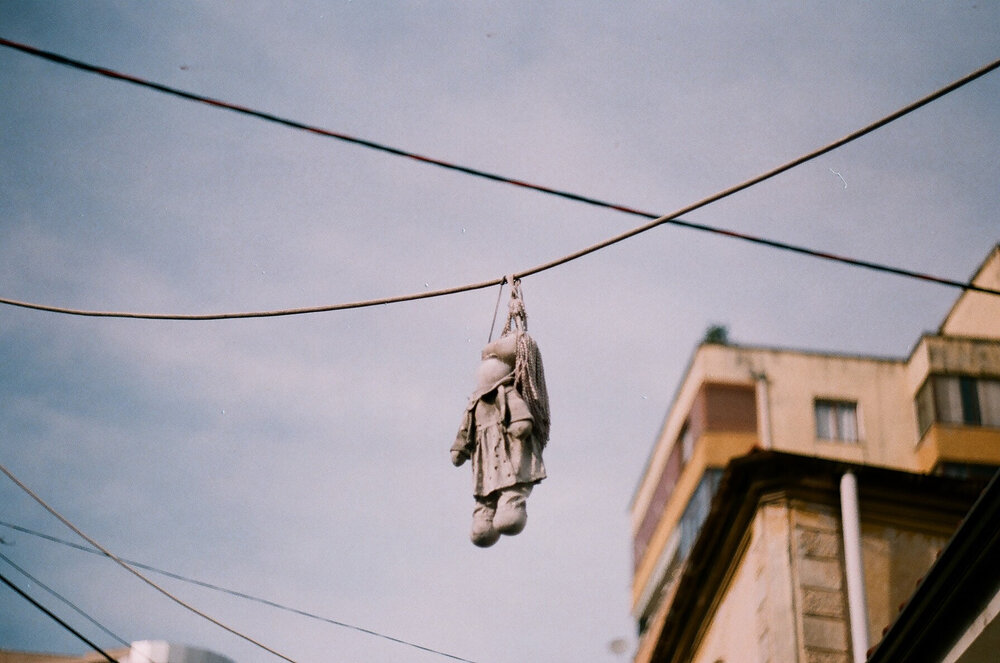
Author: Fitim Haziri
Title: "Near"
Place: Prishtina, Kosovo
Description: In a restless city , in the twilight, the eyes have the opportunity to see the sunlight and its colors in the windows of its buildings.
© Fitim Haziri “Near”
Author: Catalina Aranguren
Title: “With my dog”
Place: Jersey City, USA
Description: This photograph was taken in April, after the Coronavirus made everyone scamper into their homes. No one was around, the streets were empty, and it would appear even more so with the doubling of the reflection. I am wearing a mask and walking my dog around the block.
© Catalina Aranguren “With my dog”
Author: Josep Sánchez
Title: “Tram Glories”
Place: Glories Square /Els Encants Market, Barcelona, Spain
Description: I take the snapshot near the Agbar Tower, just one step away from the Tram.
© Josep Sanchez “Tram Glories”
Author: Andi Papastefani
Title: “Yellow Corner”
Place: Street of Kavaja, Tirana, Albania
Facebook Sketches of the Cities - Andi Papastefani
© Andi Papastefani “Yellow Corner”
Author: Glendi Kurtiqi
Title: “Blazing Sunset”
Place: Tirana, Albania
© Glendi Kurtiqi “Blazing Sunset”
“Thank you for your participation in the Online Photography Exhibition MY CITY 2020 ”

Walker Evans
Walker Evans is the American photographer who has influenced more than any other the modern documentary photography of the 20th century. With his anti-conformist nature, he rejected the prevailing pictorialist view of artistic photography, supported by the main proponent Alfred Stieglitz, and constructed a new artistic strategy based on the description of common facts in a detailed and poetic manner. Evans has been described as the photographer with the sensibility of a poet and the precision of a surgeon…
Walker Evans
(USA 1903-1975)

Walker Evans, selfportrait 1930
Walker Evans is the American photographer who has influenced more than any other the modern documentary photography of the 20th century. With his anti-conformist nature, he rejected the prevailing pictorialist view of artistic photography, supported by the main proponent Alfred Stieglitz, and constructed a new artistic strategy based on the description of common facts in a detailed and poetic manner. Evans has been described as the photographer with the sensibility of a poet and the precision of a surgeon… Following independently his artistic strategy, he built a body of work based on the description of American everyday life. His preferred subjects are the vernacular architecture, street scenes, advertising, billboards, shop windows, passers-by, automobile culture, and most important the description of American poor conditions during Great Depression. Evans is the first photographer that the Museum of Modern Art (MOMA) New York dedicated a personal photography exhibition in 1938. He was an independent and authoritative figure in photography. For two decades he worked as an editor and writer for Time and Fortune magazines, where he designed the layout and the accompanied words of his photography. In the end of his career he taught photography at Yale University. His photography has influenced a generation of photographers, such as Robert Frank, Le Friedlander, Garry Winogrand, Diane Arbus, the Bechers, and other genres of art, such as: cinematography, theater, and literature.
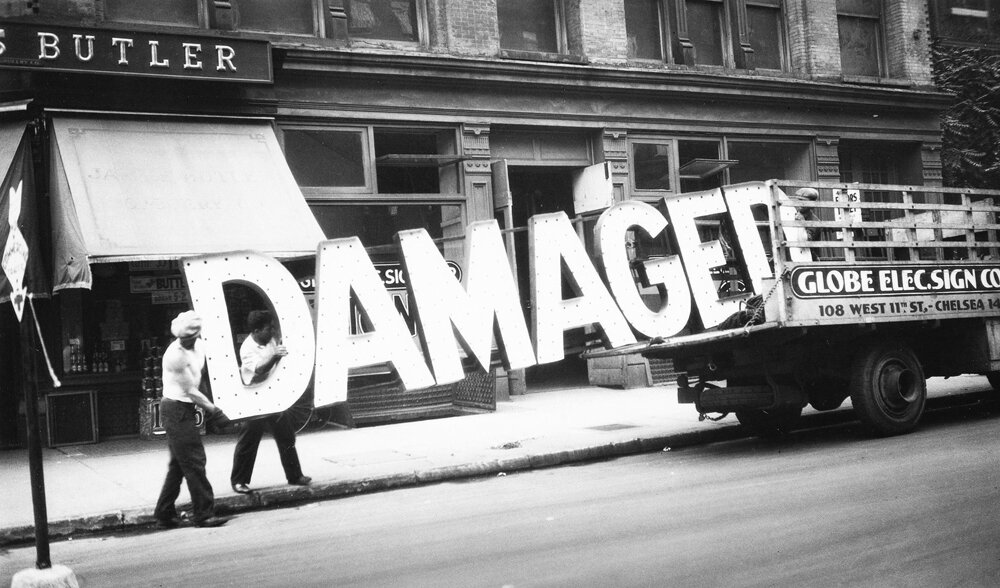
© Walker Evans, Truck and Sign New York, 1930
The first years
Walker Evans began photographing at the age of 25, with his Kodak handheld camera, during his stay in Paris, where he was studying French literature at the Sorbonne University. Evans aspired to become a writer, but upon his return to New York in 1928, he exchanged the writer's dream for the profession of the photographer. The first photographs are scenes of everyday American life and urban environments: New York streets, Victorian buildings, Brooklyn Bridge, abstract compositions of emerging new architecture, street advertisements, and storefronts. Repeating motifs in his photography are: letters, signs, numbers in billboards and road advertisements. He documented the city through the eyes of a historian and anthropologist, finding what was authentic and American in character. The main influences in his photography were: Eugene Atget and August Sander; while the favourite writer: Gustave Flaubert, from whom he adopted the saying: "An artist must be in his work like God in Creation, he should be everywhere felt, but nowhere seen”.

© Walker Evans, Brooklyn Bridge New York, 1929
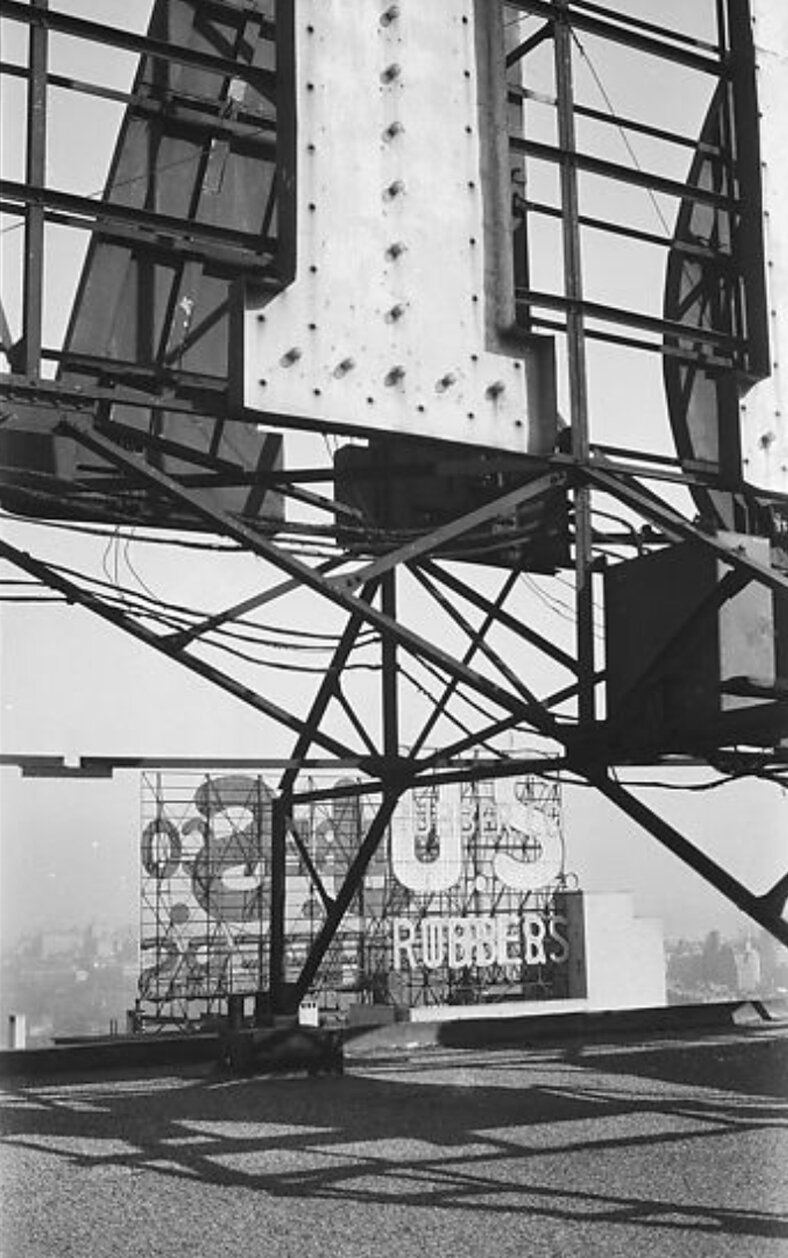
© Walker Evans, U.S. Rubber Sign, New-York, 1928-1929

© Walker Evans, Movie Poster, New York, 1930

© Walker Evans, Parked Car, Small Town Main Street, 1932

© Walker Evans, Street Scene with Telephone Pole and Lines, Provincetown Massachusetts, 1931

© Walker Evans, Chrysler Building, 1930

© Walker Evans, Construction Shack, New York, 1929
Havana
In the early 1930s, Evans was sent to Cuba to photograph the worker’s conditions during the dictatorship of Gerardo Machado. Here he photographed the slums, the street beggars, the police, the port workers, developing the human side of his latter photography. The photographs were published in 1933 in the book “Crimes of Cuba”.During his stay, Evans accompanied Ernest Hemingway, to whom he left 46 photographic prints for fear of being confiscated by the Cuban authorities. These prints were found in Havana in 2002, and were presented in a photographic exhibition.
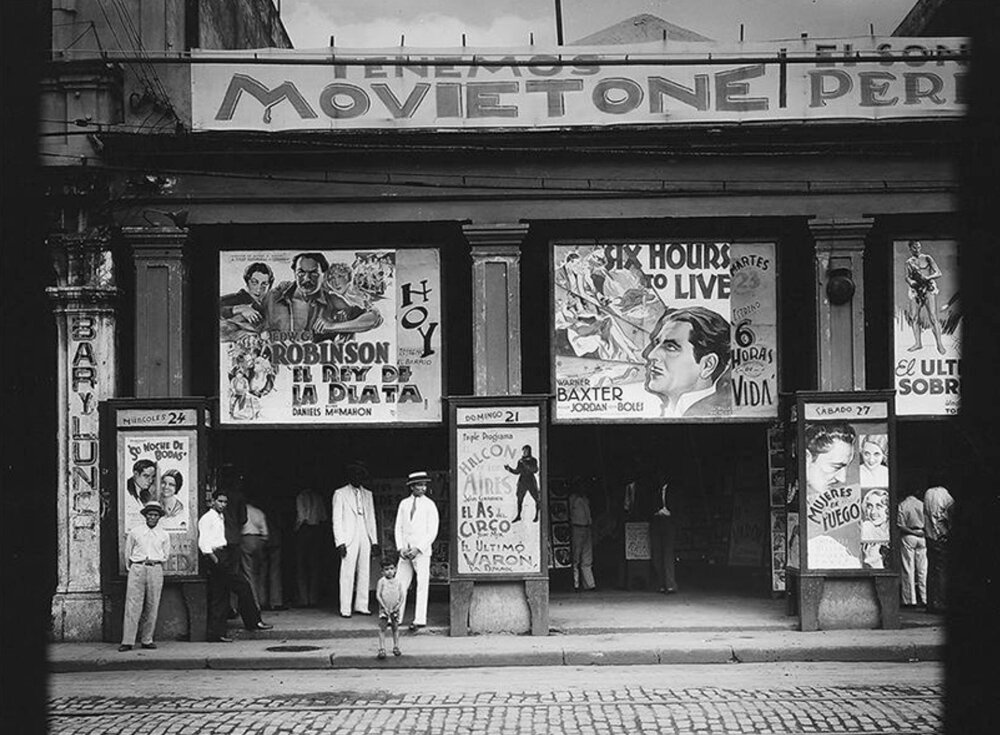
© Walker Evans, Cinema Havana, 1933
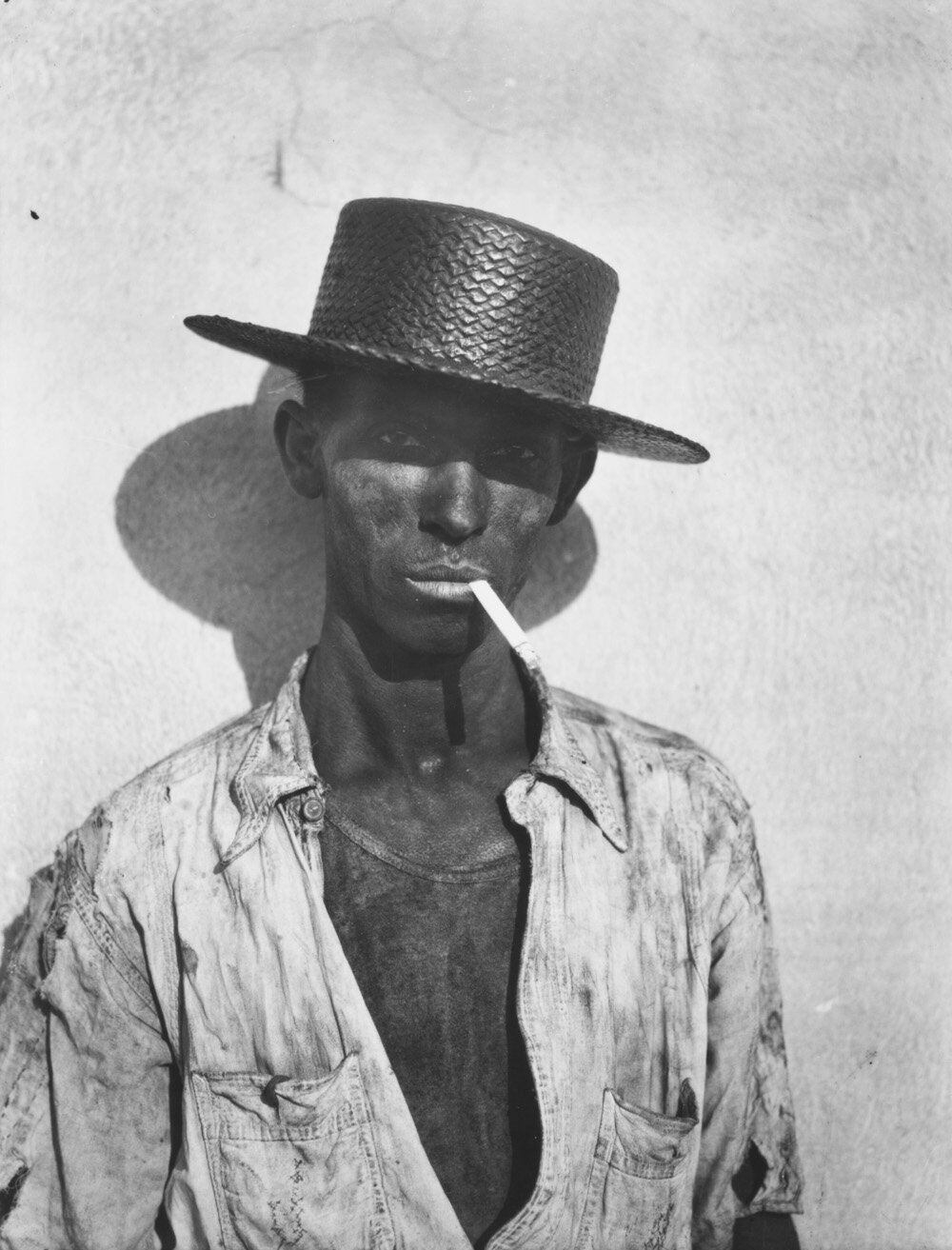
© Walker Evans, Havana Dock Worker, 1932-1933
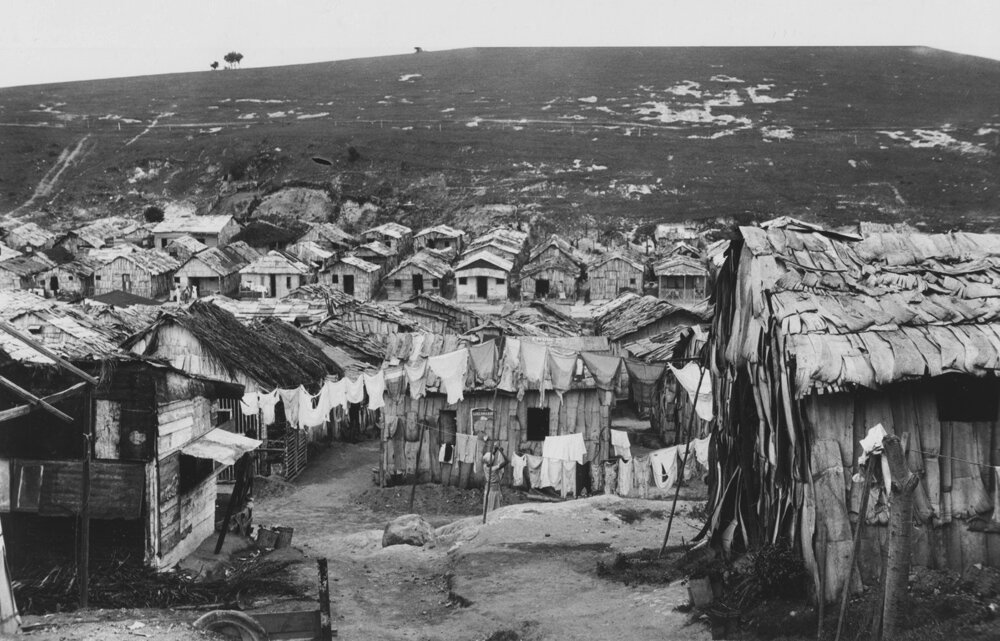
© Walker Evans, Squatters Village Cuba, 1933
Years of the Great Depression
During the years 1935-1937 Evans worked for the government's New Deal Resettlement program (later called the Farm Security), to document the life of South American farmers during the Great Depression. In this project he developed his artistic style to documented the facts in a detailed precise and neutral way, using a large format 8x10 inch camera. A collection of his works was displayed at the Museum of Modern Art in 1938 entitled "American Photographs", which is the first personal exhibition that MOMA dedicated to a single photographer. The book of the same title with 100 photographs by Evans, accompanied with a critical essay by Lincoln Kirstein, remains today one of the most influential books in the history of modern photography.
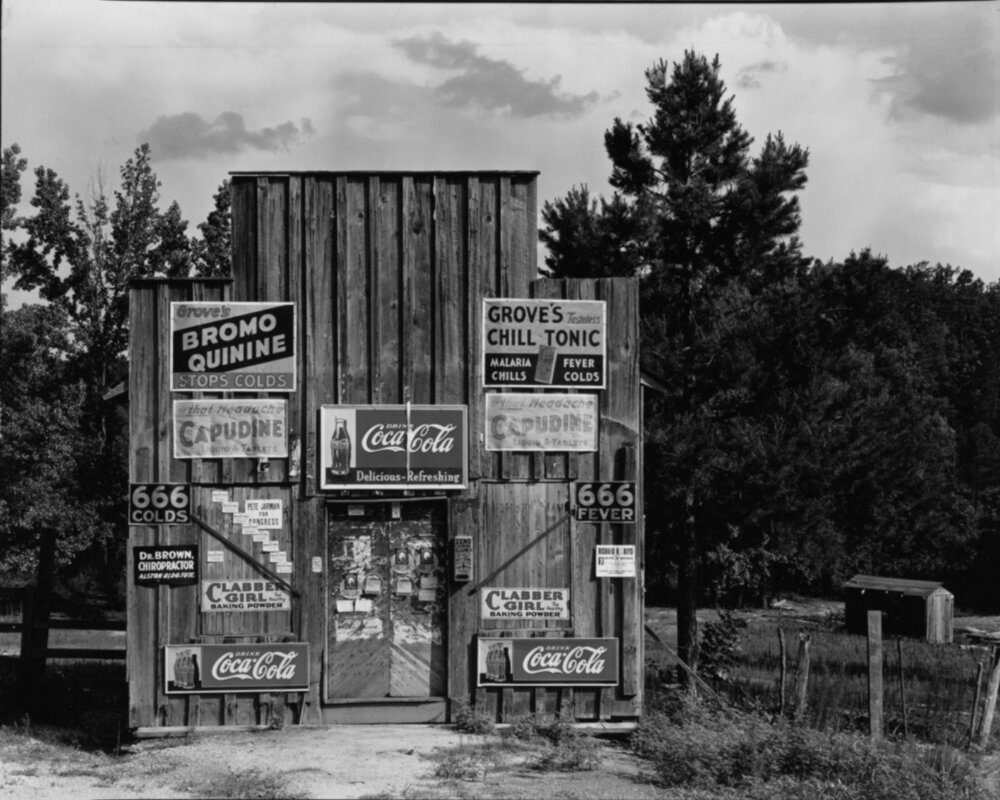
© Walker Evans, Roadside Store between Tuscaloasa and Greensboro, Alabama-1935

© Walker Evans, Easton Pennsylvania, 1935
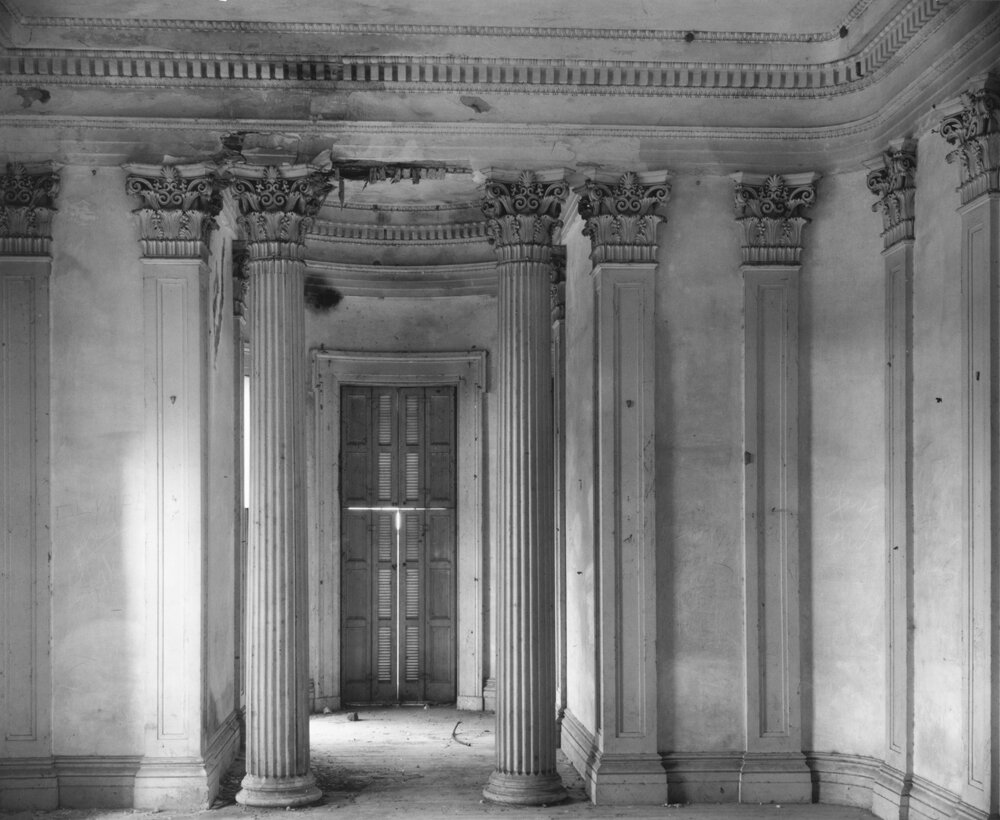
© Walker Evans, Breakfast Room at Belle Grove Plantation White-Chapel, Louisiana, 1935
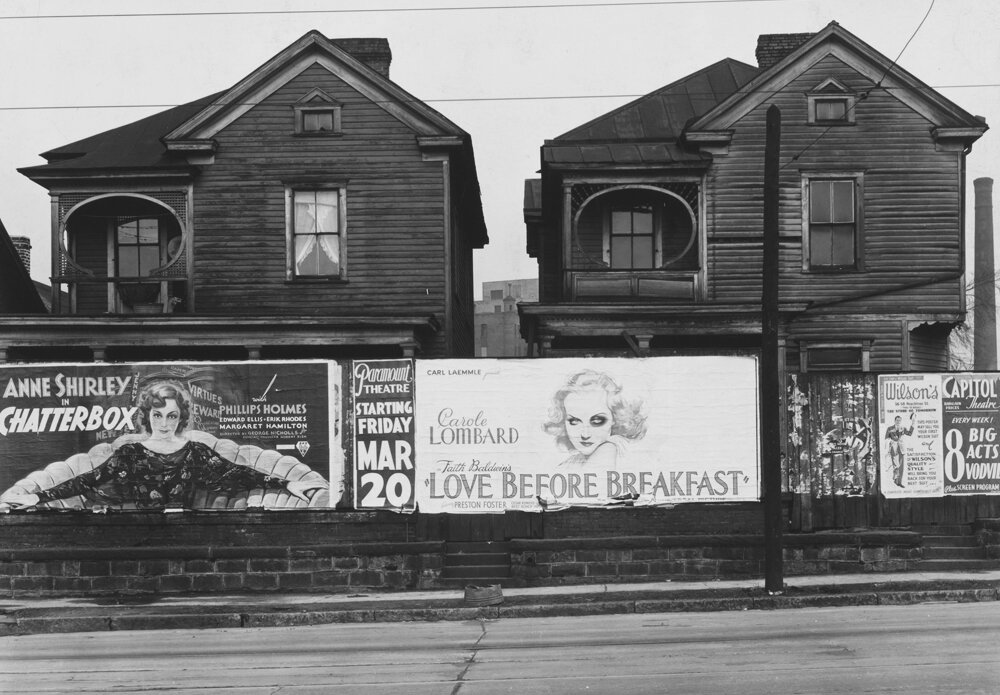
© Walker Evans, Houses and Billboards Atlanta, 1936
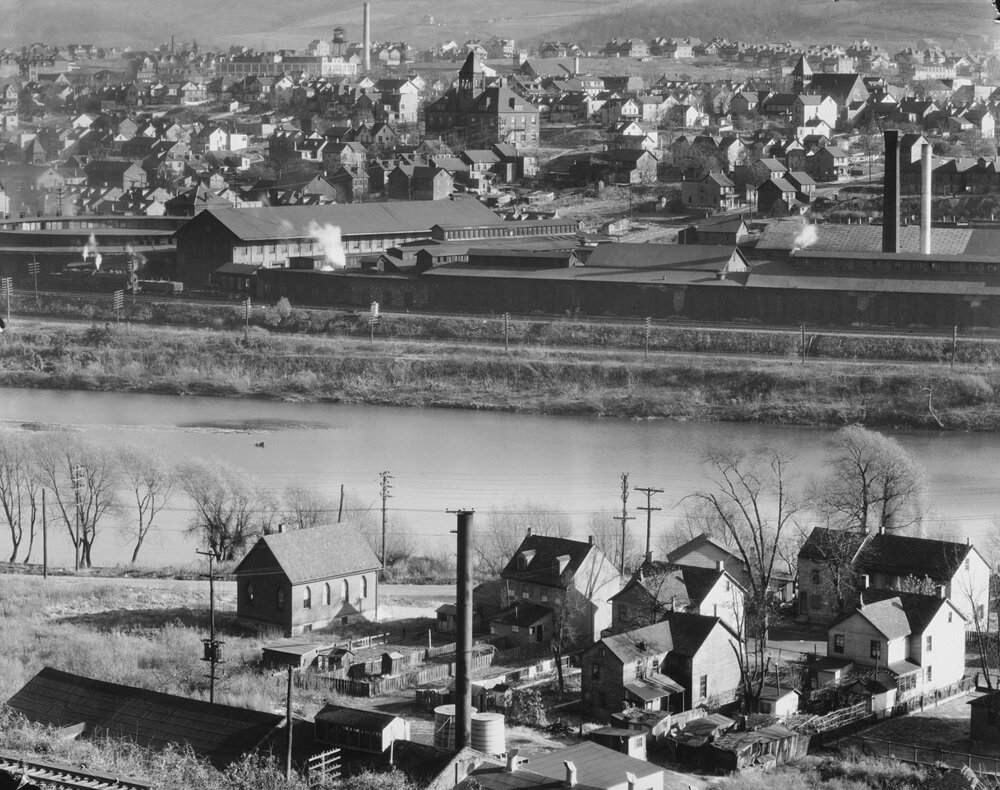
© Walker Evans, View of Easton Pennsylvania, 1936
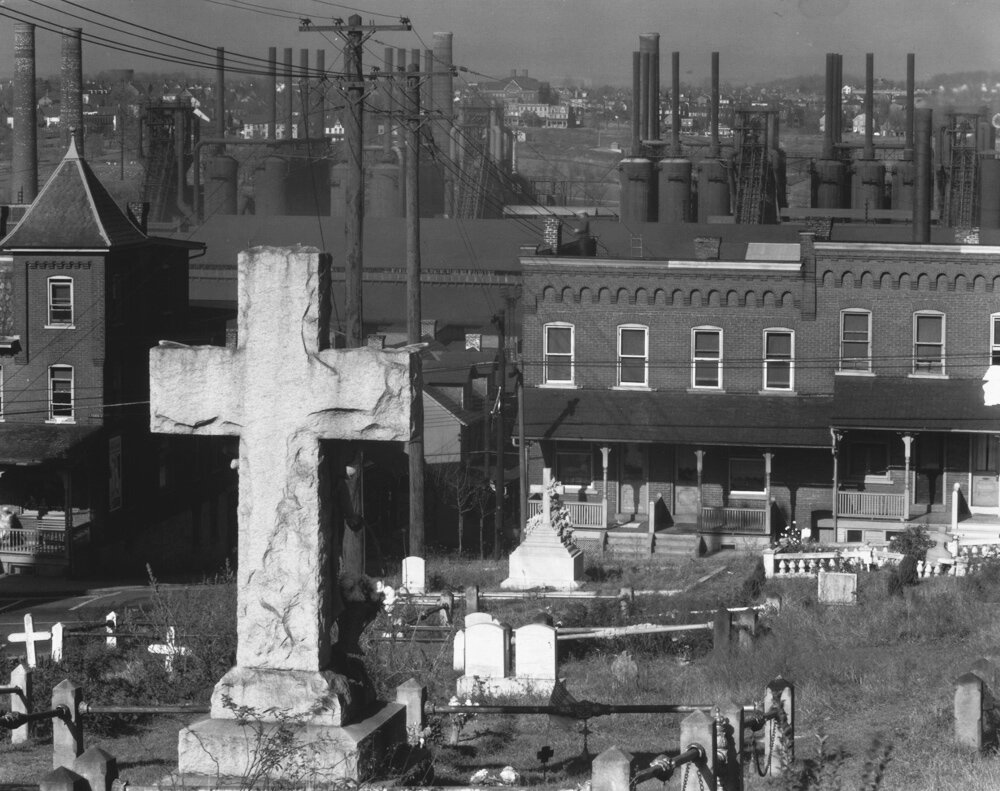
© Walker Evans, Graveyard and Steel Mill Bethlehem, Pennsylvania, 1935

© Walker Evans, Birmingham Steel Mill and Workers Houses, 1936
Let Us Now Praise Famous Men
During 1936, Evans undertook a trip to the South, with the writer and friend James Agee, to document the difficult lives of three sharecropper families affected by the economic crisis. The project, which was rejected for publication by Fortune magazine, was published in 1941 in the form of a book of pictures by Evans and text by Agee, entitled "Let Us Now Praise Famous Men". The photos of this project remain iconic images of America affected by the Great Depression.

© Walker Evans, Coal Miner's House West-Virginia, 1936
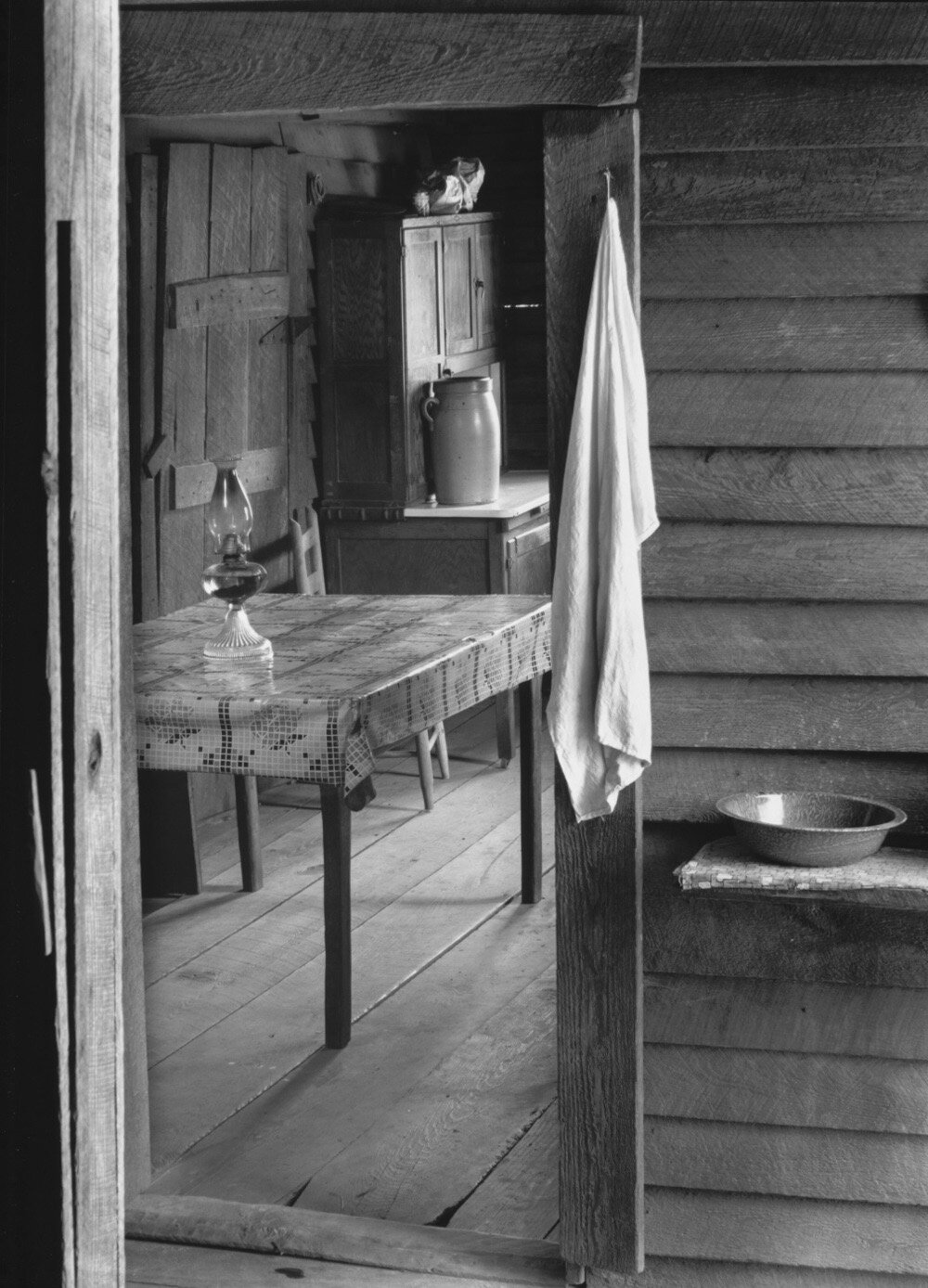
© Walker Evans, Farmers Kitchen Hale-County Alabama, 1936
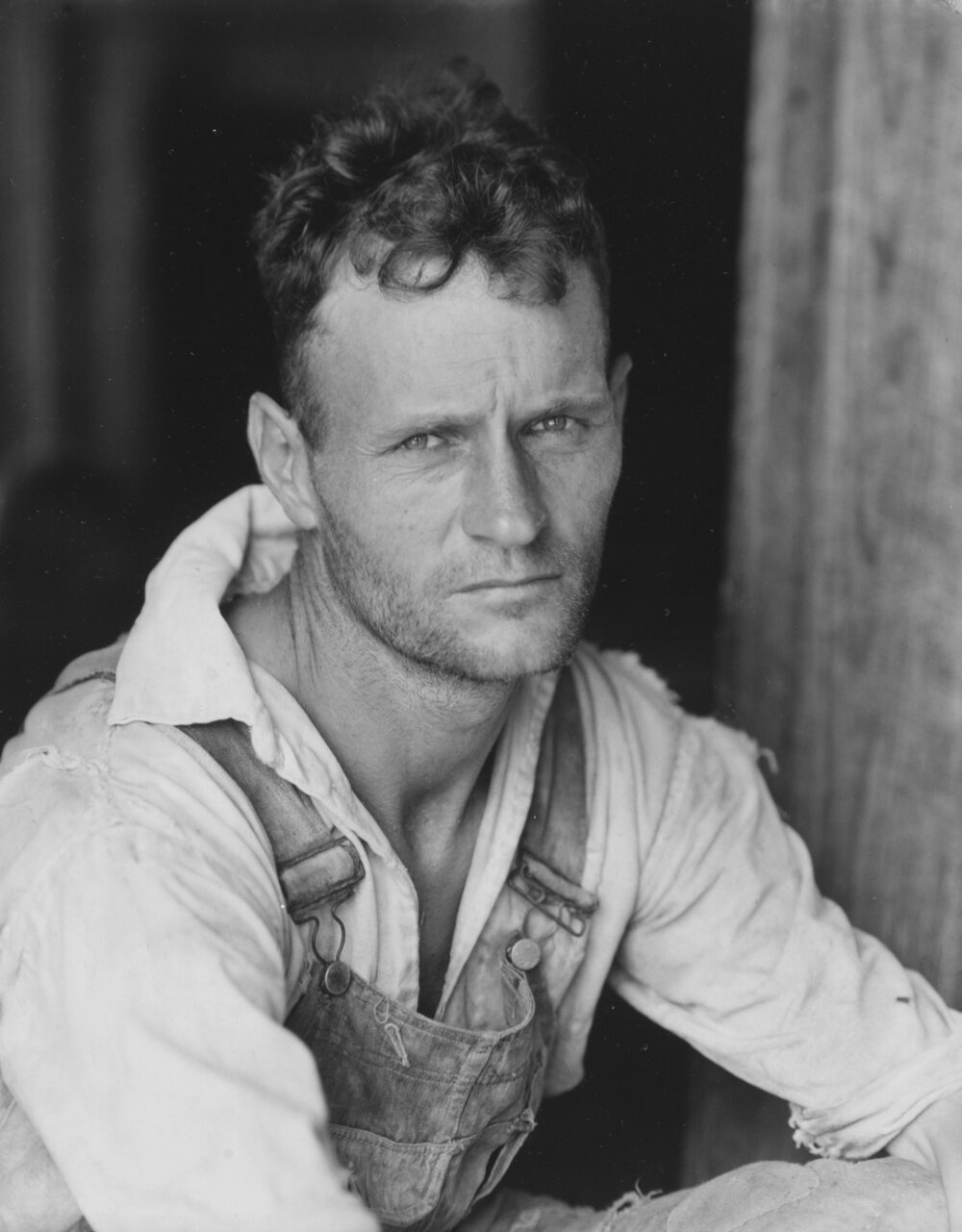
© Walker Evans, Sharecropper Hale-County Alabama, 1936

© Walker Evans, Church Organ and Pews, Alabama, 1936
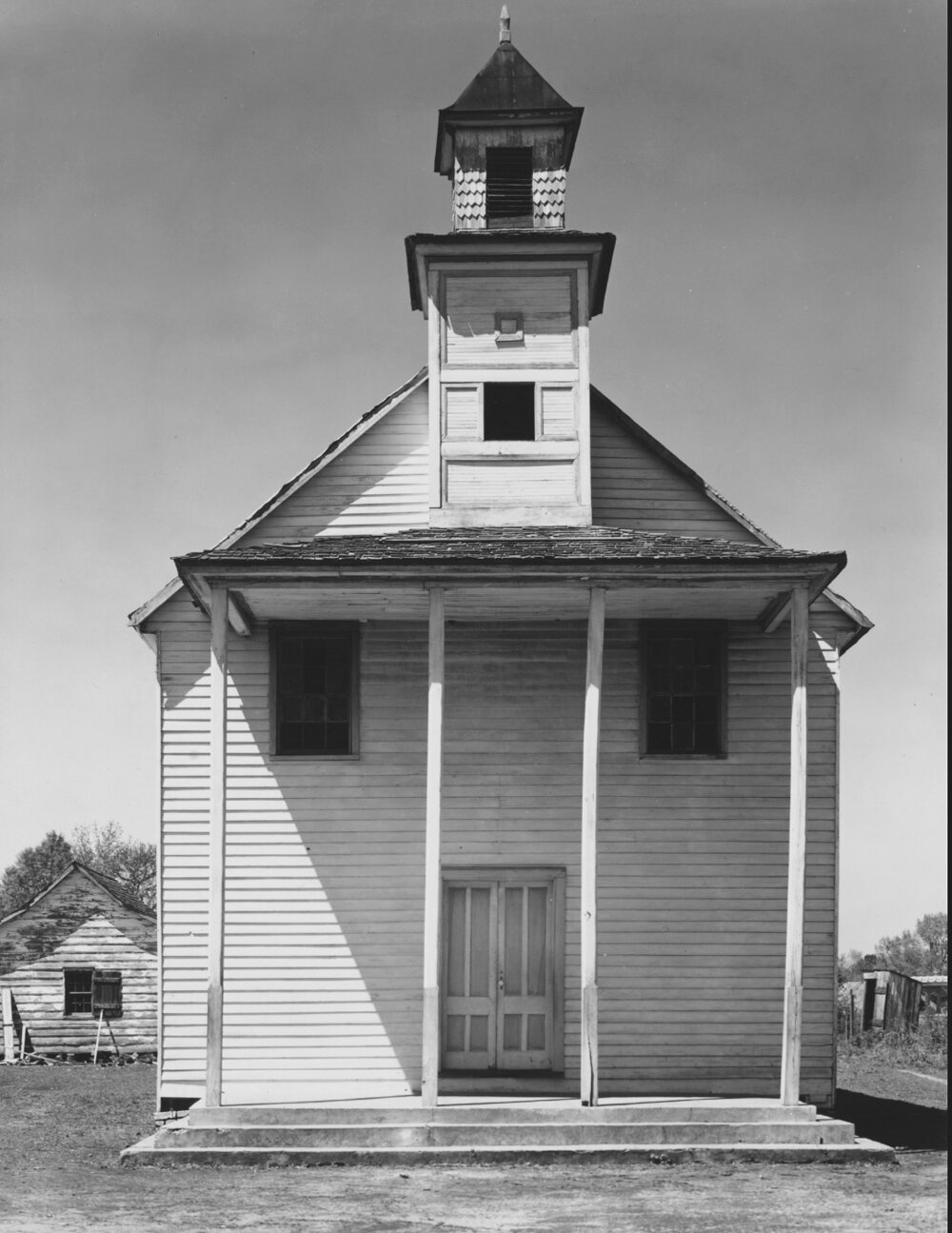
© Walker Evans, Negro Church South Carolina, 1936
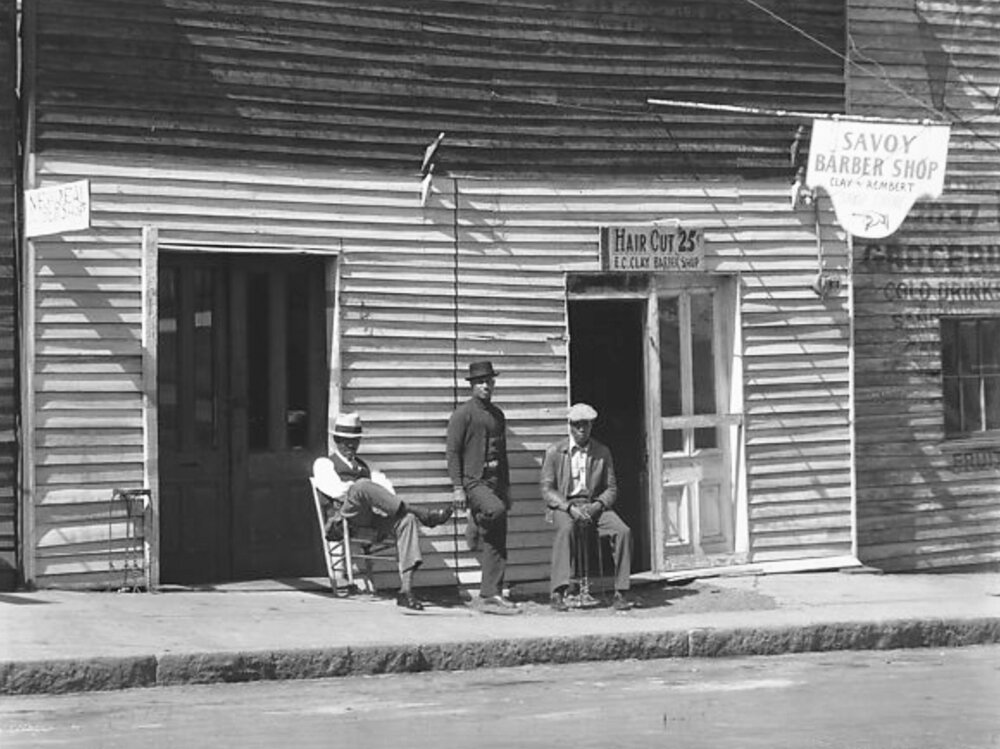
© Walker Evans, Barber Shop Vicksburg Mississippi, 1936
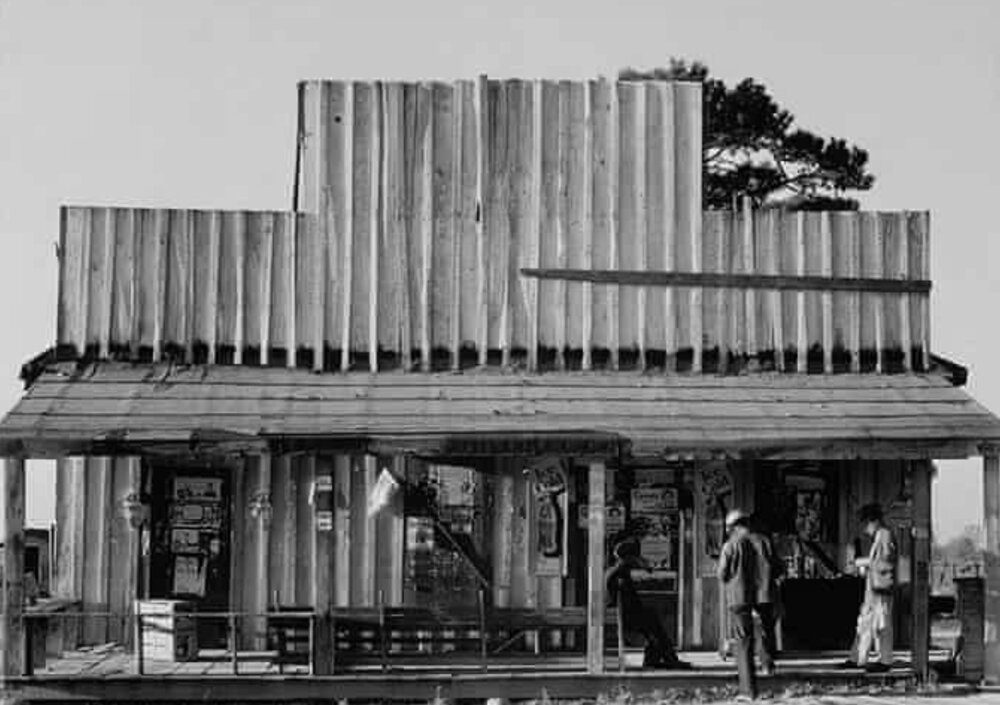
© Walker Evans, Country Store and Gas Station, Alabama, 1936

© Walker Evans, Roadside View Alabama Coal Area Company Town, 1936
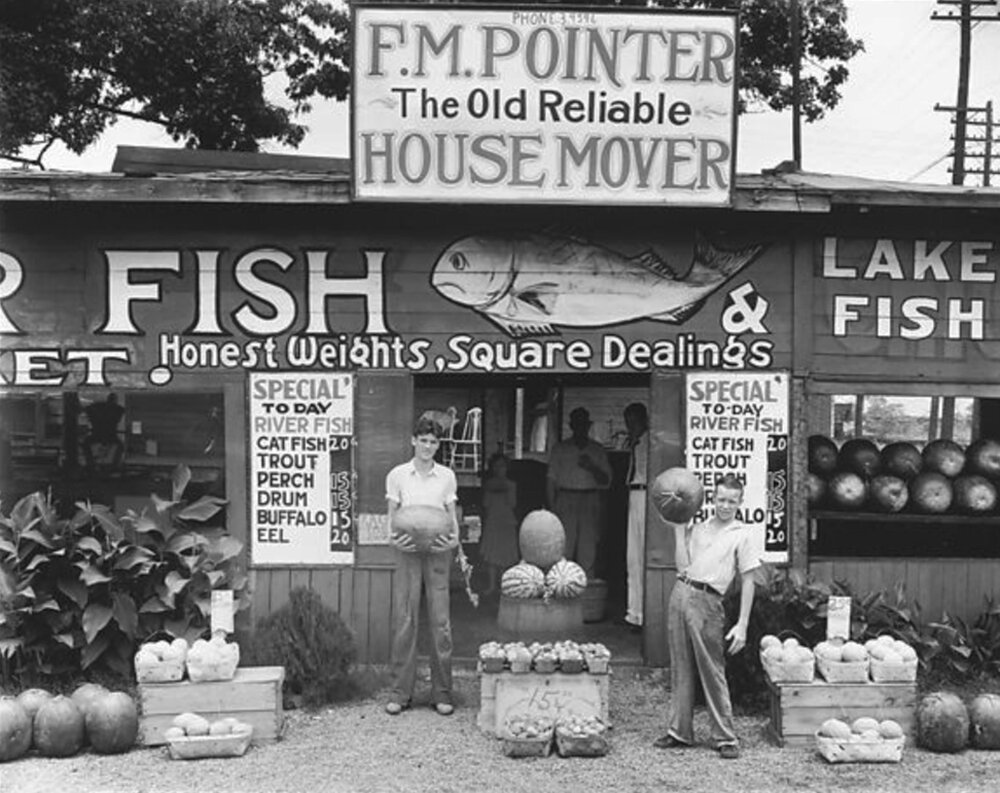
© Walker Evans, Roadside Stand near Birmingham, Alabama, 1936

© Walker Evans, Window Display Bethlehem Pennsylvania, 1935
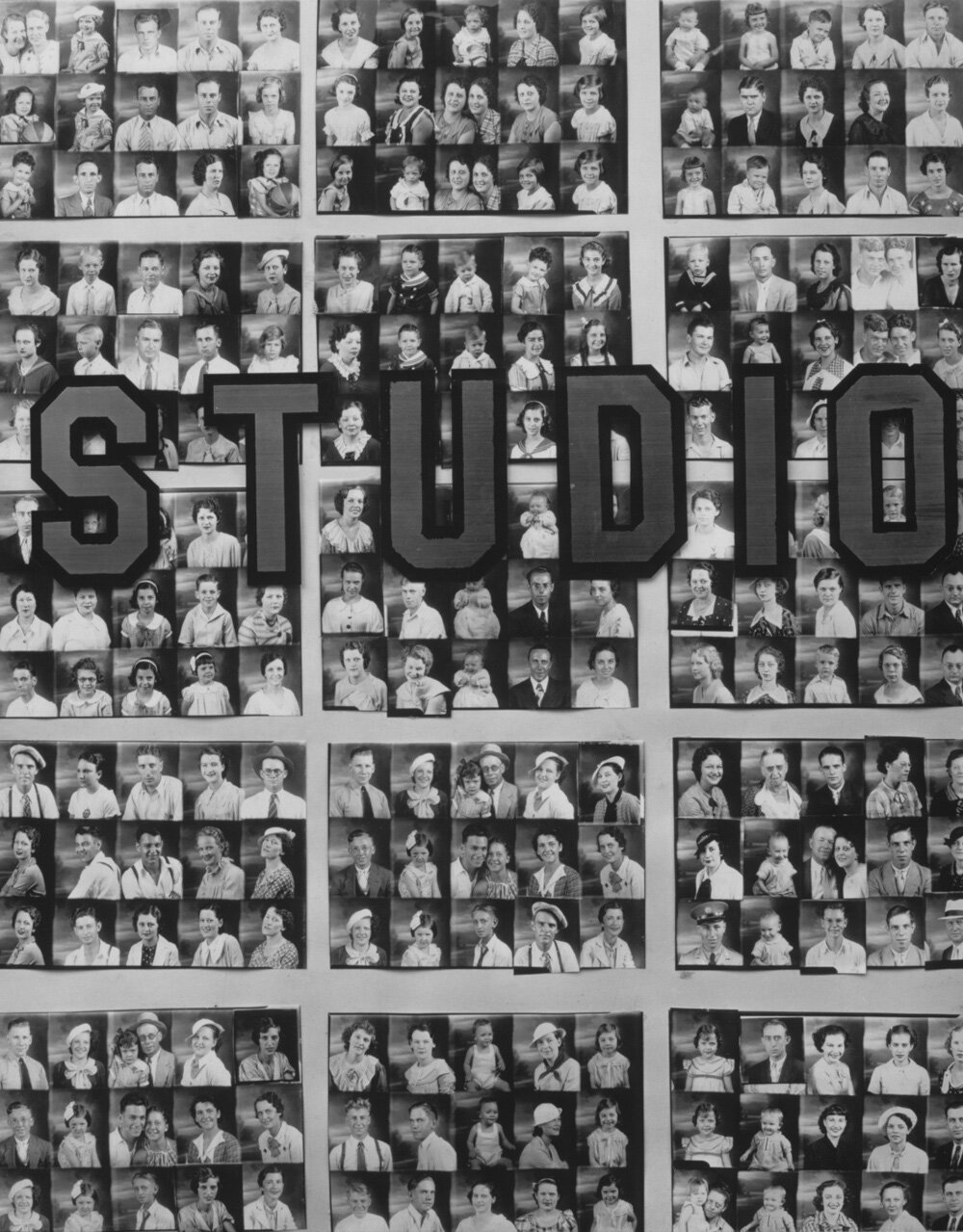
© Walker Evans, Penny Picture Display, Savannah 1936
Subway Portraits
From 1938-1941, Walker Evans photographed New Yorkers on the subway, captured by his Contax 35mm camera, hidden under his coat. The photographic series was published many years later (1966), under the title "Many are called".As he puts it, he wanted to photograph people "when the guard is down and the mask is off." The motif of casual passers-by, is a recurring motif in Evans work. While working for Fortune in 1946, he photographed with Rolleiflex a series of portraits of workers on the streets of Chicago, which are published in 2 pages of the magazine under the title "Labor Anonymous".

© Walker Evans, Subway Portrait, 1938-1941

© Walker Evans, Subway Portrait, 1938-1941

© Walker Evans, Labor Anonymous, Fortune November 1946, pp152-153
Years in Time and Fortune Magazine
Evans worked for Time magazines (1943-1945), and later for Fortune (1945-1965) as a photo editor, producing over 400 photos and 46 articles. Evans had complete control over the publication of his photographs, he chose the subjects himself, the accompanying writings and the layout of the magazine. Having photographed America at its most difficult years, now Evans captures its rise as the world superpower, the culture of automobile and consumerism.

© Walker Evans, Burlesque Theater, Chicago 1946

© Walker Evans, Views of Pedestrians Uniontown, Maryland, 1946

© Walker Evans, Pedestrians Uniontown Maryland, 1946

© Walker Evans, Shoppers Randolph Street, Chicago 1946

© Walker Evans, Untitled Chicago, 1946

© Walker Evans, Lamp on Table, Evans Apartment New-York, 1946

© Walker Evans, Details of Clapboard House, 1960
Last years
In 1965, Evans began teaching photography at Yale University School of Art and Design. During the ’70s he experimented with colour photography, and the Polaroid SX-70 camera, with an unlimited supply of film from Kodak. These photographs are interesting studies of colour and shape, on Evans' preferred motif: architecture, portraits and signs.
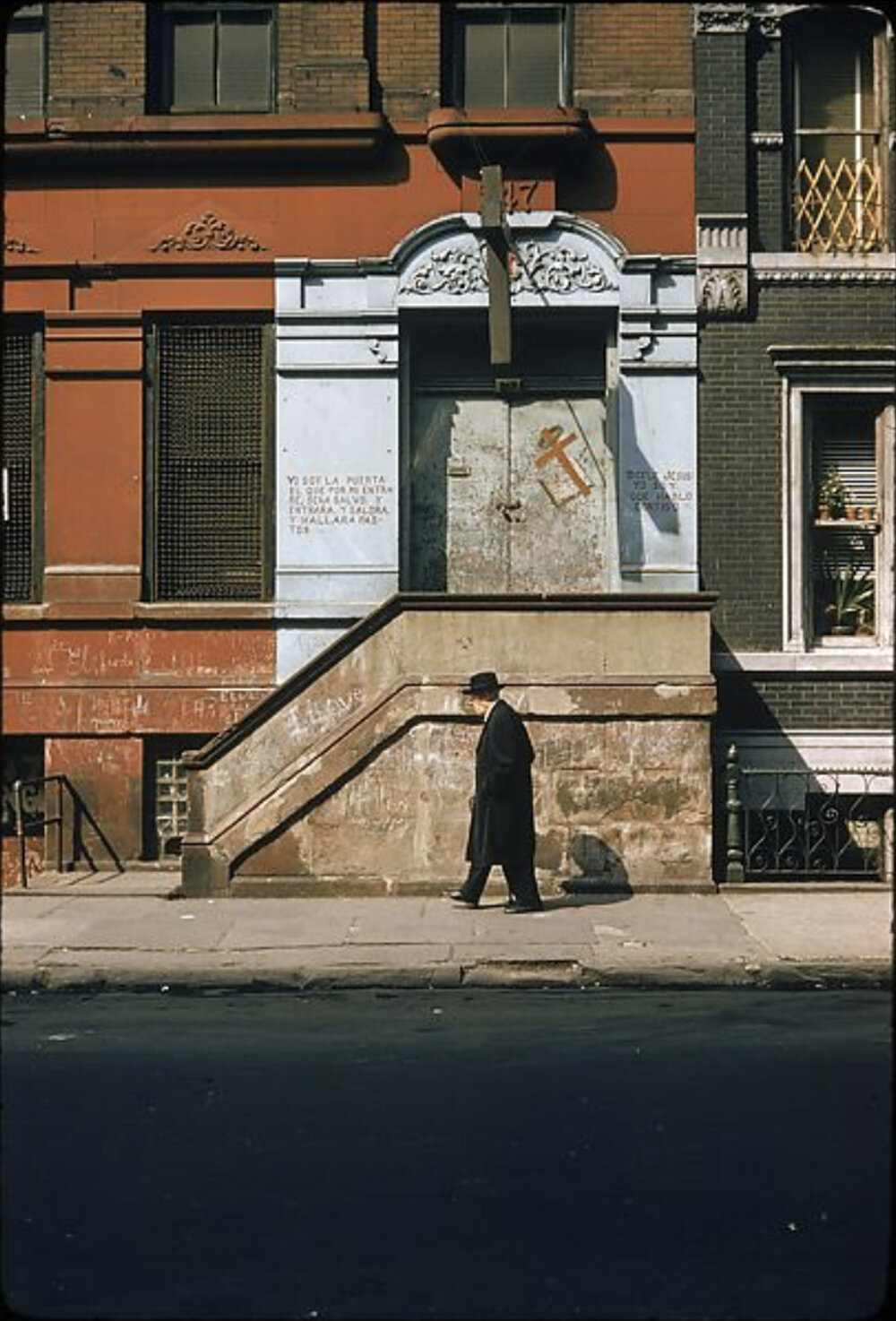
© Walker Evans, New-York Streets, 1957-1959
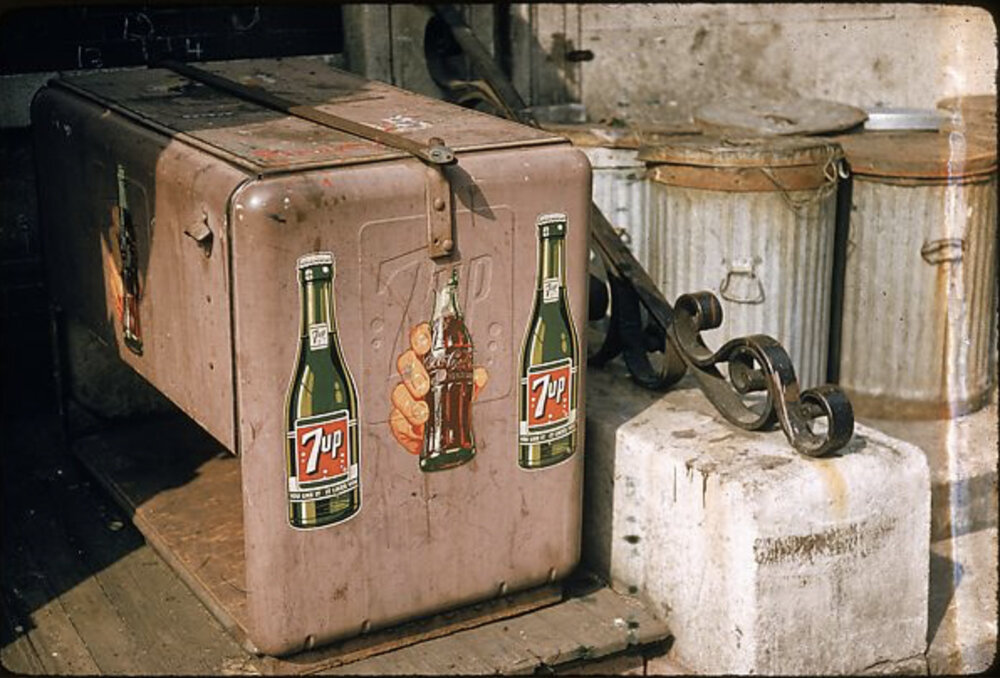
© Walker Evans, New-York Streets, 1957-1959
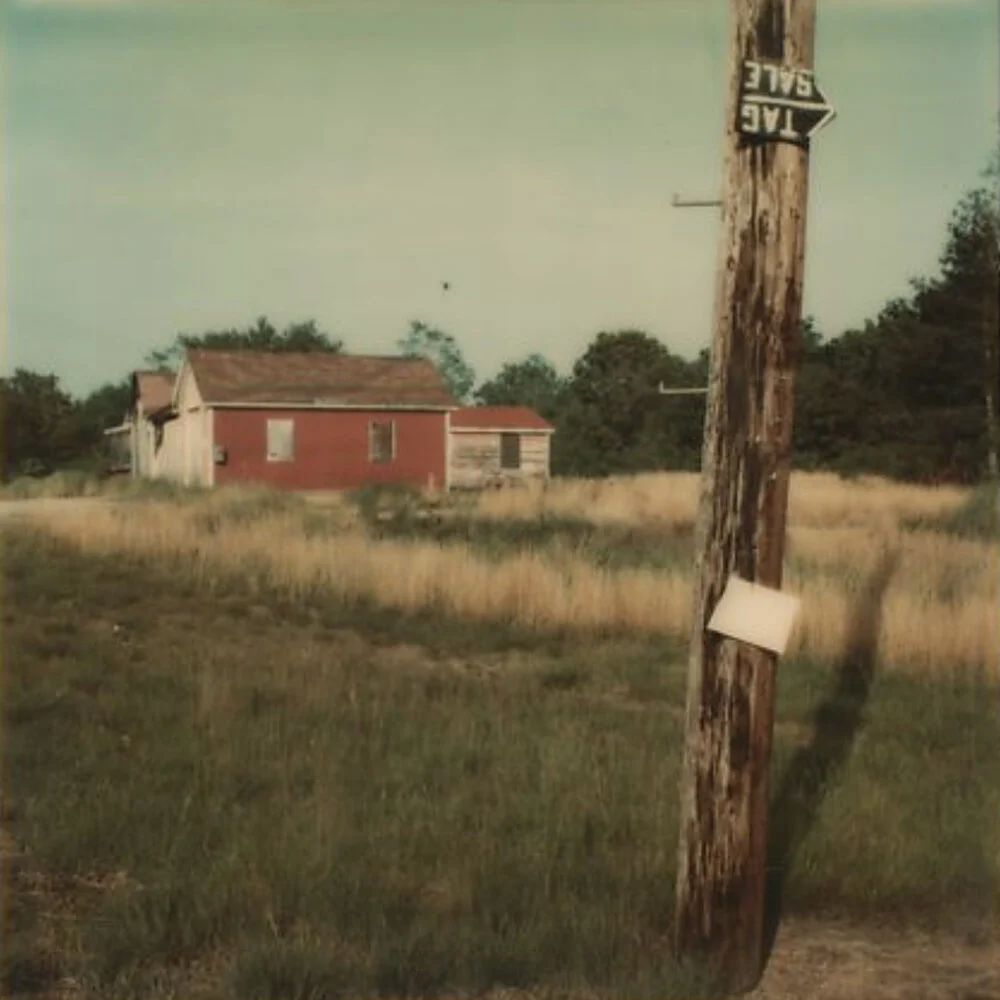
© Walker Evans, Telephone Pole and Red Barn, 1974
Walker Evans's photographs are in the collections of:
Selected Books by Walker Evans


W. Eugene Smith
W. Eugene Smith was an American photographer, known as the father of photo essay in the American editorial of the '40s and '50s. He created the genre’s model and standards that were followed for a long time. Eugene Smith worked for several magazines of the time such as: Newsweek, Life, and for the agency Magnum as a freelancer.
W. Eugene Smith
(U.S.A 1918-1978)
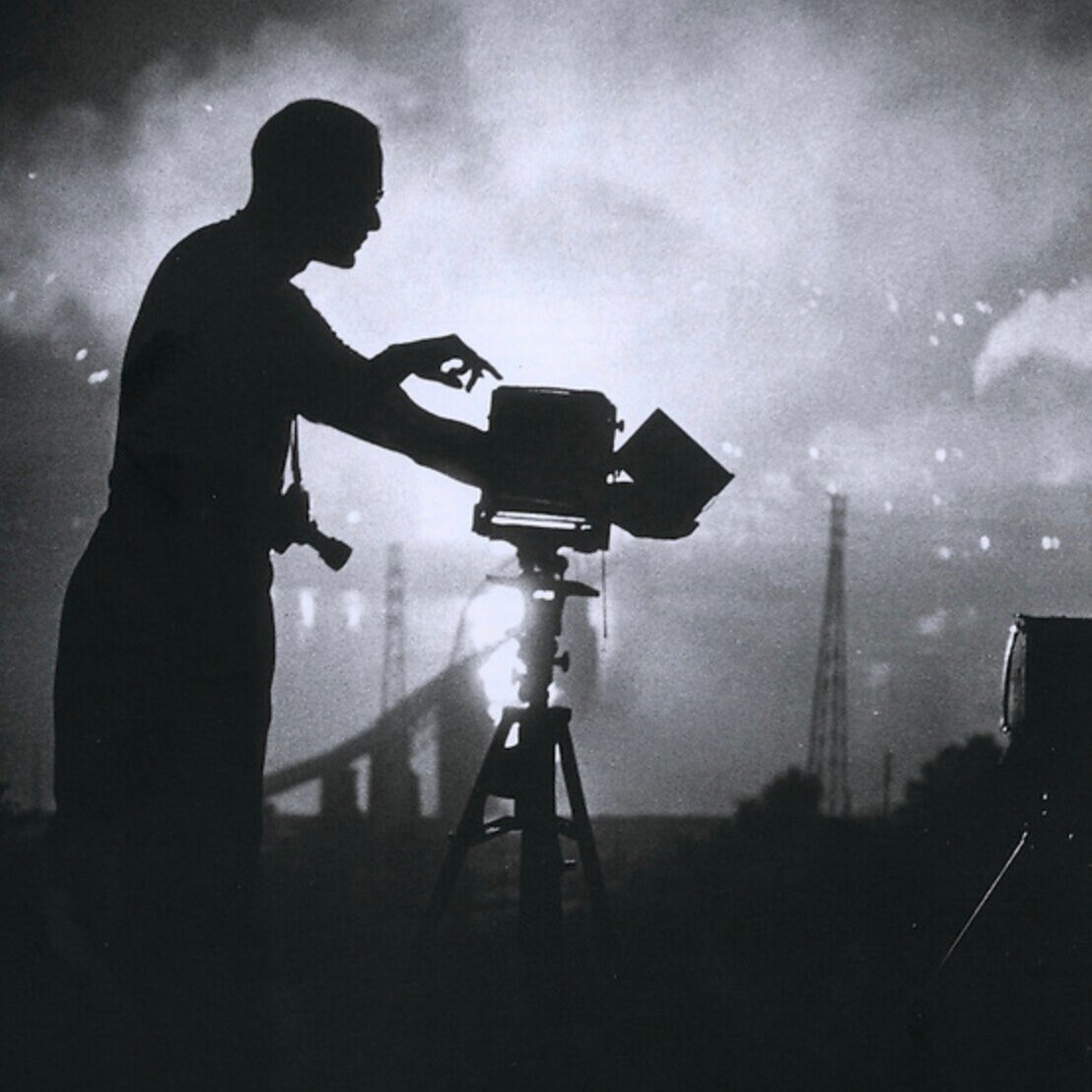
Portrait of W. Eugene Smith. Photograph by Fran Erzen
W. Eugene Smith was an American photographer, known as the father of photo essay in the American editorial of the '40s and '50s. He created the genre’s model and standards that were followed for a long time. Eugene Smith worked for several magazines of the time such as: Newsweek, Life, and for the agency Magnum as a freelancer. His most famous photos essays are (in chronological order): World War II (1943), Country Doctor (1948), The Midwife (1951), The Spanish Village (1951), Man of Mercy (1954), Pittsburg (1955), Jazz Loft (1965), Minamata (1971).
During his career in photography, Eugene Smith is distinguished for his humanism, the need to know his subjects well, the perfectionism and anti-conformism to the dictate and boundaries set by the mass media. More than a photojournalist, he is a director of storytelling and a poet of photography through the use of light and chiaro-scuro.

US Marine World War II. Photograph by W. Eugene Smith

A Hospital in a Philippine Cathedral (Island of Leyte). Photograph by W. Eugene Smith

“The walk to Paradise garden” 1946, Photography W. Eugene Smith

“Country Doctor, Ernest Ceriani”, 1948, Photography W. Eugene Smith
His most important photo essays addressing the theme of urbanisation and consequences of industrialisation are; Pittsburg (1955) and Minamatas (1971).
Eugene Smith began photographing Pittsburgh in 1955 when writer and publisher Stefan Lorant asked him a series of photographs to illustrate his book on the city's 100th anniversary. Smith saw this commission as a personal project. He extended the duration of the project from three months to three years, and expanded the subject by photographing the modernity and the steel industry, as well as other topics that did not belong to government propaganda, such as working class conditions, poor neighbourhoods, the immigrants, the African American community, preceding the riots of the 1960s. In this project, Smith built a rich archive consisting of 17,000 photographic images and audio recordings, a small part of which have been published.

Inside Mellon National Bank. Photograph by W. Eugene Smith.

International Union of Electrical, Radio, and Machine Workers. Photograph by W. Eugene Smith

City Council Chamber, Pittsburg, © Photography W. Eugene Smith

Children at Colwell and Pride Streets, Hill District. Photograph by W. Eugene Smith

Pittsburg, 1955, Photography by W. Eugene Smith

Sixth Street Bridge over Allegheny River. Photograph by W. Eugene Smith

Steelworker wearing goggles and a hardhat. Photograph by W. Eugene Smith

Rails, Homestead works, U.S. Steel, Monongahela River. Photograph by W. Eugene Smith

US Steel Pittsburg, 1955 Photograph by W. Eugene Smith

Pittsburg 1955 Photograph by W. Eugene Smith
In Minamata series (1971-1973), Eugene Smith photographs the inhabitants of Minamata coastal area in Japan affected by a severe disease caused by mercury in the industrial waste of Chisso factory, a giant chemical industry in the area. In 1972, Smith was attacked by Chisso Company, to stop the publication of the project on Minamata disease, which caused him severe injuries and loss of vision. The photo essay was published in 1975 and its main photo was ‘Tomoko Uemura in Her Bath”, shot in 1971, showing a mother in a traditional Japanese bathtub, with her daughter deformed by the disease. The photo drew public attention to the Minamata disease. Smith's photographs were the main evidence in the trial against Chisso, and the first case in Japan where a company became liable of the damages it caused to the people, which made Smith a national hero in Japan.
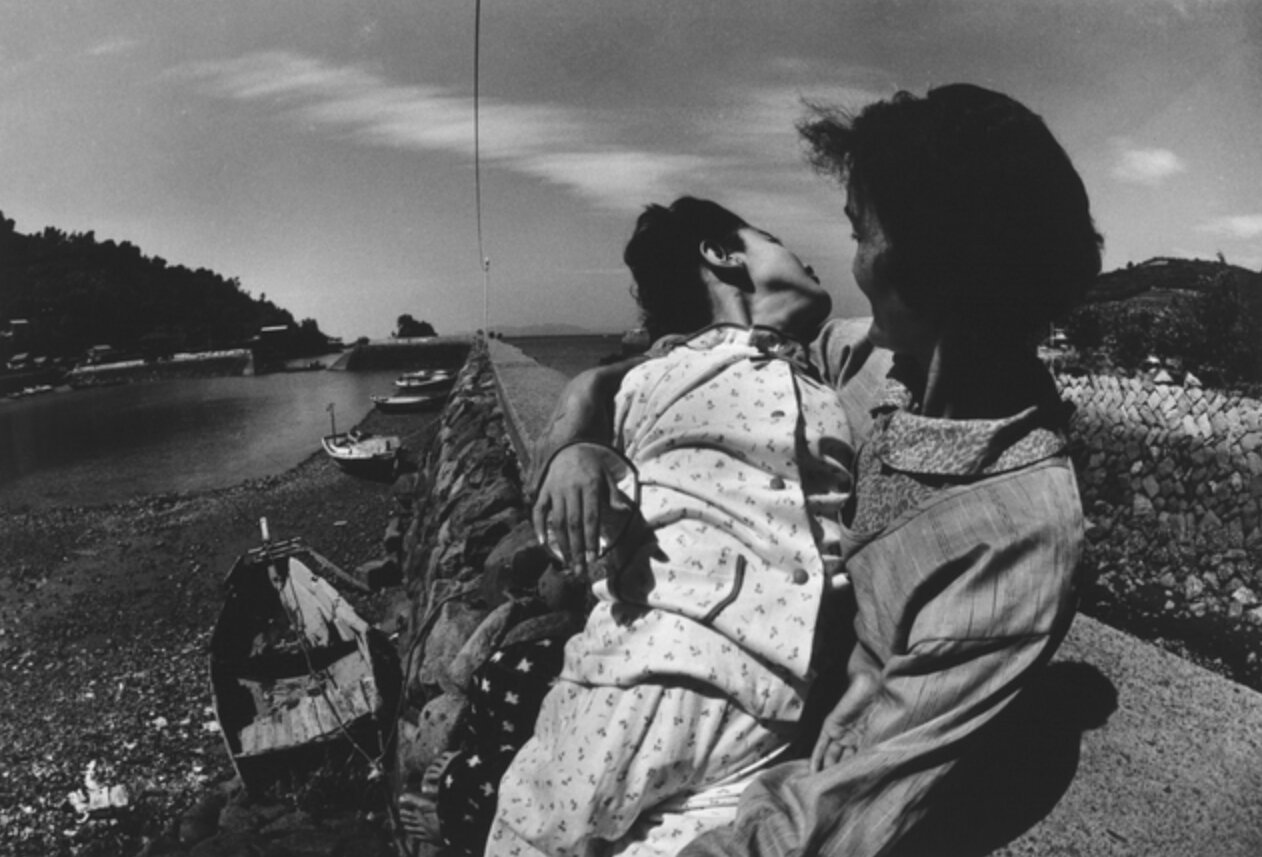
Minamata, 1972 Photography W. Eugene Smith

Minamata 1971 Photograph by W. Eugene Smith

Goi, near Tokyo. Demonstration at the Chisso Plant. 1971 Photograph by W. Eugene Smith

Demonstrators against the Chisso Chemical Company demonstrating in front of the plant near Tokyo during the Pollution Board hearings. 1971. Eugene Smith
After Minimata project, Eugene Smith returned to America, but was not able to photograph anymore. He taught at university and arranged his archive until 1978, when he died of a heart attack. Eugene Smith believed in the power of photography to change the world. In 1980, the Eugene Smith Fund was established to finance humanitarian photographic projects that cannot be funded by the mass media, contributing to the growth of the independent voice of photographers.
W. Eugene Smith Fund: https://www.smithfund.org/humanistic-photography
Selected Books by W. Eugene Smith


Berenice Abbott
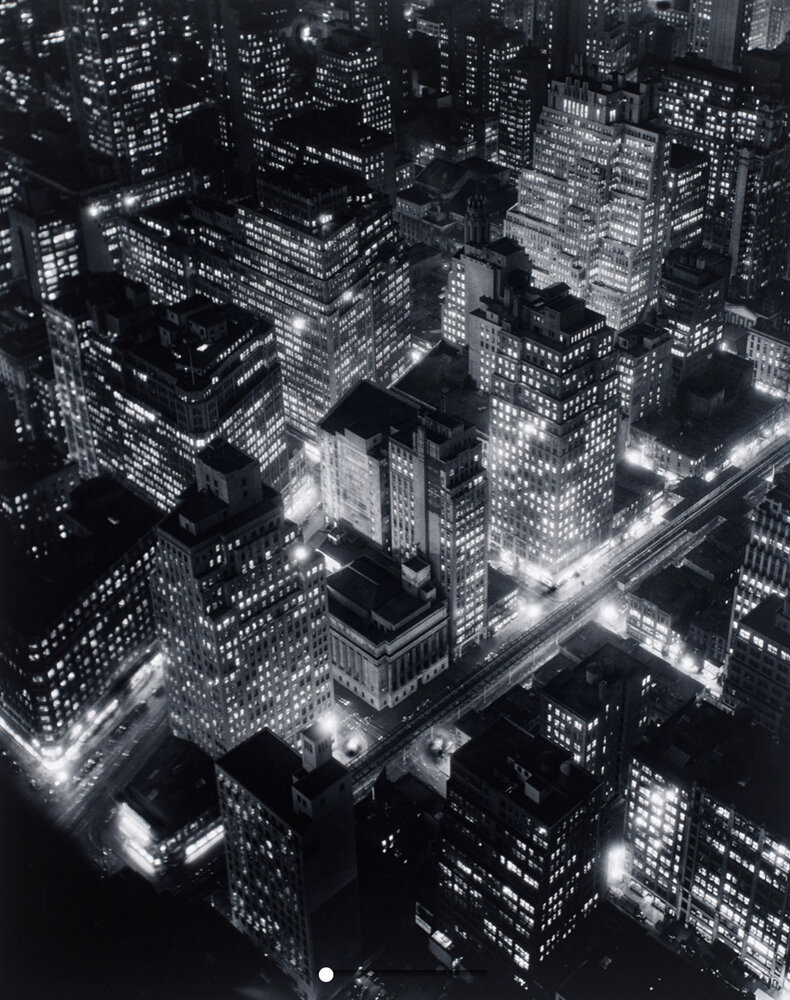
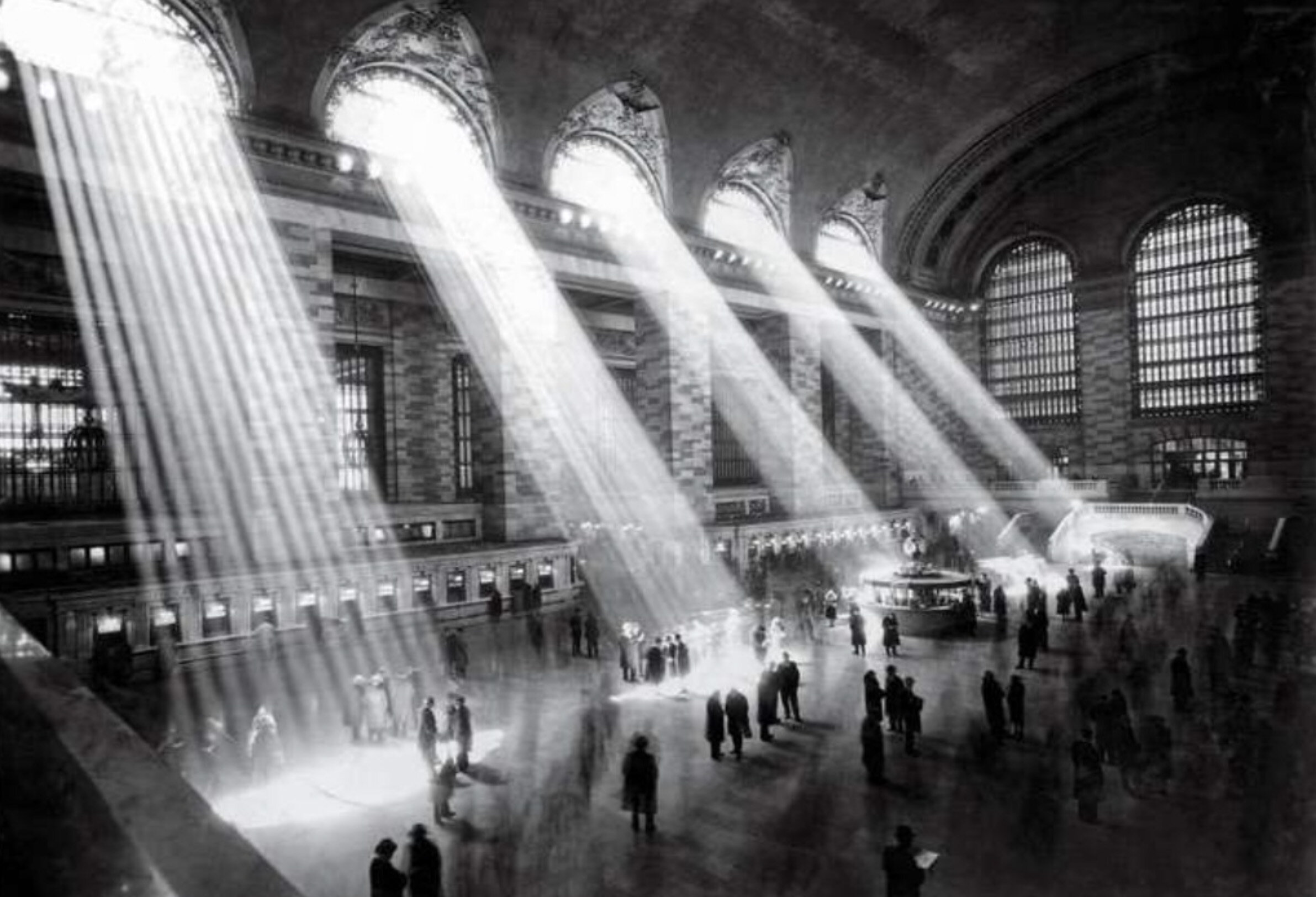
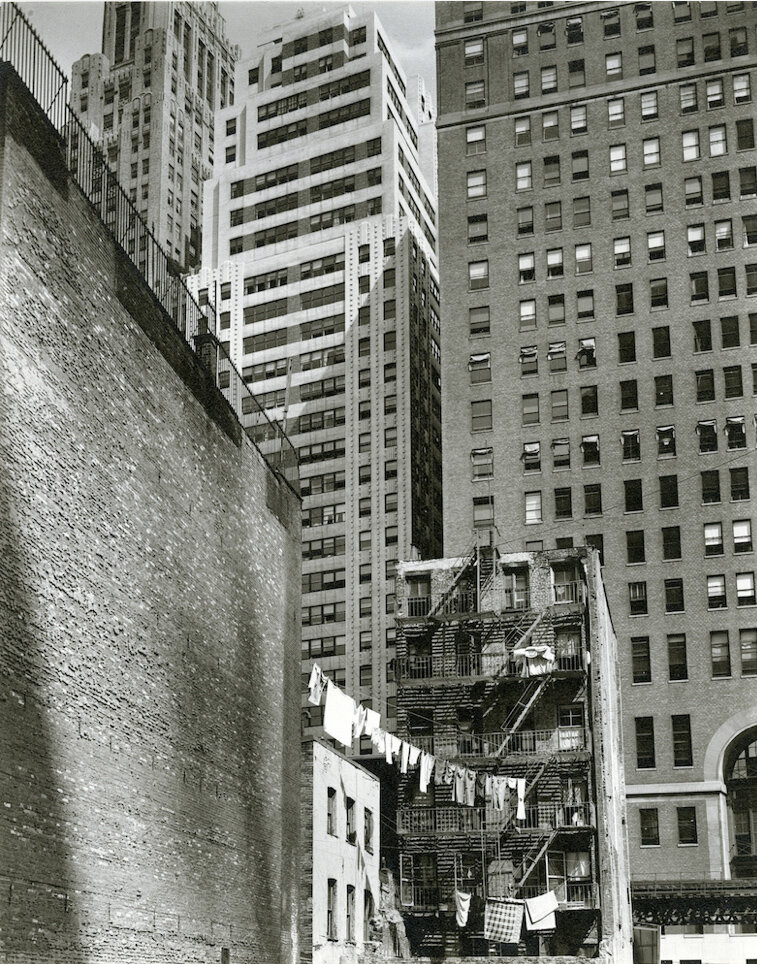
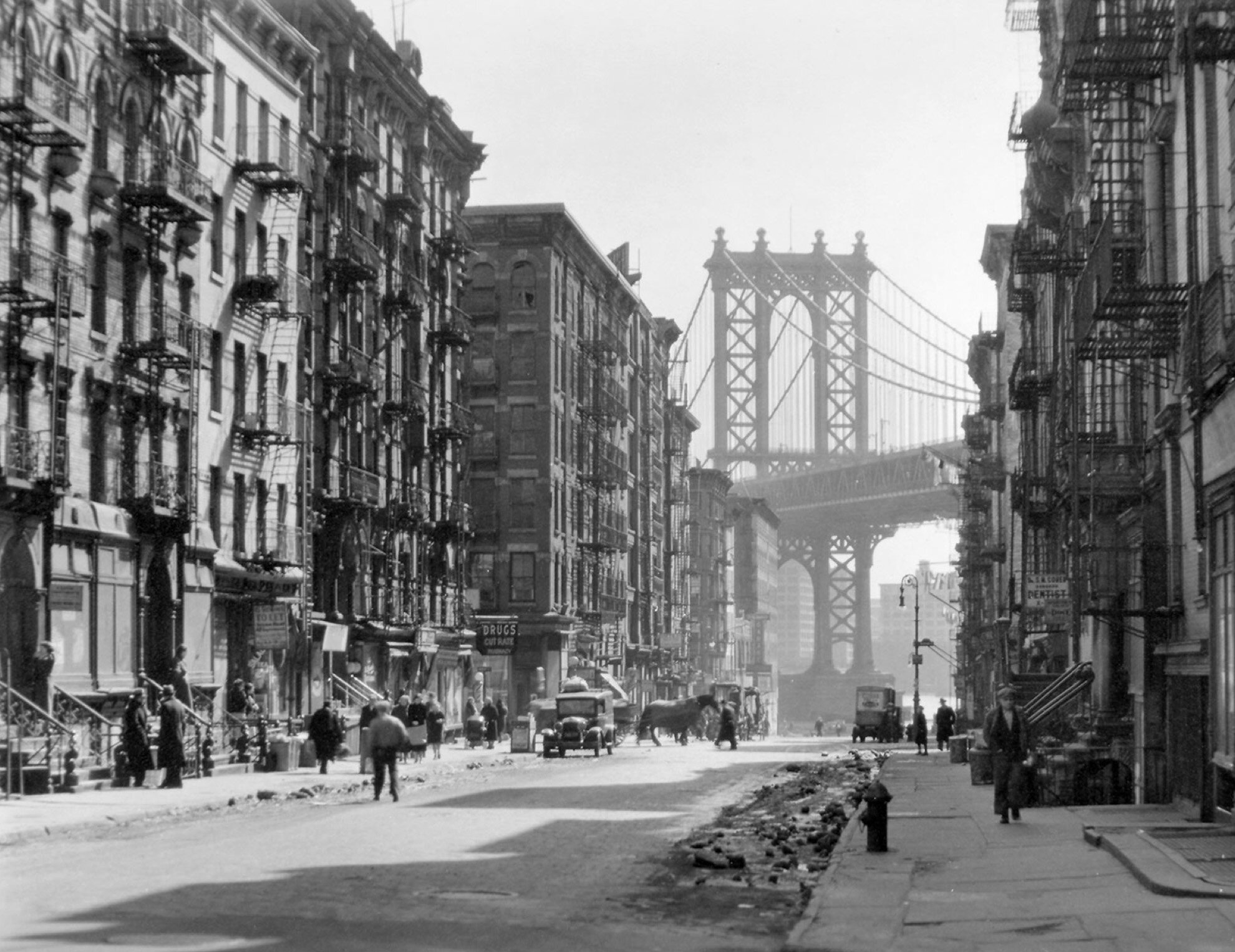
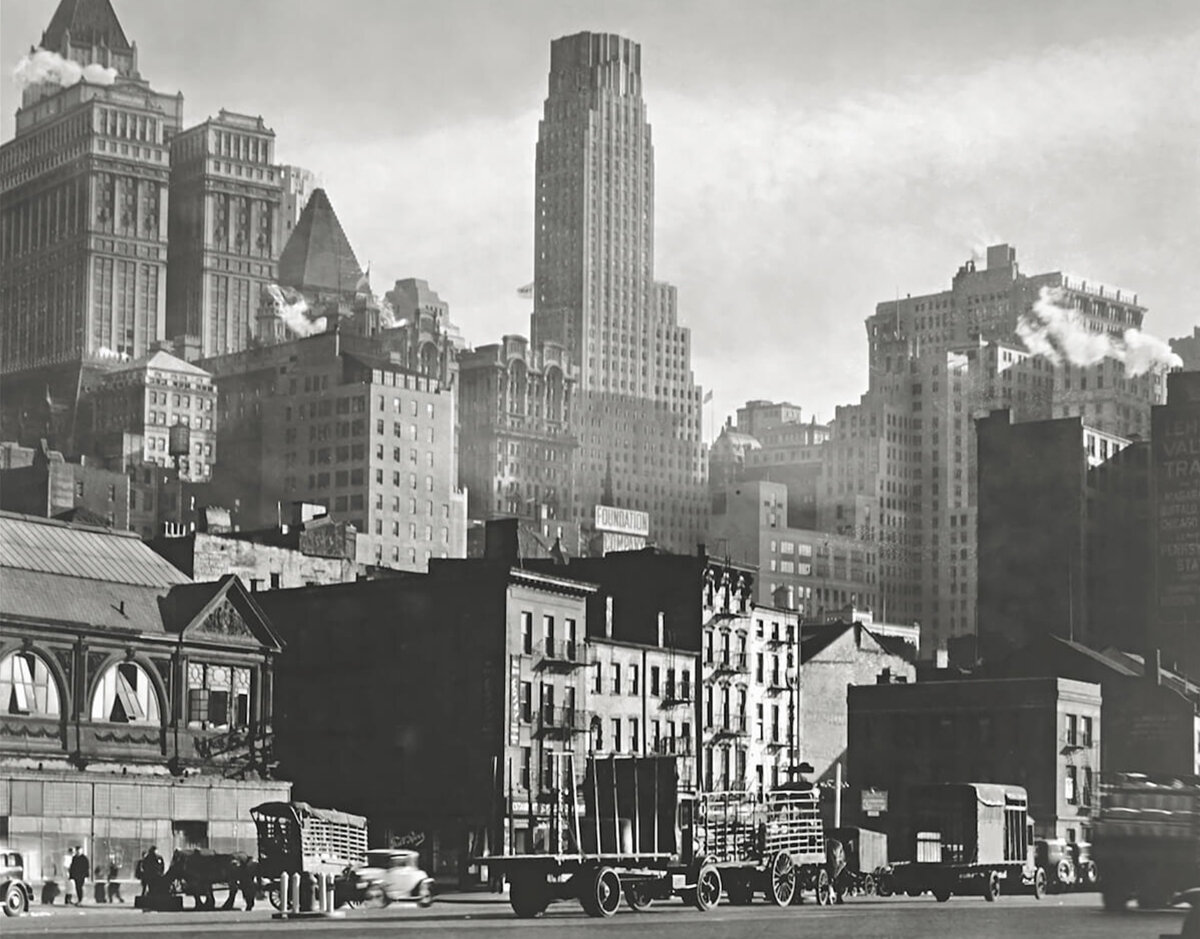
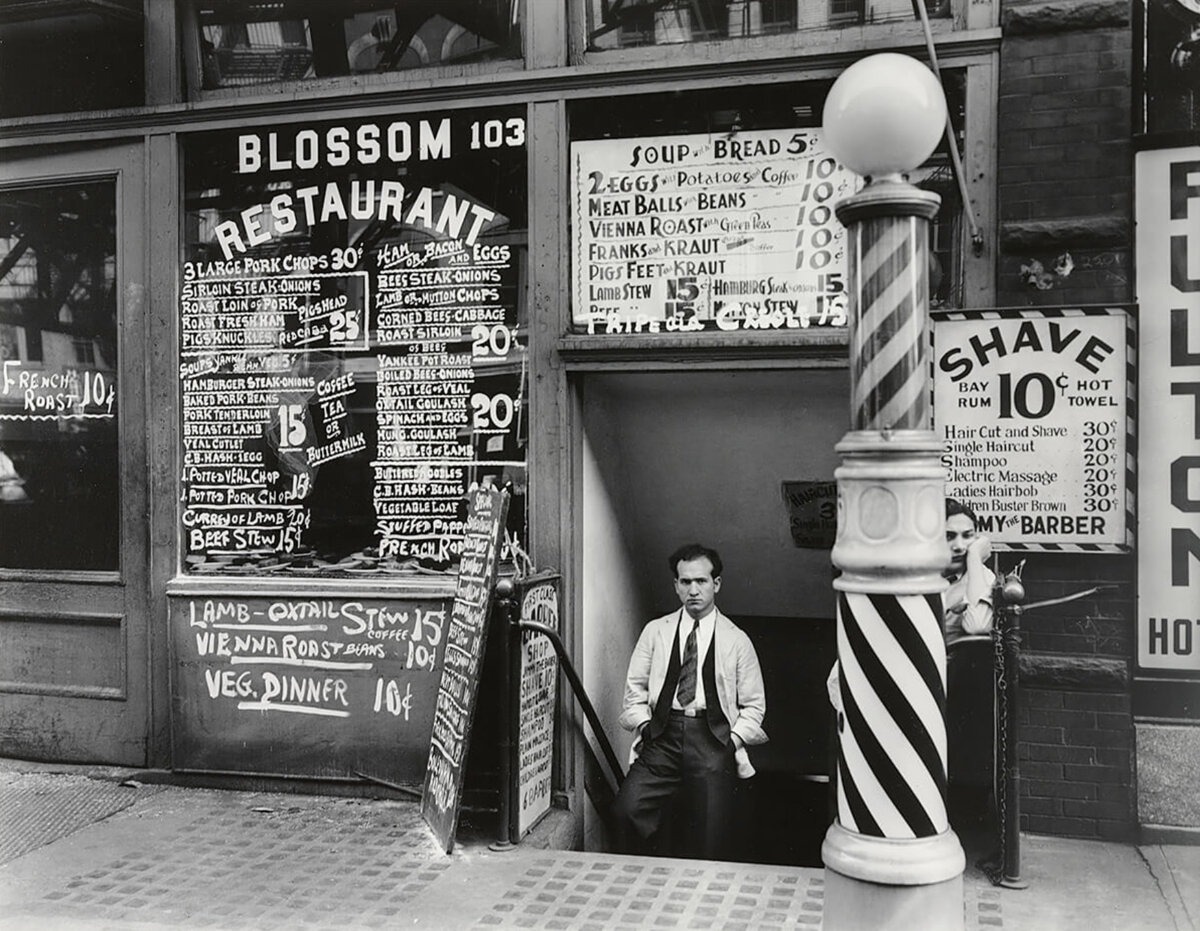
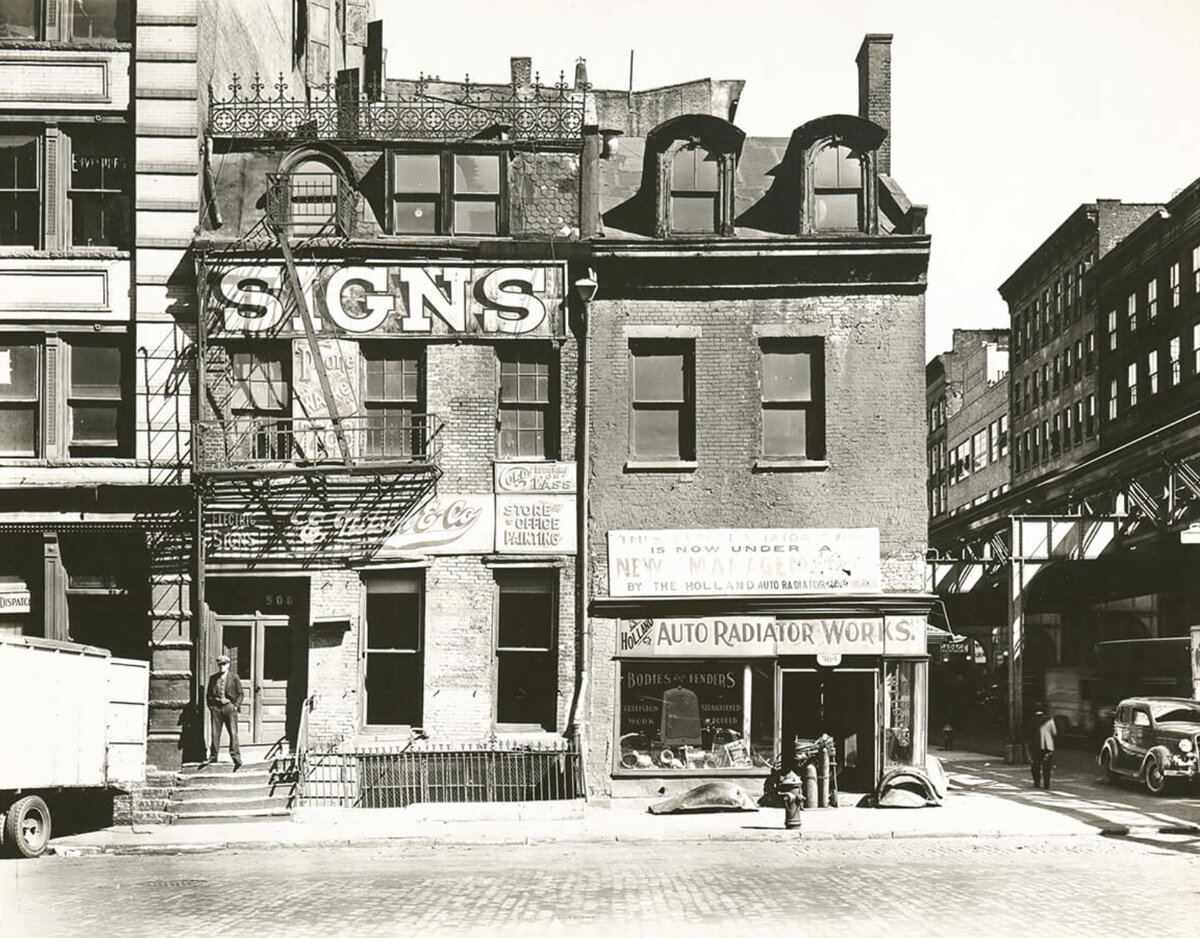
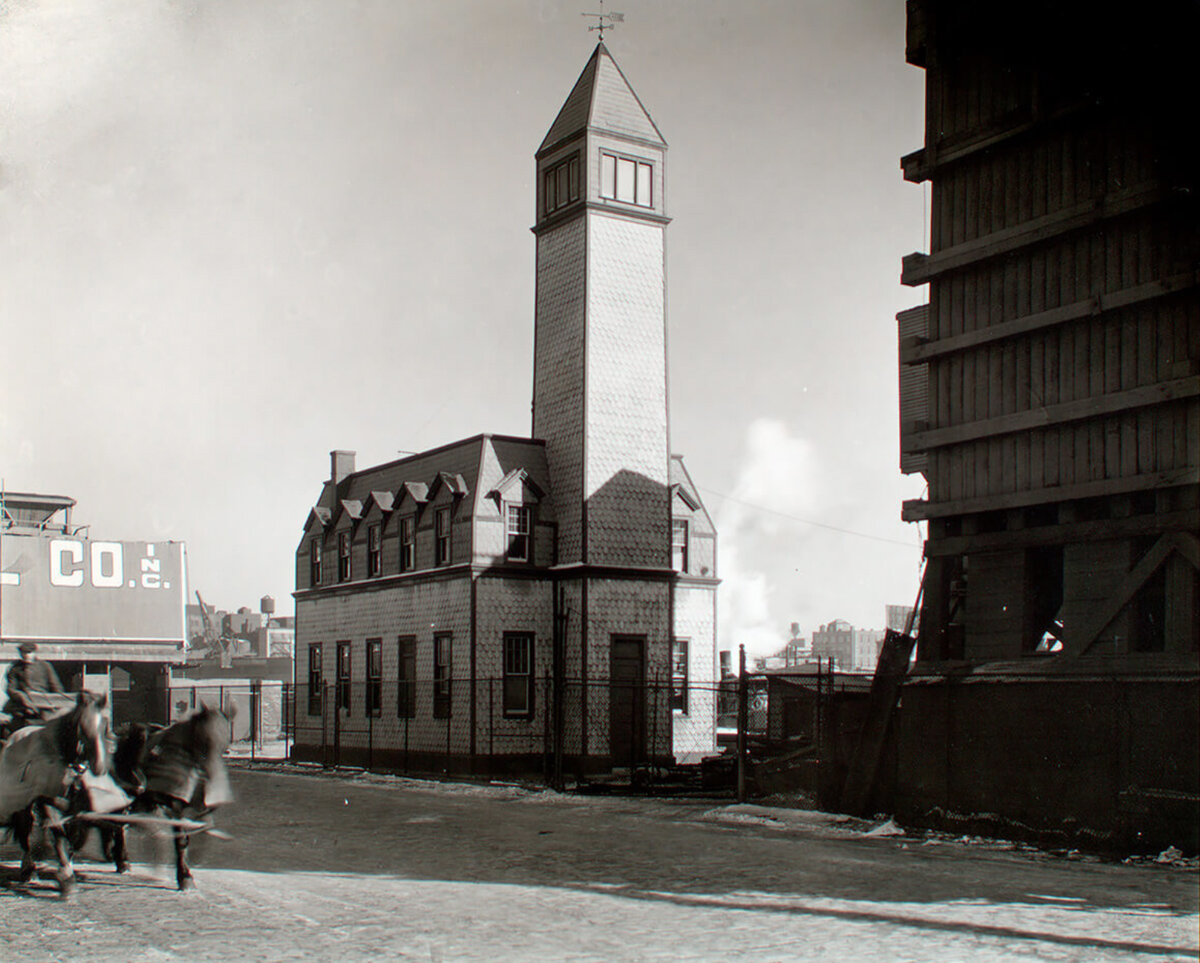
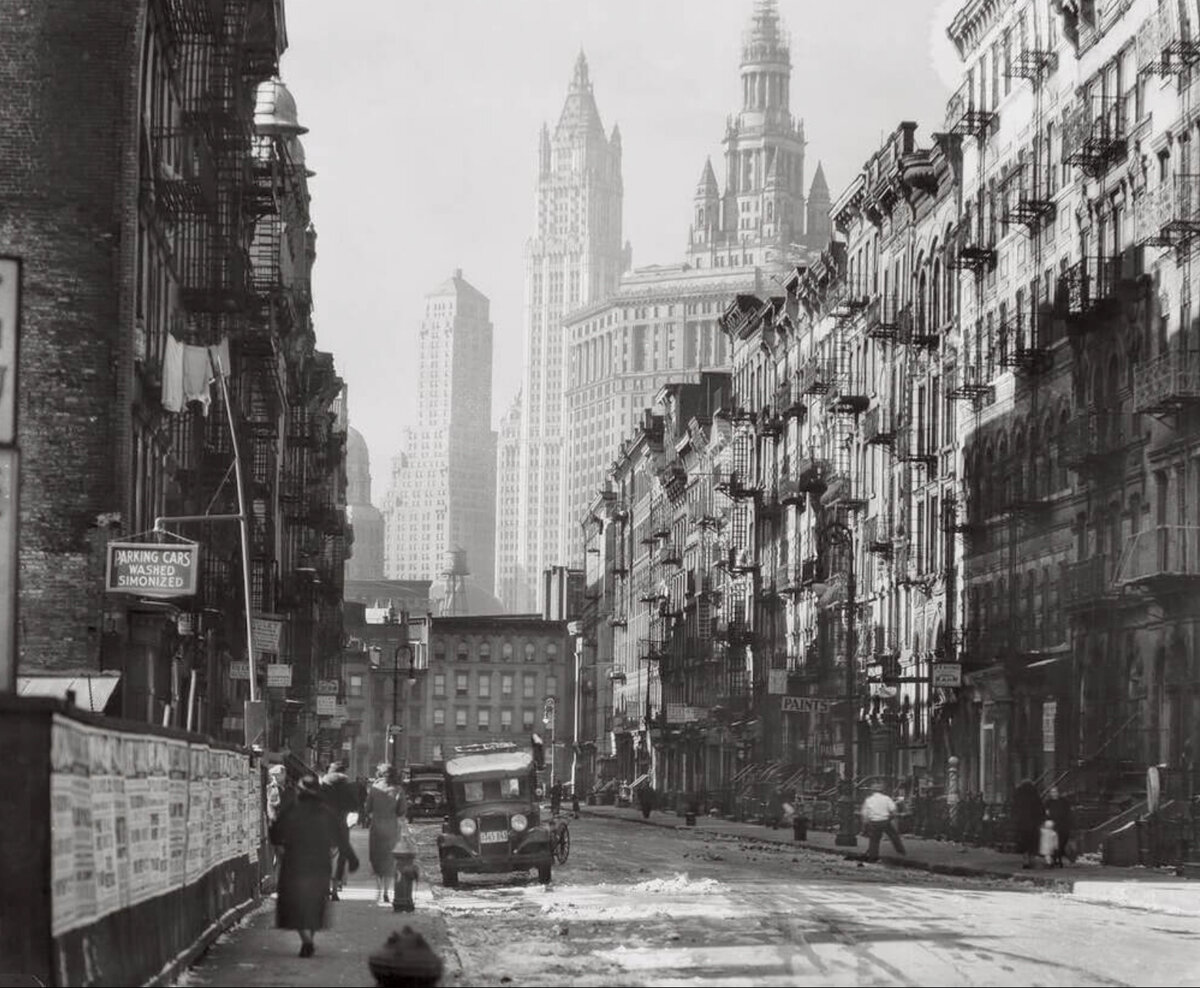
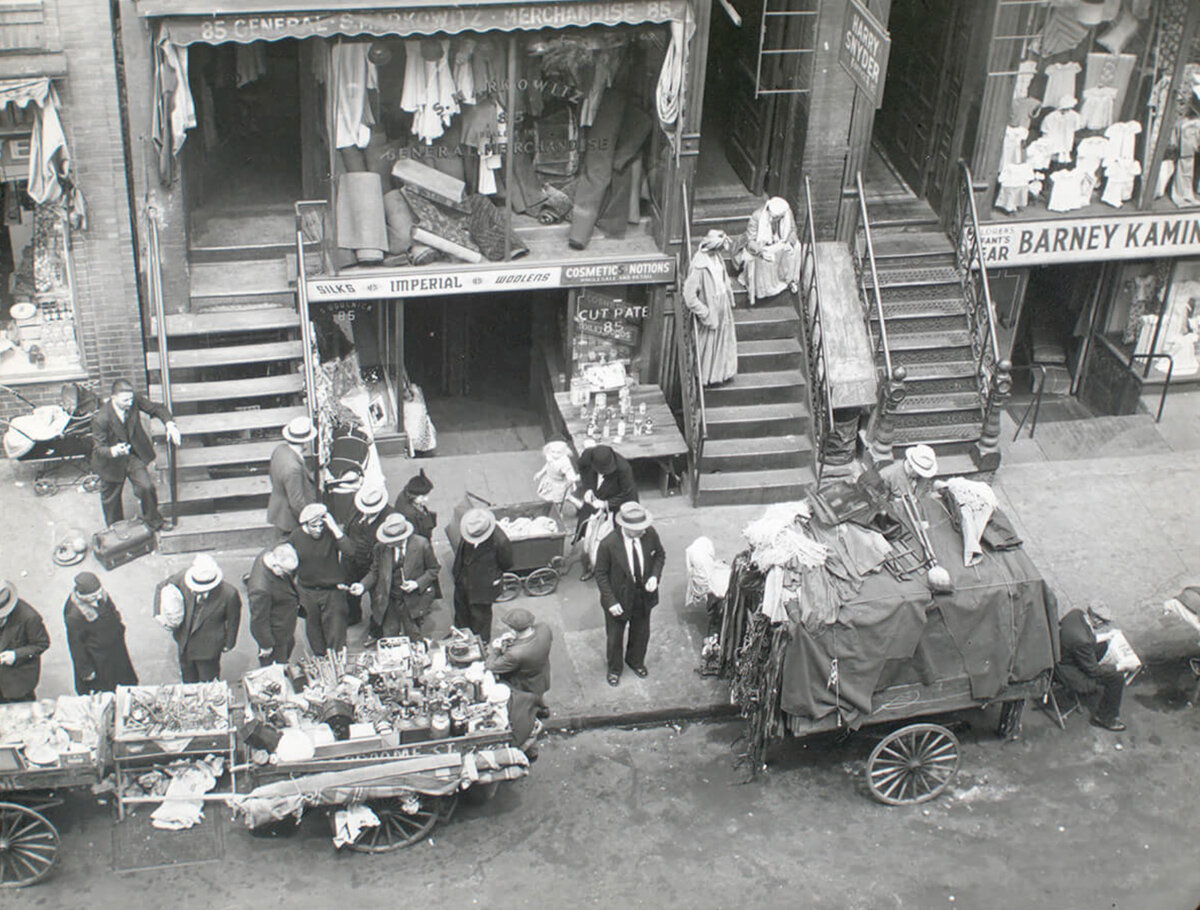
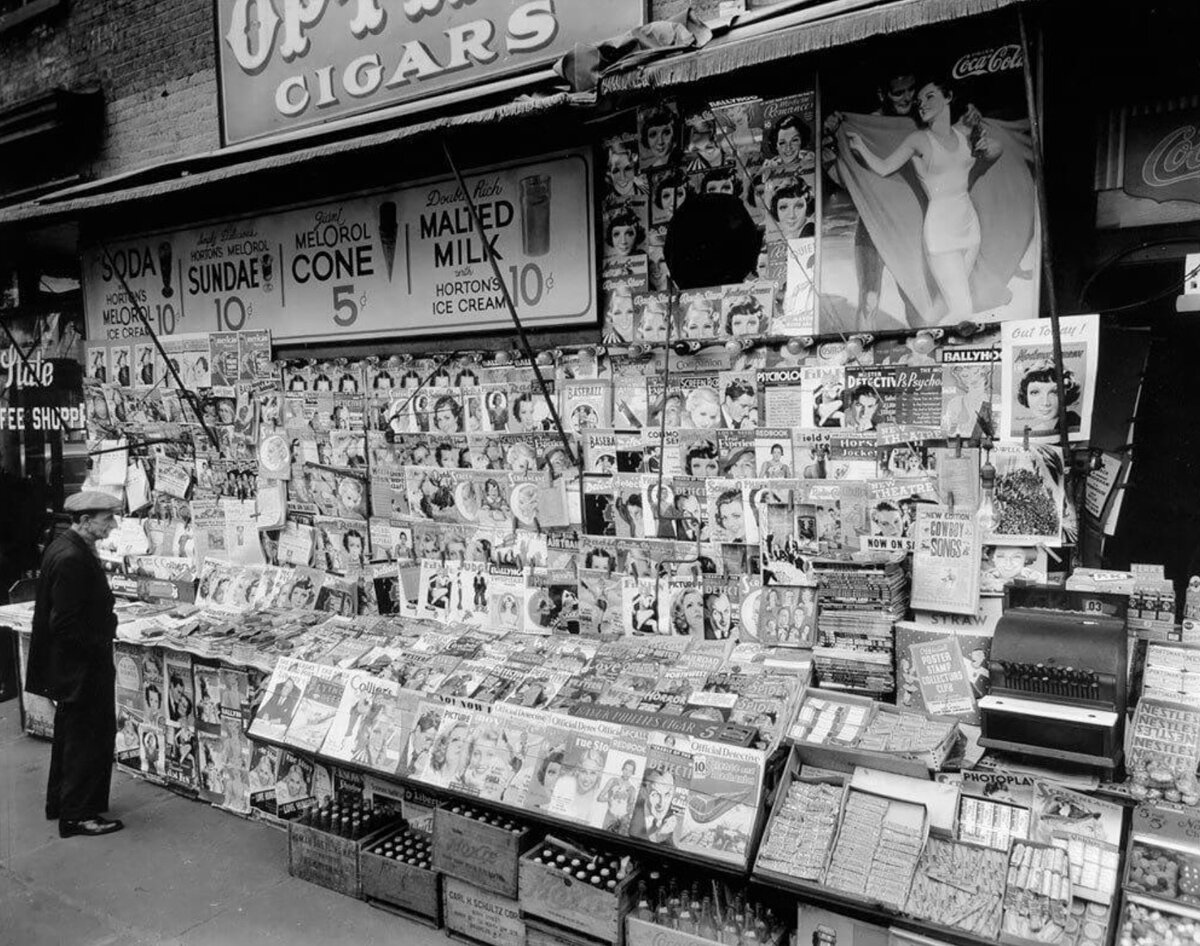
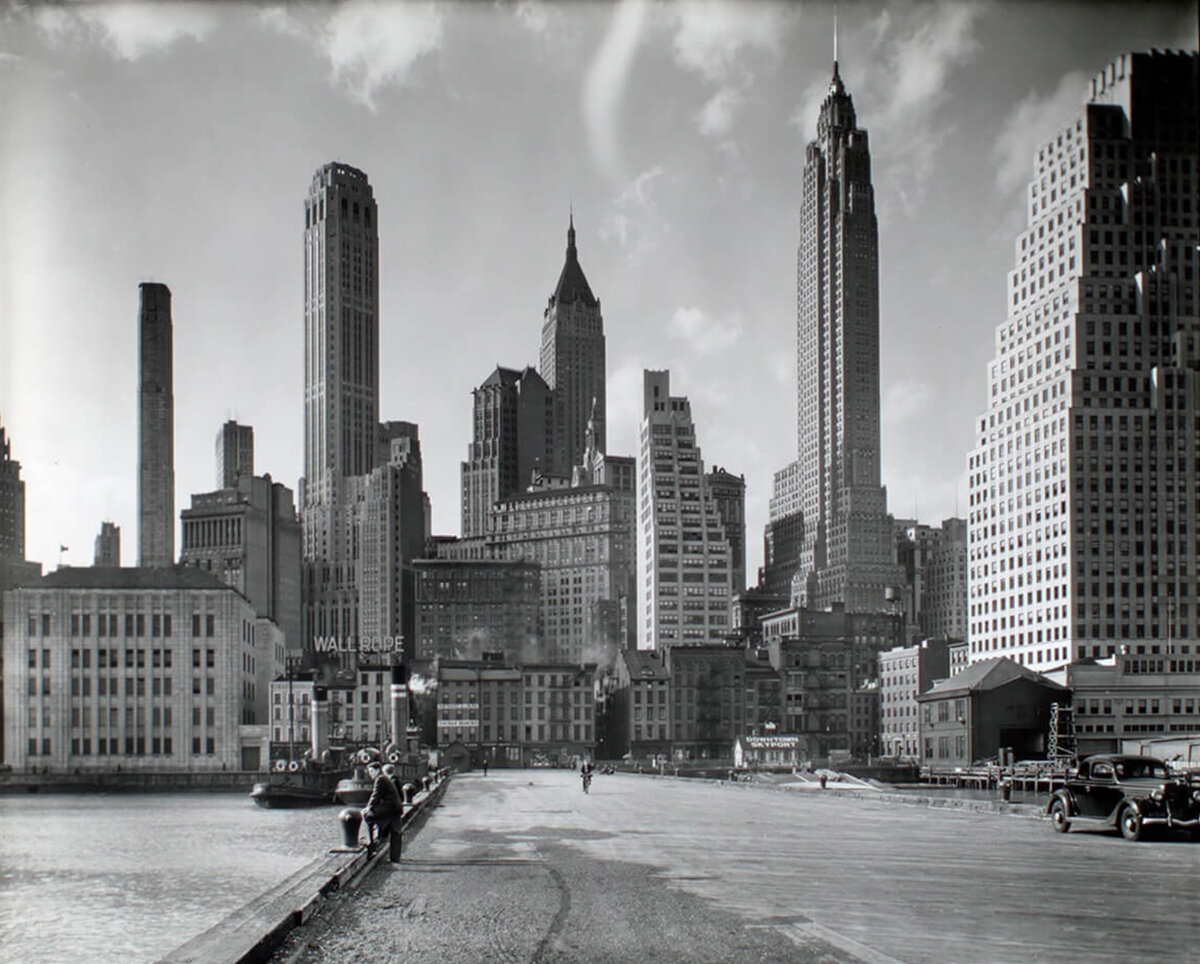
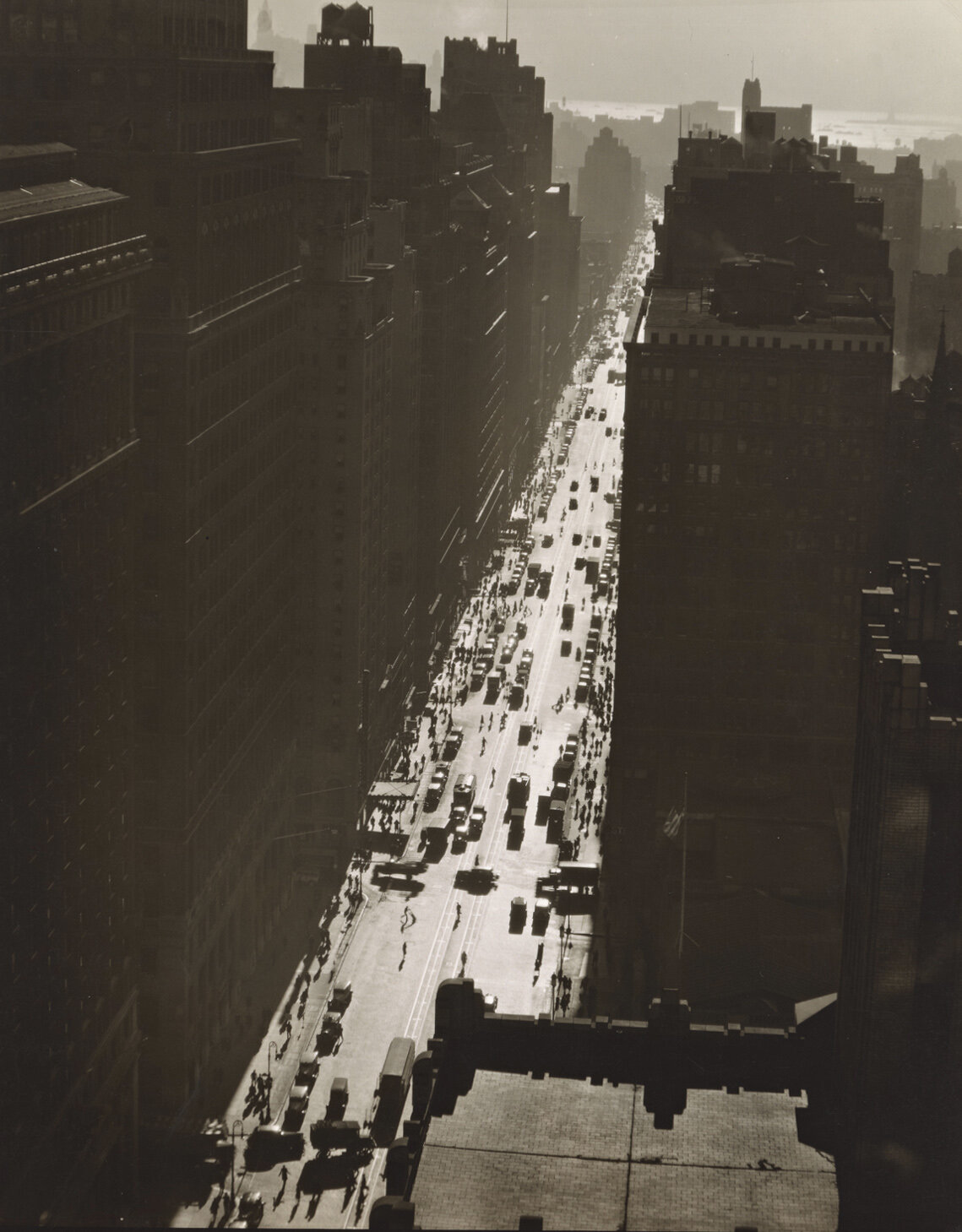
Berenice Abbott is an American photographer known for documenting the architecture and metropolitan life of New York with all its contrasts in the ’30s of the Great Depression. She photographed with an 8x10 inch camera the new architecture of New York that was emerging, but also the places that were disappearing from development.
Berenice Abbott
(U.S.A 1898-1991)
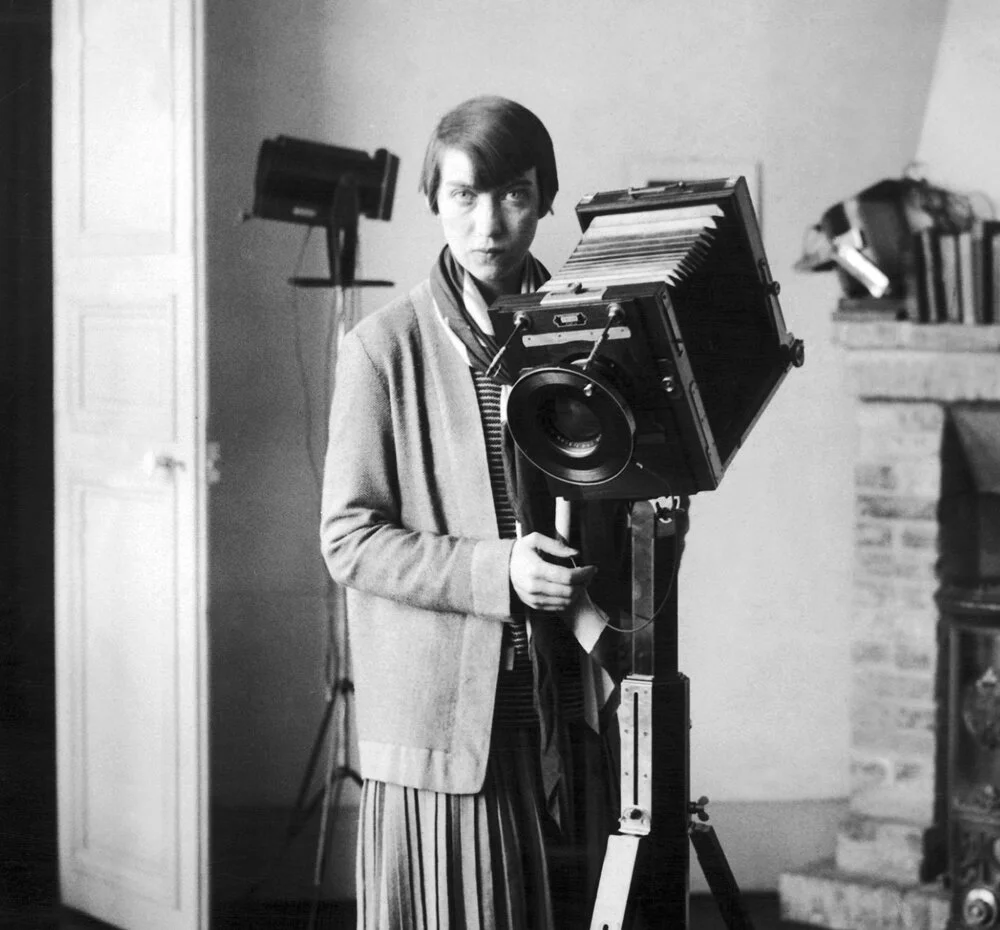
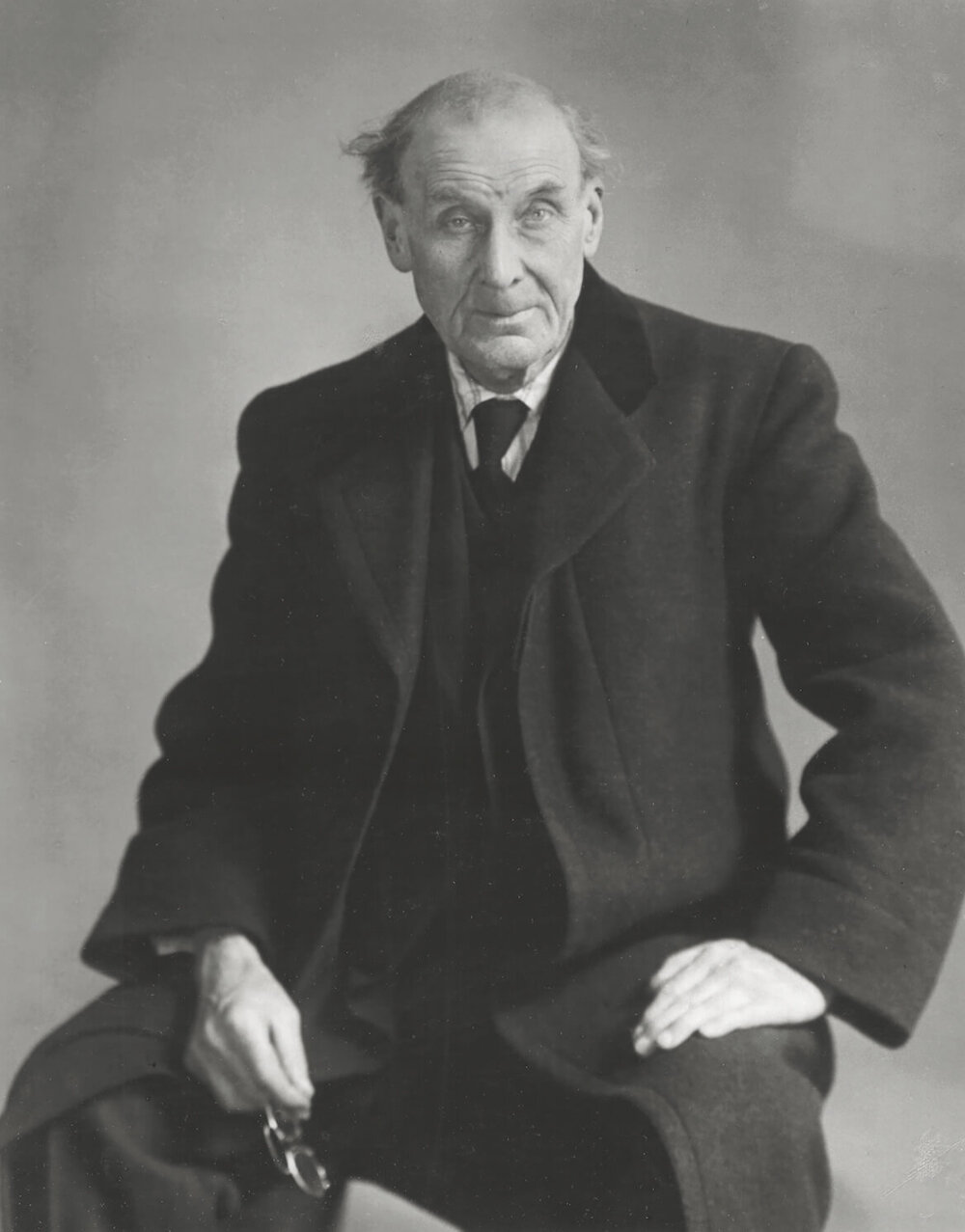
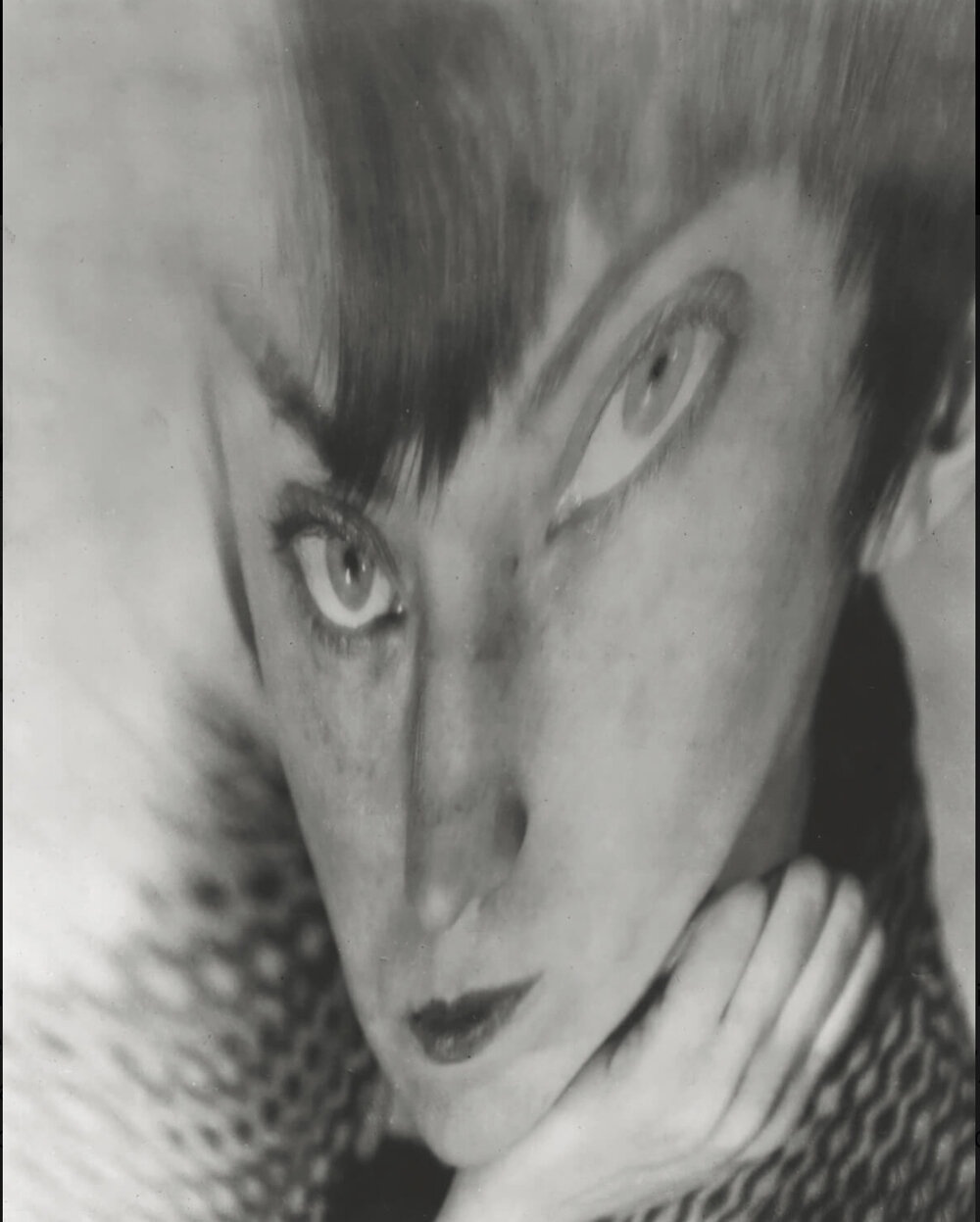
Berenice Abbott Portrait
Berenice Abbott is an American photographer known for documenting the architecture and metropolitan life of New York with all its contrasts in the ’30s of the Great Depression. Berenice Abbott is known for her documentary style, outside of any subjectivism and pictorialism. She photographed with an 8x10 inch camera the new architecture of New York that was emerging, but also the places that were disappearing from development. Her main influence was the French photographer Eugene Atget, who scrupulously photographed old Paris, which was disappearing from the modernity of the early 20th century. Abbott called Atget ‘the Balzac of the camera’ and an ‘urban historian’. She is credited with rescuing Atget's archive when, after his death, she bought all the negatives and took them to America, where she worked to publish his work. In the last years of her career Berenice Abbott was involved in the technical and scientific aspects of photography.
One of her expressions is "The world doesn't like independent women, I don't know why, but I don’t care"

Gabriele Basilico
Gabriele Basilico is an italian photographer known for its urban and cityscape photographs. He is one of the best european and international contemporary photographers of the 20th century. Graduated as an architect from the Polytechnic University of Milan in 1973, he devoted his entire career documenting urban and metropolitan landscapes transformed from an industrial to post-industrial society.
Gabriele Basilico
(Milano 1944-2013)

Gabriele-Basilico, Portrait 2012, by Giorgia Fiorio
Gabriele Basilico is an italian photographer known for its urban and cityscape photographs. He is one of the best european and international contemporary photographers of the 20th century. Graduated as an architect from the Polytechnic University of Milan in 1973, he devoted his entire career documenting urban and metropolitan landscapes transformed from an industrial to post-industrial society.

© Gabriele Basilico, Milano Ritratti di Fabbriche, 1978-1980
Documenting the urban change was his main objective. In his autobiographical book "Architecture, Cities, Visions: reflections on photography" he states : “I had given myself a kind of mission, to witness how urban space changes… Cities resemble each other, but they are not all the same: there are social differences, of history, of size, of latitude, of climate. I think that urban space, subjected to an unprecedented change in history, presents itself as a real metaphor for our society, which certainly deserves to be observed with great attention”.

© Gabriele Basilico, Milano 1973
On the issues of transformation, shape and identity, Gabriele Basilico has published over 100 photography books during his 40-year career. The main cities he has documented are Milan, Rome, Bari, Barcelona, Berlin, Madrid, Lisbon, Naples, Hamburg, Beirut, Genoa, Istanbul, Moscow, Paris, Shanghai, San Francisco, Rio de Janeiro, etc. His first project was in 1978-1980 "Milan-Factory Portraits", presented in 1983 at PAC Milan (Contemporary Art Pavilion). The first international project came in 1984 when he and other photographers were commissioned by the French government in Mission DATAR to document the transformation of contemporary landscape. From here the book "Bord de Mer" was created. The theme of ports and the sea accompanies him, as in the project of Genoa, concluded in the book “Porti di Mare” (1990).

© Gabriele Basilico, Dunkerque 1984

© Gabriele Basilico, Dunkerque 1984

© Gabriele Basilico, Bord de Mer, 1984

© Gabriele Basilico. LeTouquet, France 1984

© Gabriele Basilico, Genova 1985

© Gabriele Basilico, Hamburg 1988
In 1991 he took part in the internationally renowned project, photographing Beirut destroyed by the 15-year civil war, along with other photographers such as Rene Burri, Robert Frank, Jodeph Koudelka, Raymond Depardon and Fouad Elkoury. In 1996 he participated in the Venice Biennale with the exhibition, “Cross Sections of a Country”, where he received the Osella d’Oro Award for Contemporary Architecture Photography. In 1999 he published the book "Interrupted City" and "Cityscapes" with over 300 urban photographs taken since the early ‘80s. In 2000 he photographed the Berlin metropolitan area, from which the book “Berlin” was created that won the best photography book award in 2003. In 2007, he was invited by SFMOMA (San Francisco Museum of Modern Art), to develop a photography project in the Sillicon Valley metropolitan area, published in the book "Gabriele Basilico-Sillicon Valley". Another project of this year is "Vertical Moscow", photographed from the seven towers of the Stalinist period. In the coming years 2010-2012 his work will be extended to other world metropolis; Istanbul, Shanghai, Rio de Janeiro. The latest project is in Milan 2012, documenting the construction of Porta Nuova from its inception to the completion.

© Gabriele Basilico, Beirut 1991

© Gabriele Basilico, Beirut 1991

© Gabriele Basilico, Madrid 1993
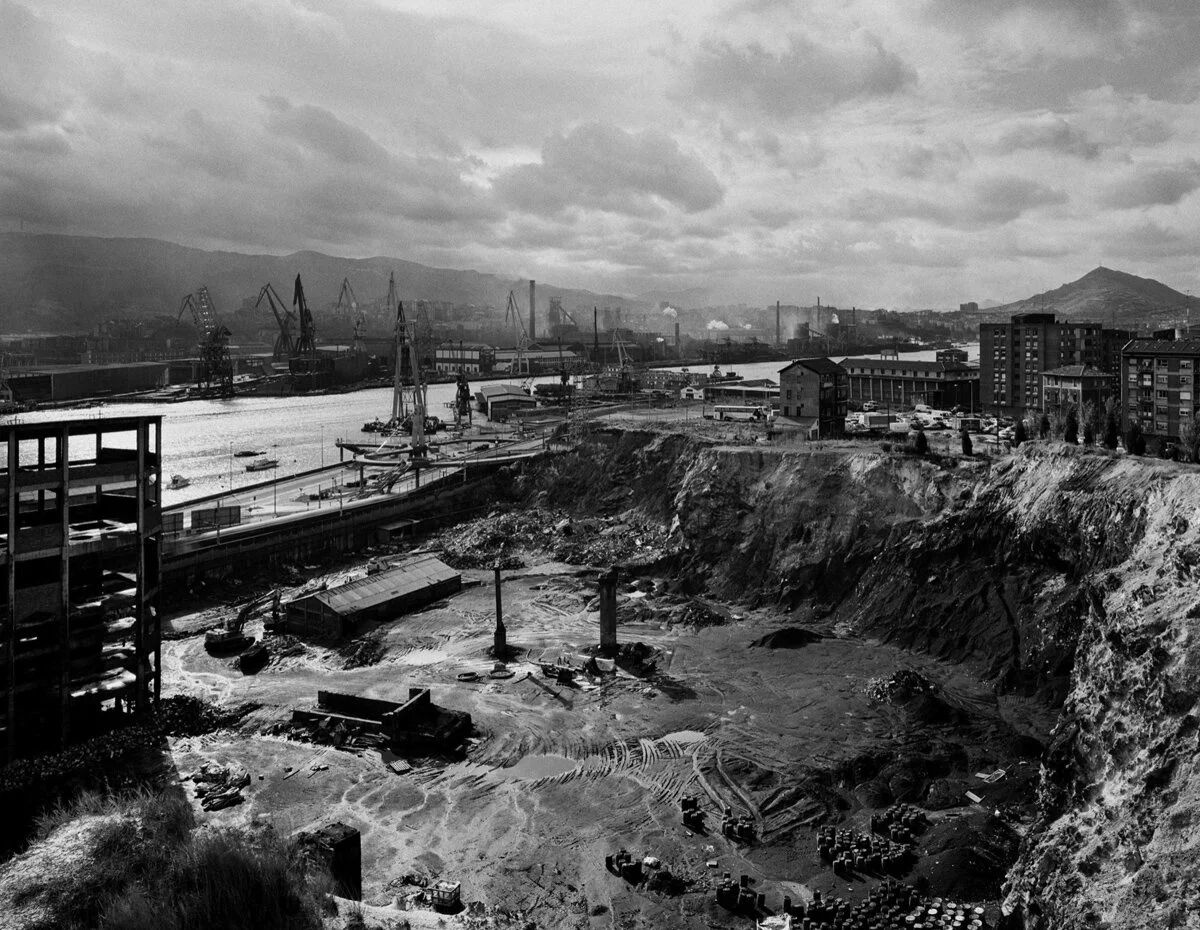
© Gabriele Basilico, Bilbao 1993

© Gabriele Basilico, Porto 1995
The photography of Gabriele Basilico is known for its monumentality and silence, the lack of people, the contrast in black and white, which reinforce the grandeur of architecture and gives the place a metaphysical character. He is interested in social and historical stratifications. As he states : "I can not help but see the city as a large body that breathes, a body in transformation, and I am interested in grasping its signs, observing its shape, like the doctor who investigates the modifications of the human body to study its nature. I am constantly looking for new points of view, as if the city were a labyrinth and my gaze was looking for a precise point of penetration”.

© Gabriele Basilico, Milano 1995

© Gabriele Basilico, Milano 1995

© Gabriele Basilico, Milano 1996
Gabriele Basilico's photography is documentary in character, but far from advertising and propaganda. He doesn’t capture the 'decisive moment' as Bresson, but is meditative and analytical as Atget, Evans, and Beckers. As Francesco Bonami says, "Basilico’s work is not a celebration of architecture and its symbolic value, but a discourse about the aesthetic value of architecture and the constant tension between this and its social function". During his entire life, Basilico has explained his photography in many articles, conversations and books. But the paragraph that most synthesizes his thinking is: “Photographing the city does not mean choosing the best architecture and isolating it from the context to enhance its aesthetic, but for me it means exactly the opposite. That is, putting in the same level high-end architecture with ordinary one, building a place of coexistence, because the real city, the city I am interested in, contains this mixture of excellence with mediocre, the center with periphery, a vision of urban space that once we would have called democracy ”.

© Gabriele Basilico, Paris France 1997

© Gabriele Basilico, Valencia 1999

© Gabriele Basilico, Milano 2011

© Gabriele Basilico, Rome 2007.

© Gabriele Basilico, Roma 2007
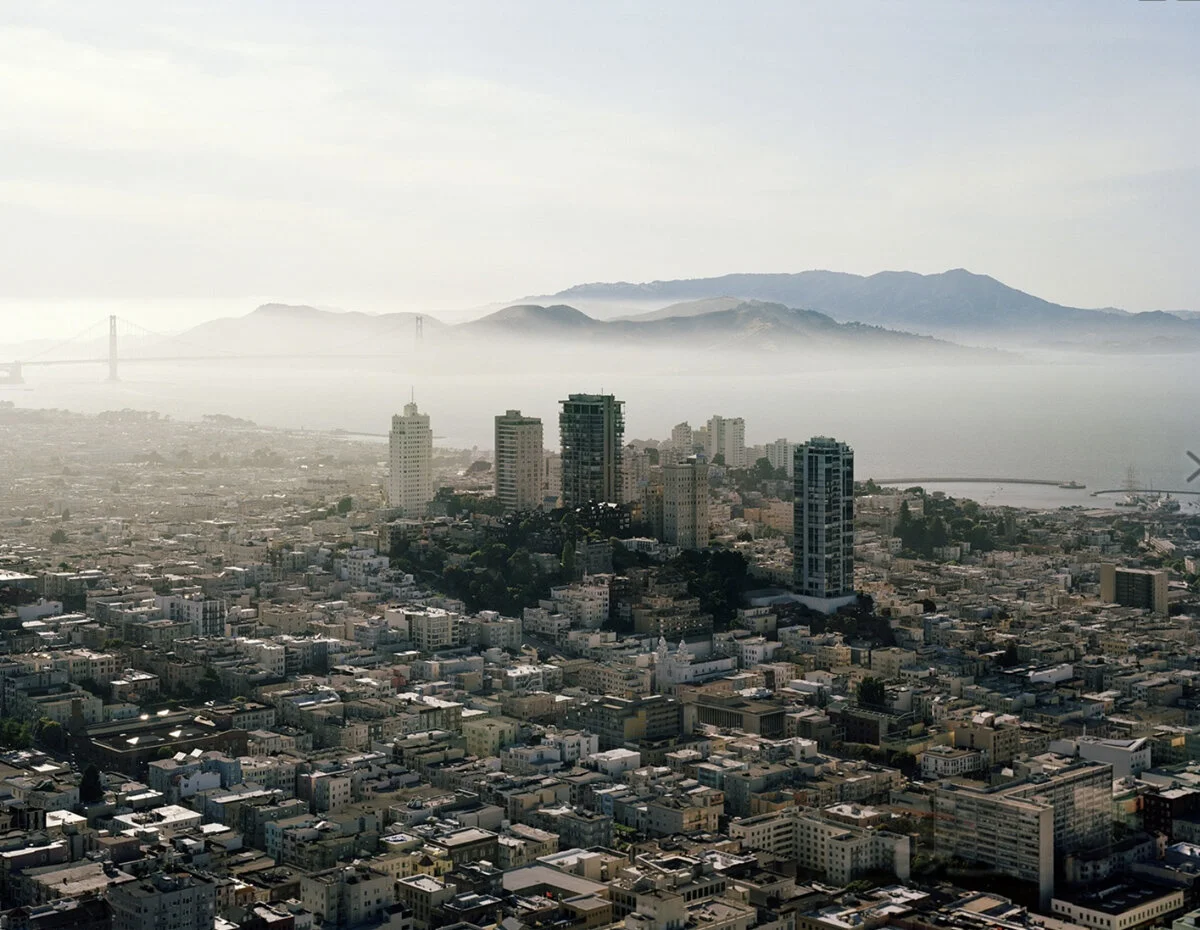
© Gabriele Basilico, San Francisco 2007

© Gabriele Basilico, Shanghai 2010

© Gabriele Basilico, Istambul, 2010

© Gabriele Basilico, Rio De Janiero 2011

© Gabriele Basilico, Milano, Porta Nuova, 2012

© Gabriele Basilico, selfportrait