
The Importance of Protected Areas
Protected areas in Albania represent territories of significant natural, ecological, economic, and cultural value, whose conservation and sustainable management are essential for ensuring long-term development. These areas encompass a wide variety of ecosystems, from mountainous regions and forests to wetlands, rivers, lakes, and coastal environments.
by:
Dritan Dhora (text)*
Alketa Misja (photography)**
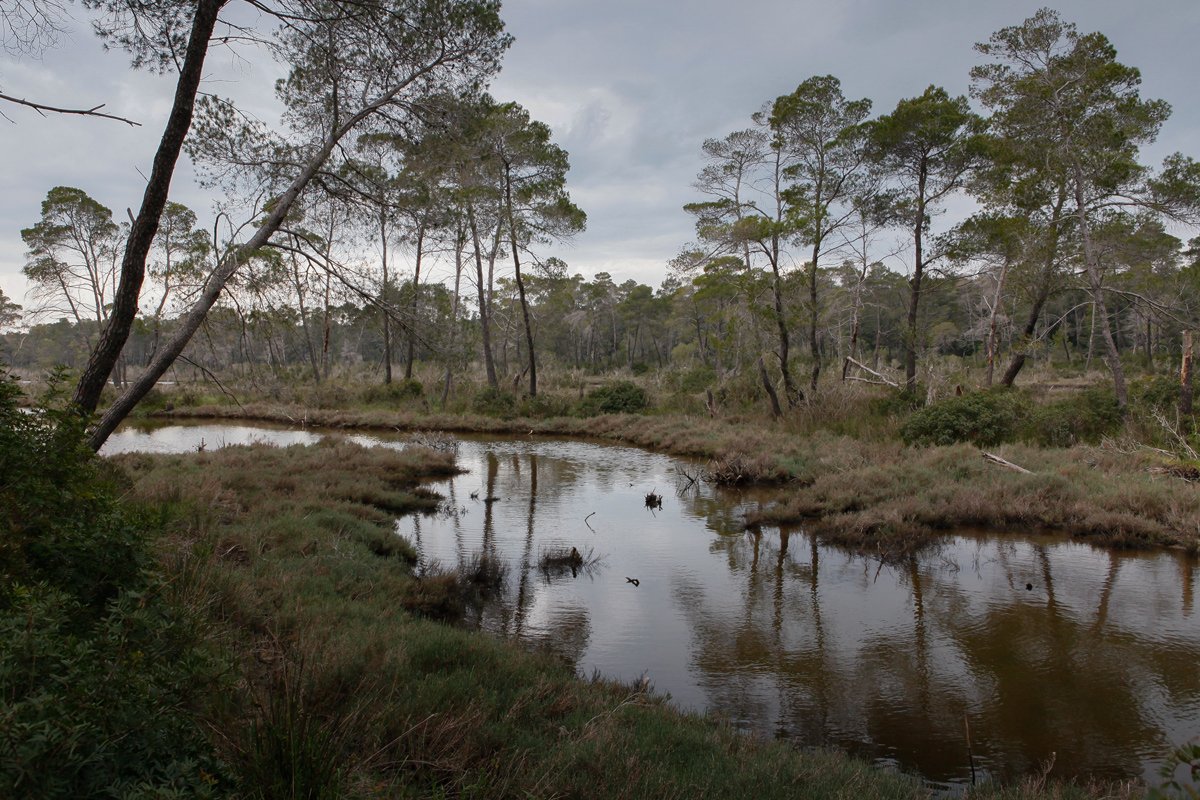
National Park Divjakë-Karavasta, Albania © Alketa Misja
Protected areas in Albania represent territories of significant natural, ecological, economic, and cultural value, whose conservation and sustainable management are essential for ensuring long-term development. These territories encompass a wide variety of ecosystems, from mountainous areas and forests to wetlands, rivers, lakes, and coastal environments. Due to their rich biodiversity and natural resources, protected areas play an important role in maintaining ecological balance and ensuring the essential ecosystem services that nature provides to society.
Their ecological importance is particularly related to the conservation of biodiversity and natural habitats. They provide conditions for the survival of numerous species of flora and fauna, including endemic and endangered species. At the same time, protected ecosystems contribute to regulating the water cycle, preventing soil erosion, absorbing carbon, and mitigating the impacts of climate change.
From an economic perspective, protected areas offer a wide range of resources and opportunities for sustainable development. The rational management of forests can provide timber products, while medicinal and aromatic plants represent significant potential for the rural economy and processing industries. In addition, agricultural land and pastures surrounding these areas support farming and livestock activities, while rivers, lakes, and coastal areas create opportunities for sustainable fishing. Alongside these resources, the development of ecotourism, agritourism, and nature-based tourism can generate income and employment opportunities for local communities.
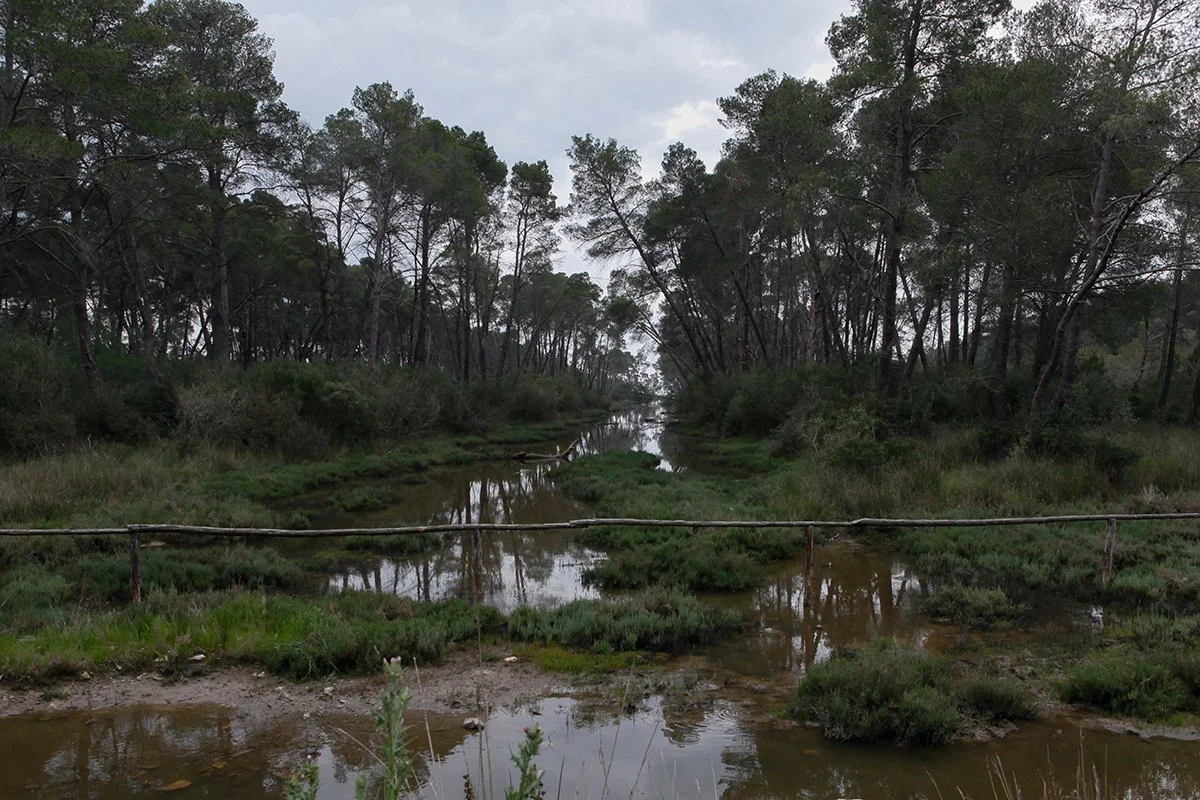
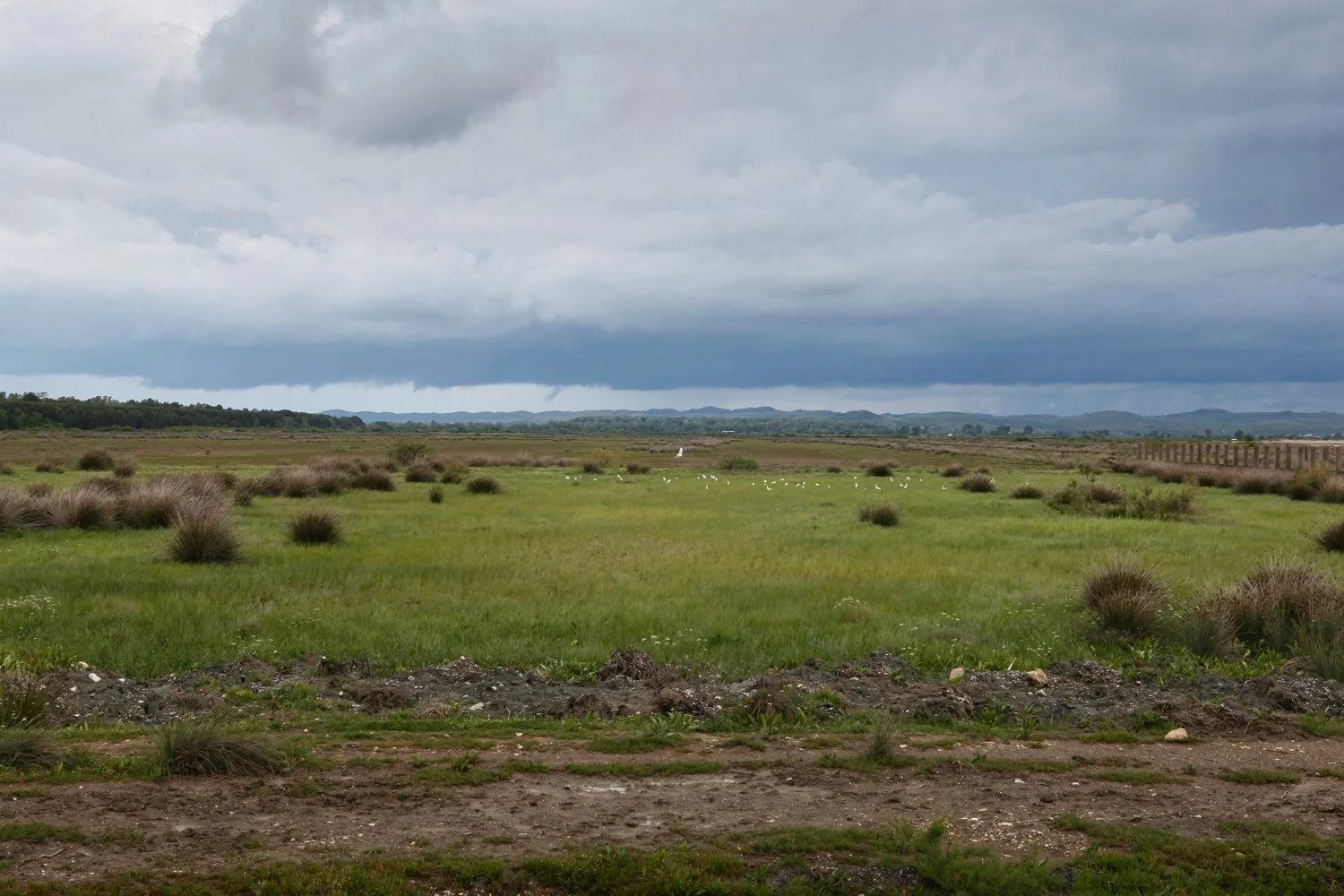
Karavasta Lagoon within the National Park Divjakë-Karavasta, © Alketa Misja
Finally, protected areas are of direct importance to public health and quality of life. Forests and natural ecosystems contribute to filtering air pollutants, producing oxygen, and regulating temperatures. The conservation of wetlands and water basins helps improve water quality, naturally filter pollutants, and ensure safer water resources for local communities. At the same time, the protection of soils reduces erosion and degradation, while the conservation of natural ecosystems helps prevent flooding and supports more effective water resource management. Natural areas also provide opportunities for physical activity, recreation, and relaxation, contributing positively to the physical and psychological well-being of individuals. For these reasons, the conservation and effective management of protected areas should be regarded as a strategic investment in Albania’s natural capital, public health, economic sustainability, and the preservation of ecosystem balance for future generations.
Karavasta Lagoon within the National Park Divjakë-Karavasta, © Alketa Misja
Potential Profitable Economic Activities in a Protected Area:
Sustainable agriculture
Traditional livestock farming
Beekeeping
Agritourism
Ecotourism
Mountain tourism
Adventure tourism
Rural tourism
Cultural tourism
Camping and glamping (camping with more luxurious eco-accommodation)
Tourist guiding and nature interpretation
Tourist accommodation (guesthouses, homestays)
Gastronomy and restaurants featuring local products
Sustainable fishing (where permitted)
Traditional aquaculture (in designated areas)
Collection and marketing of medicinal and aromatic plants
Collection and marketing of wild fruits, mushrooms, and other non-timber forest products (where permitted)
Processing and sale of agricultural and livestock products
Processing and marketing of honey and other beekeeping products
Traditional crafts and handicrafts
Production and sale of souvenirs
Nature photography and videography for commercial purposes
Organization of outdoor recreational activities (hiking, cycling, kayaking, horseback riding, etc., in accordance with applicable regulations)
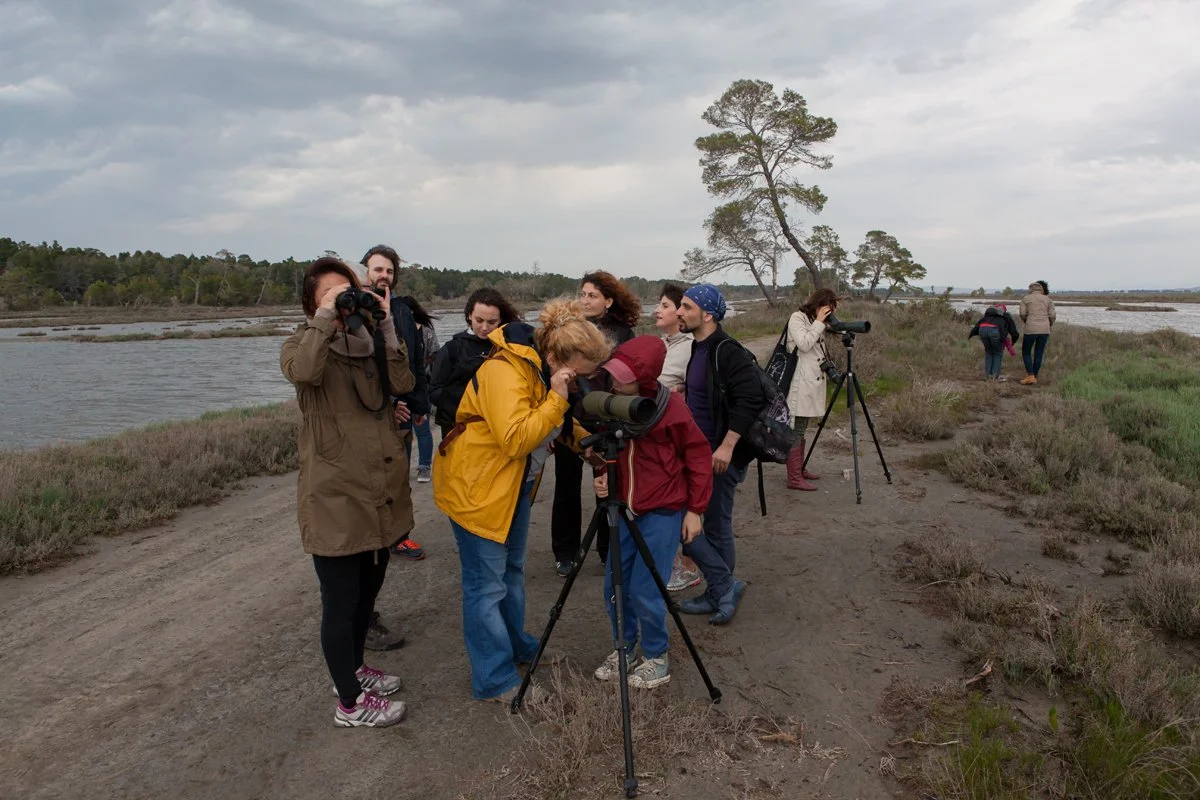
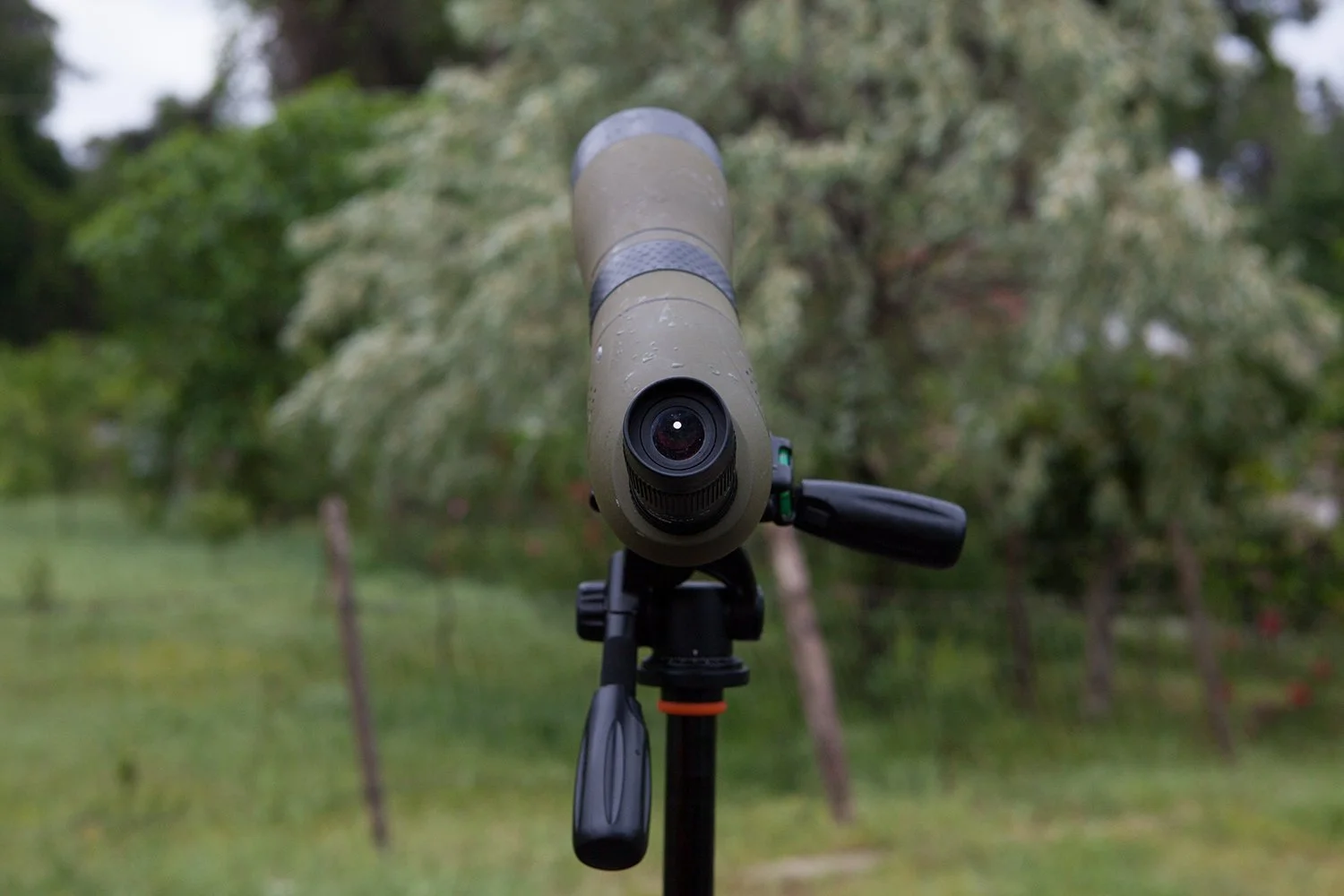
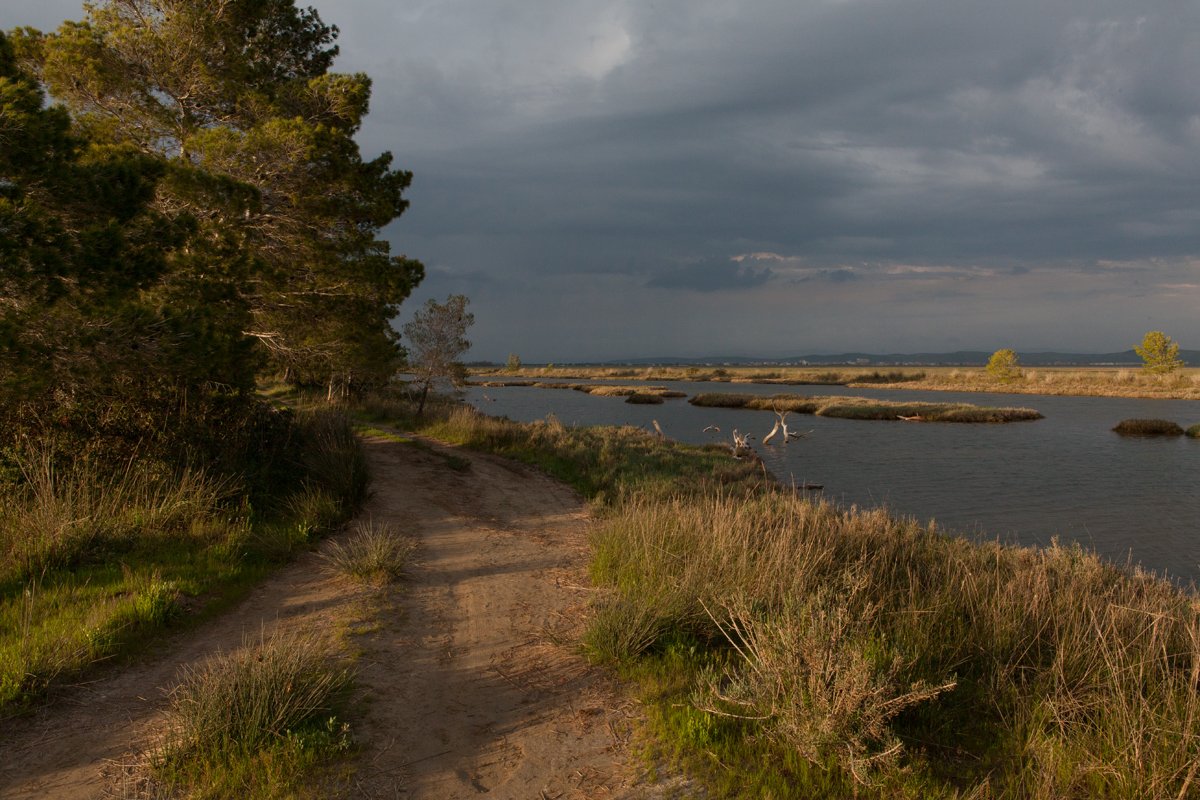
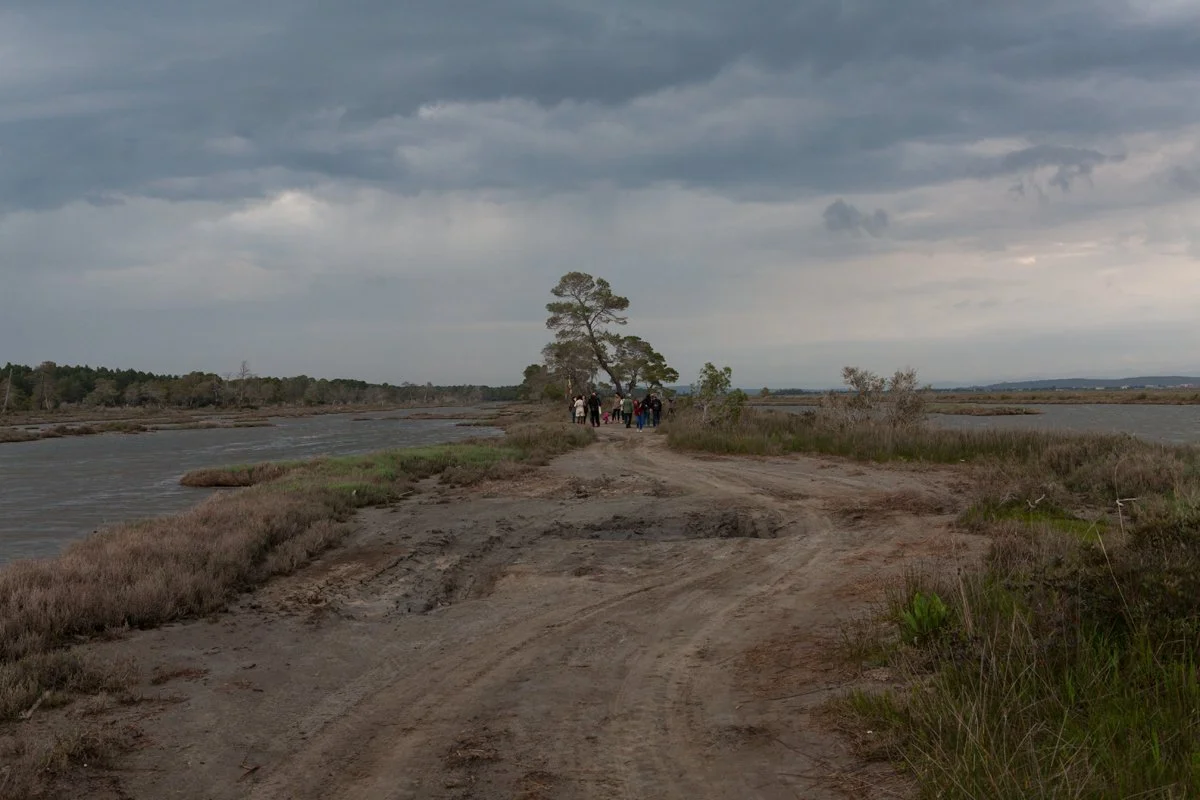
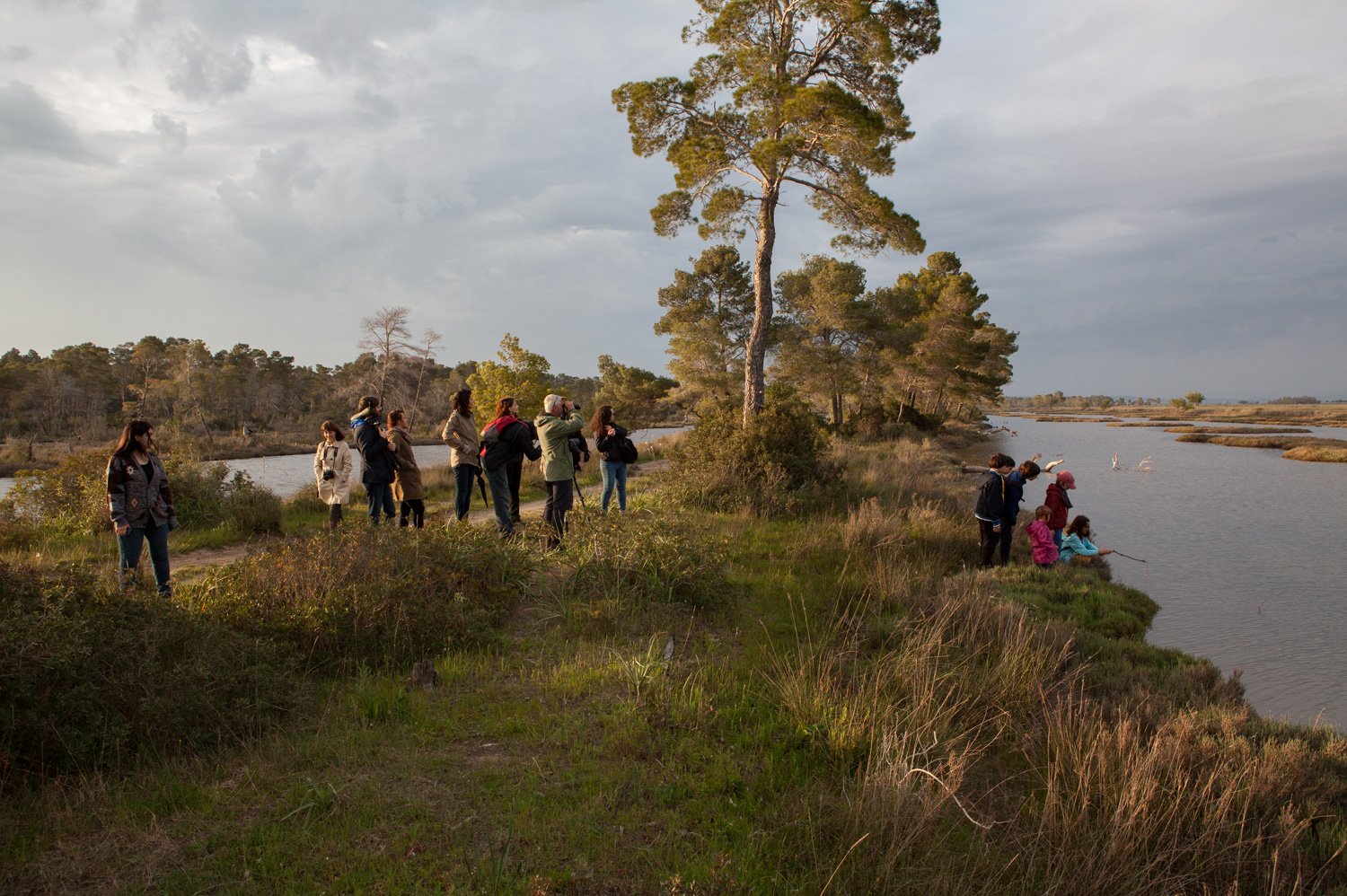
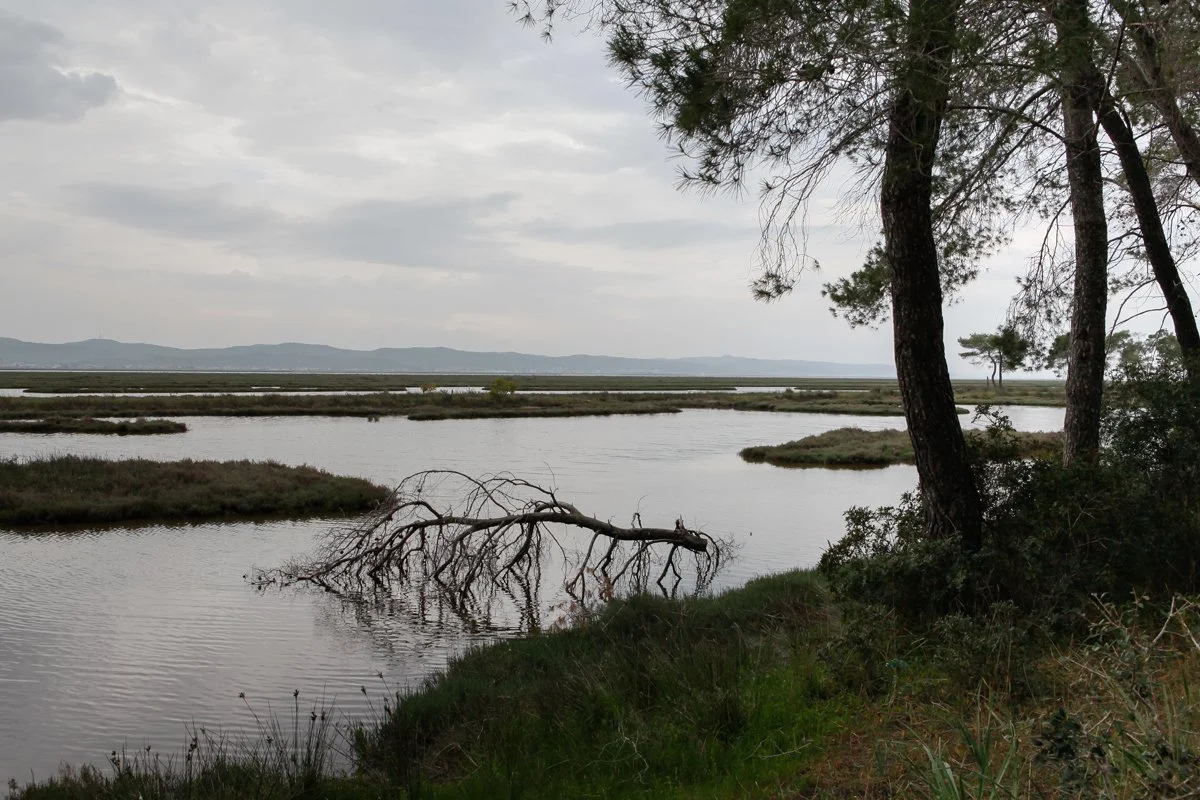
The Photos are taken inside Karavasta Lagoon within the National Park Divjakë-Karavasta,, © Alketa Misja
Albania has 52 protected areas, divided into categories such as national parks, natural parks/managed nature reserves, and protected landscapes. These areas cover approximately 624,460 hectares, representing around 21.8% of Albania’s territory.
In addition, Albania has approximately 330 natural monuments, which constitute the third category of protected areas.
According to Albanian legislation on protected areas, which is based on the categorization established by the IUCN (International Union for Conservation of Nature), the categories of protected areas, ranked according to their level of importance, are:
1. Strict Nature Reserve – Areas subject to a very high level of protection, where human activity is highly restricted and primarily scientific research is permitted.
2. National Park – Large areas of significant natural value and high biodiversity, protected for conservation, education, and sustainable tourism.
3. Natural Monument – Natural features or formations of particular scientific, geological, biological, or aesthetic value, such as caves, waterfalls, canyons, and monumental trees.
4. Managed Nature Reserve (or Natural Park) – Areas where nature conservation is combined with the sustainable use of natural resources.
5. Protected Landscape – Areas where the interaction between nature and human activity has created landscapes of particular natural, cultural, and recreational value.
6. Managed Resource Protected Area – Areas designated for the conservation of ecosystems and the sustainable use of natural resources.
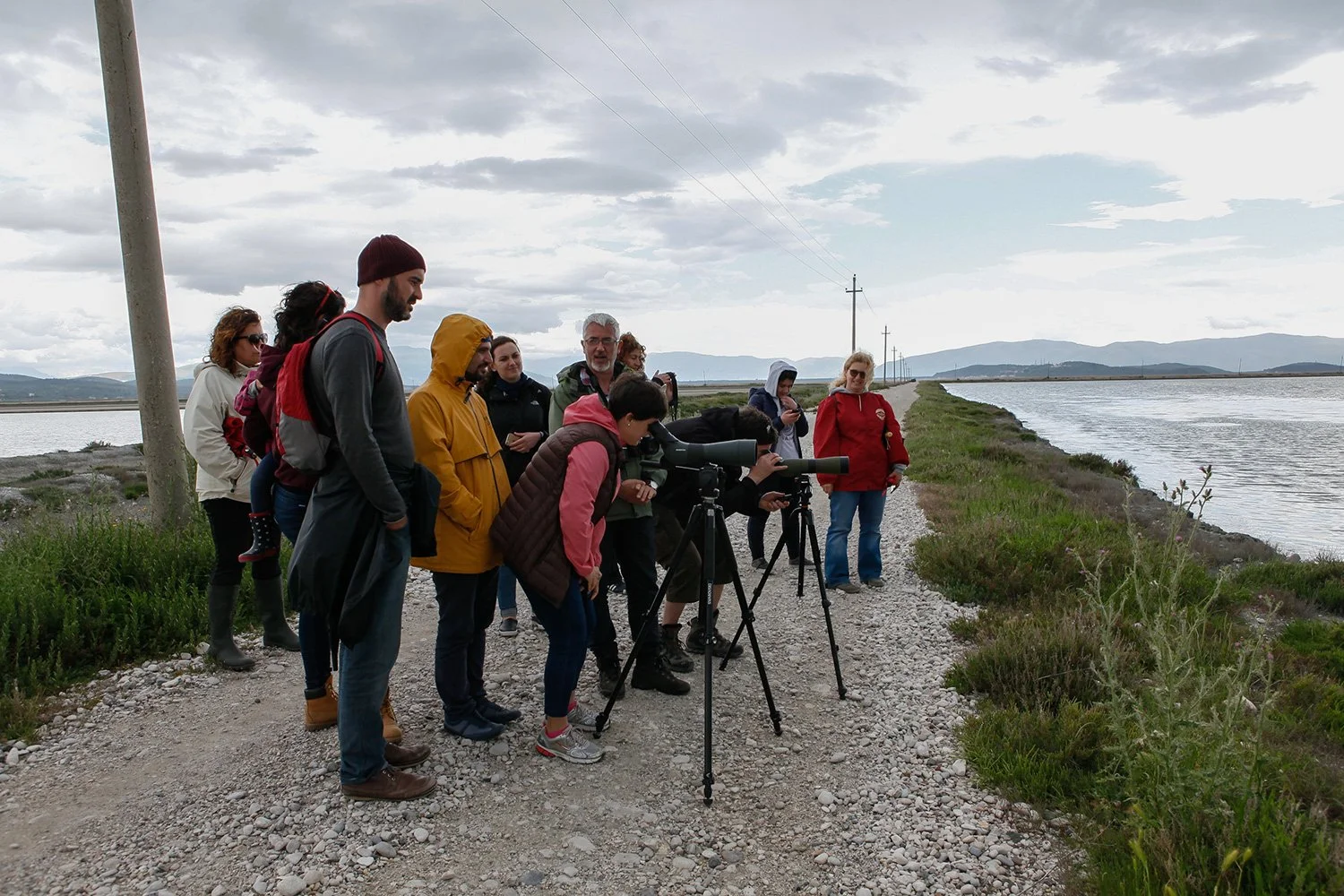
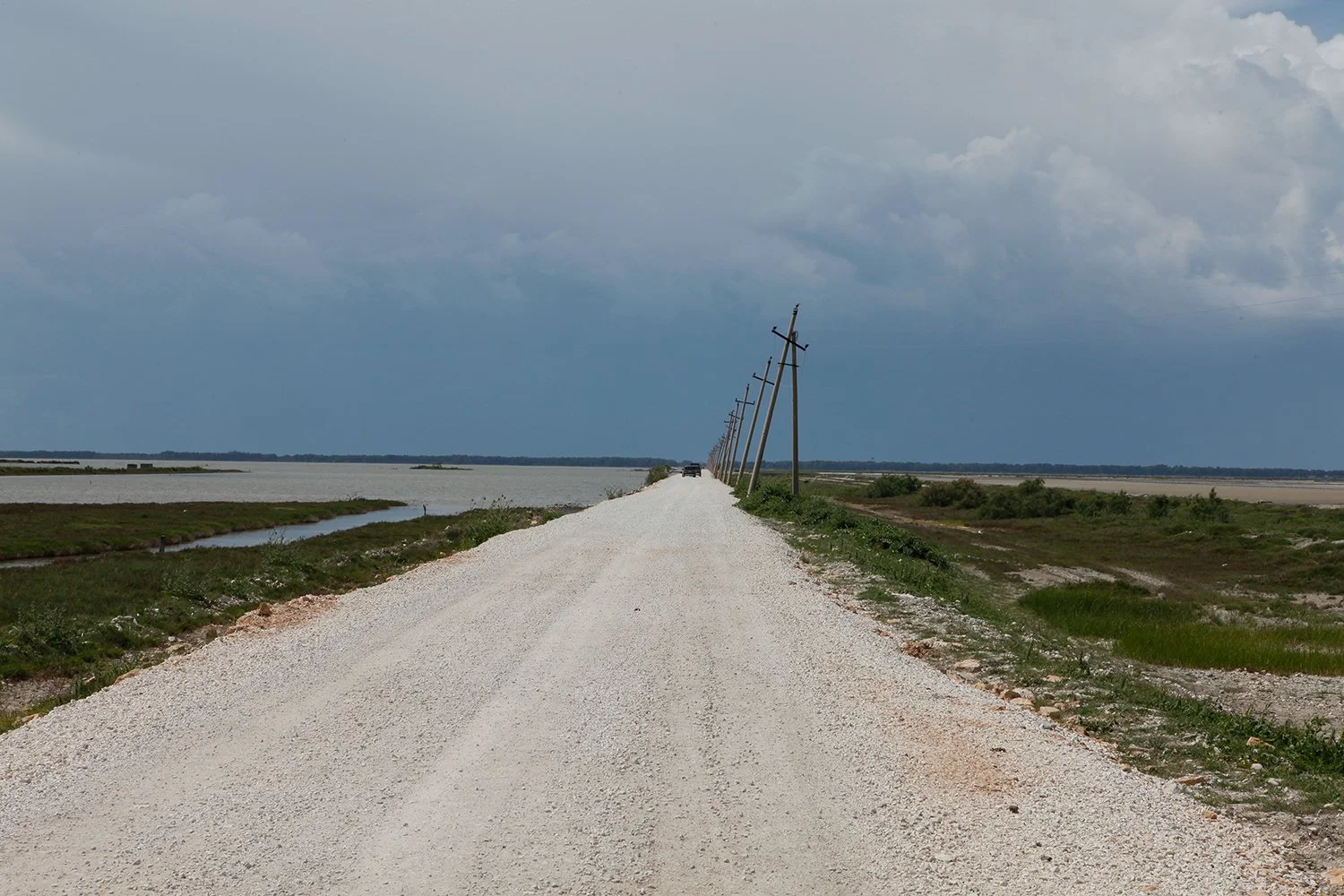
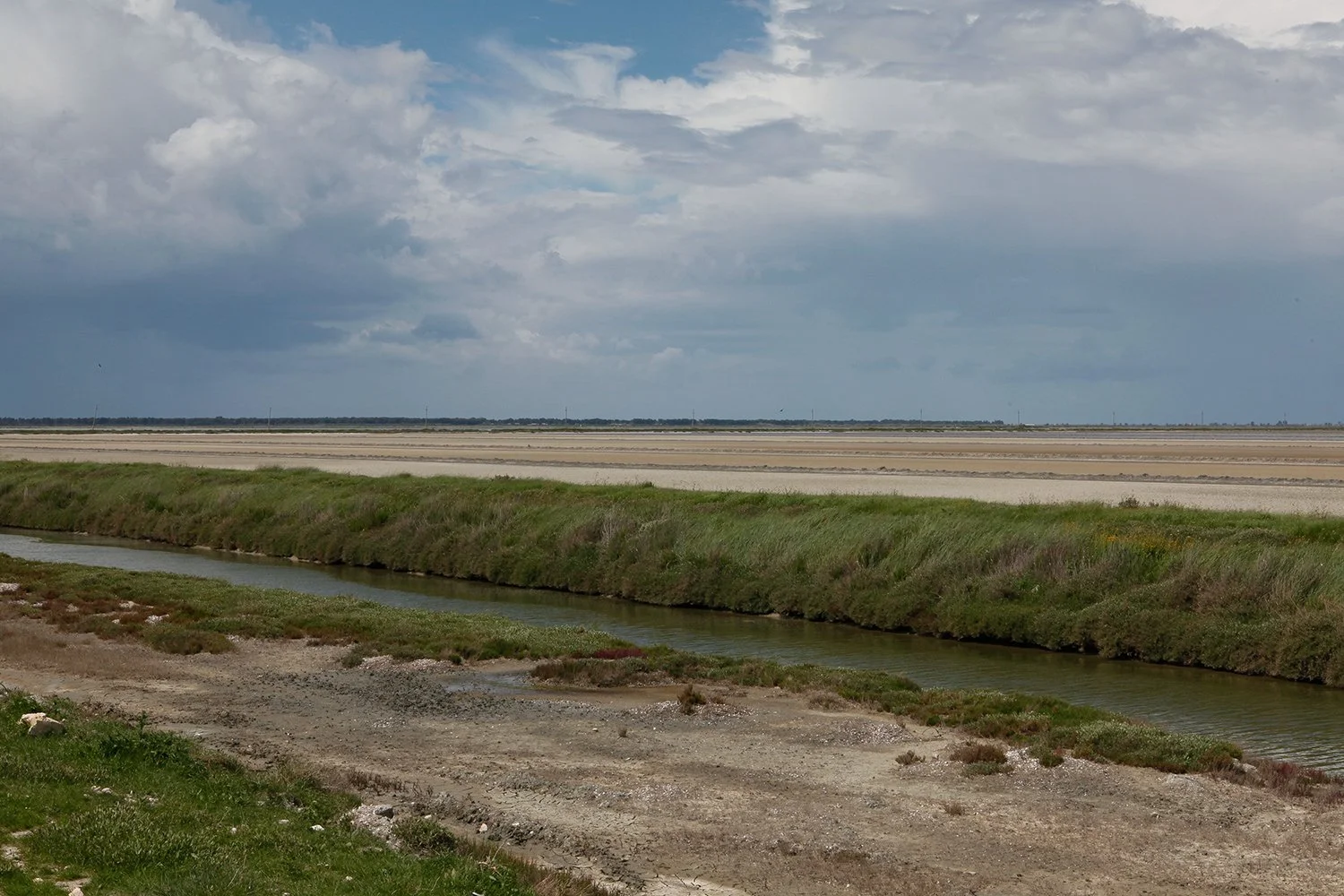
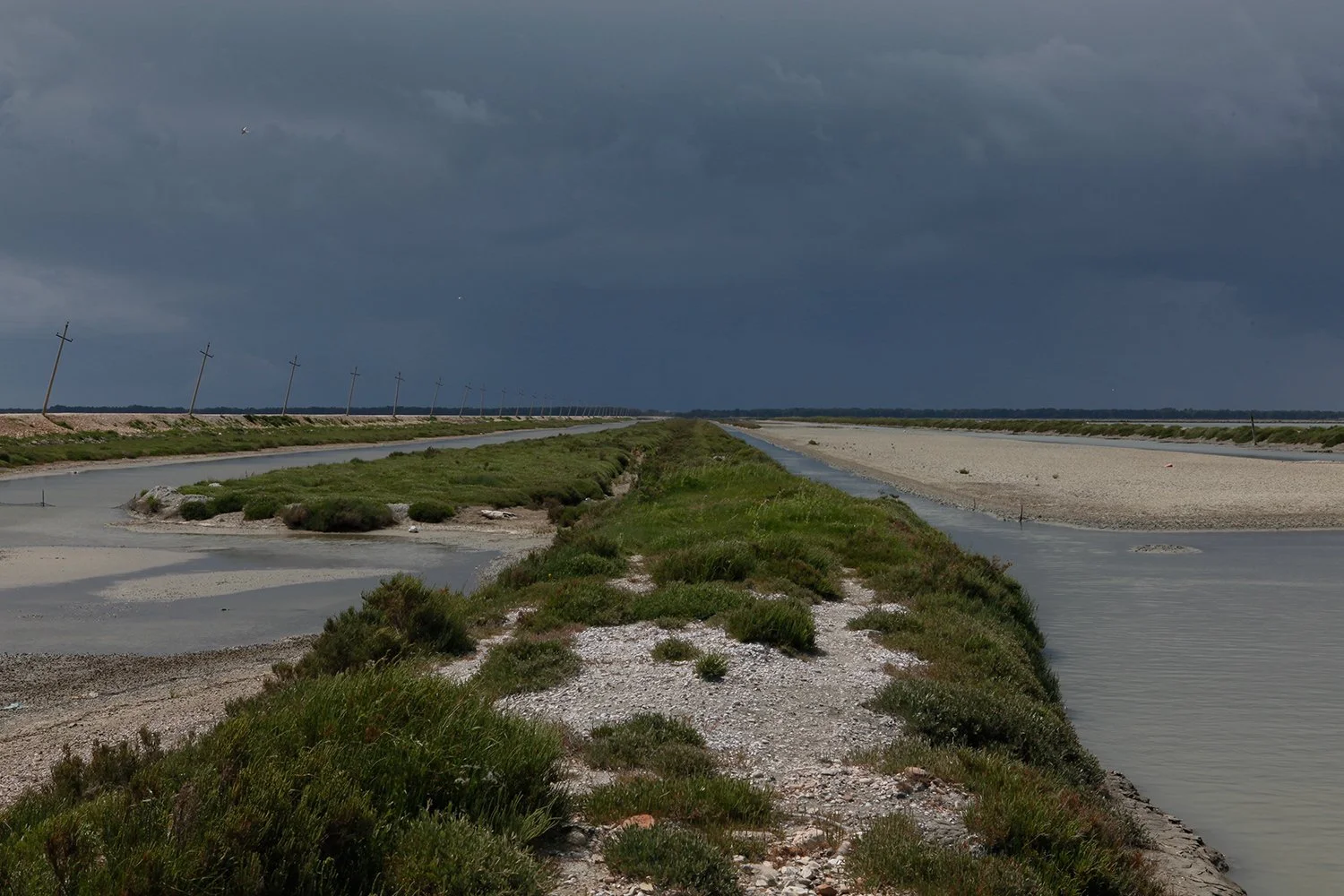
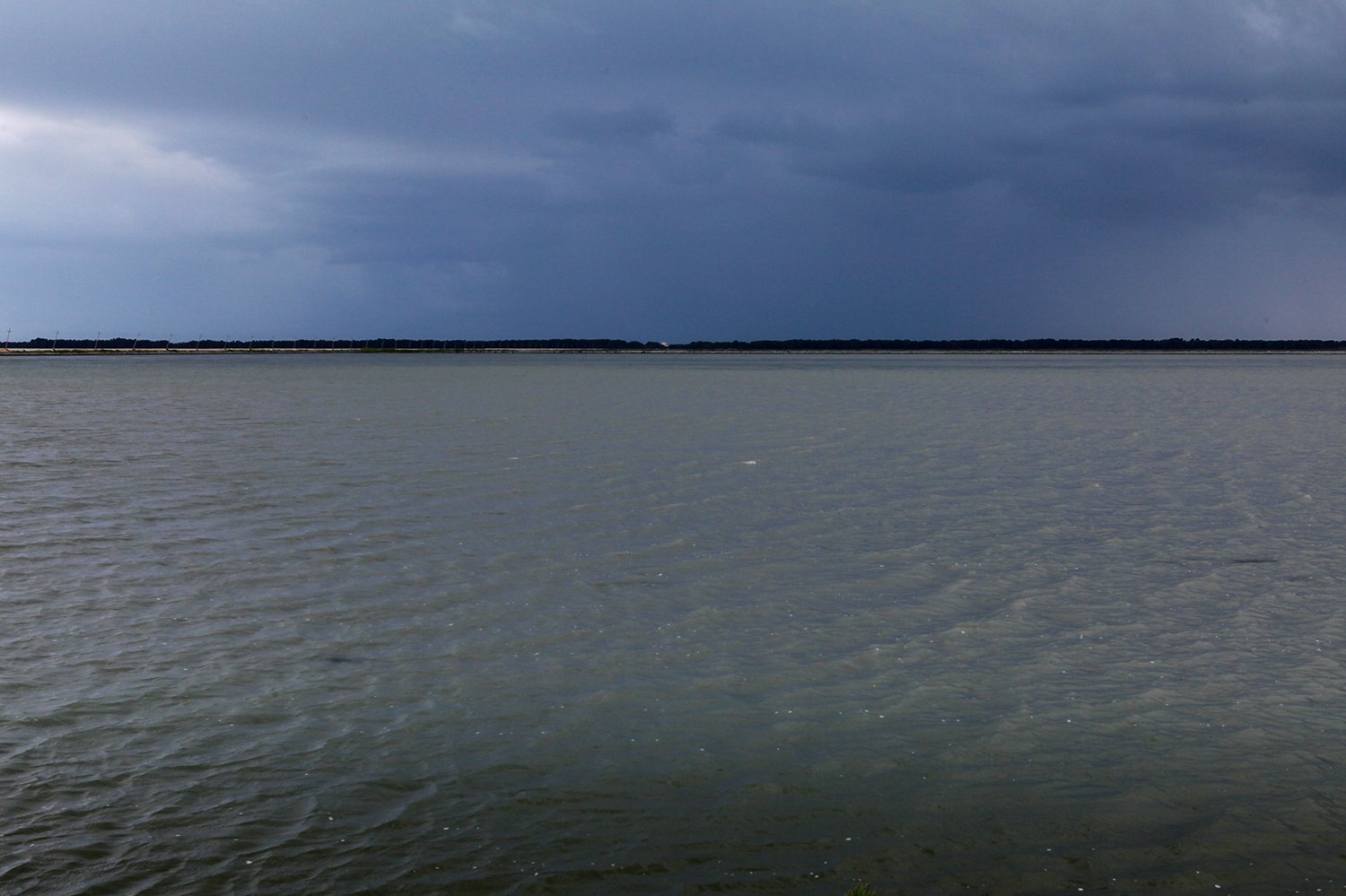
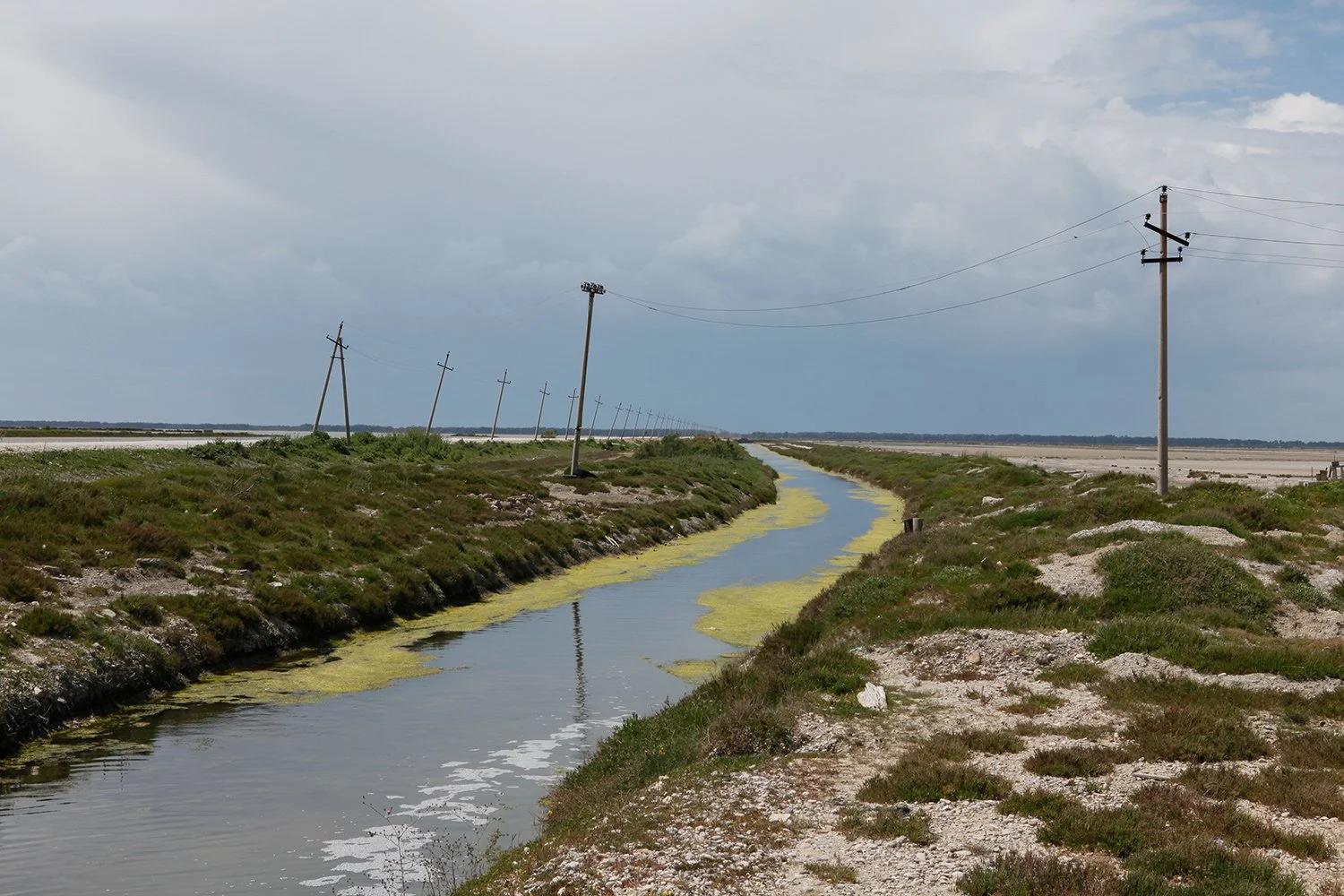
Photos from the Narta Salinas within the Pishë-Porro–Nartë Protected Landscape, © Alketa Misja
*Dritan Dhora is an environmental expert and environmental project coordinator with over 25 years of professional experience in the environmental field. His expertise includes biodiversity, the protection and management of aquatic ecosystems, natural resources, environmental assessment, and sustainable development. He has extensive experience in managing and coordinating national and international projects, as well as collaborating with public institutions, organizations, and academic partners. He also has considerable experience in higher education, scientific research, and the preparation of professional studies and publications. His work focuses particularly on environmental issues in the Shkodër region, including Lake Shkodër, the Buna River, biodiversity, and the integrated management of natural resources.
**© Alketa Misja. The photographs were taken at Karavasta Lagoon, within the Divjakë–Karavasta National Park, and at the Narta Salinas, within the Pishë-Porro–Nartë Protected Landscape, during an organized Bird Guided Tour led by AOS – Albanian Ornithological Society Albania.

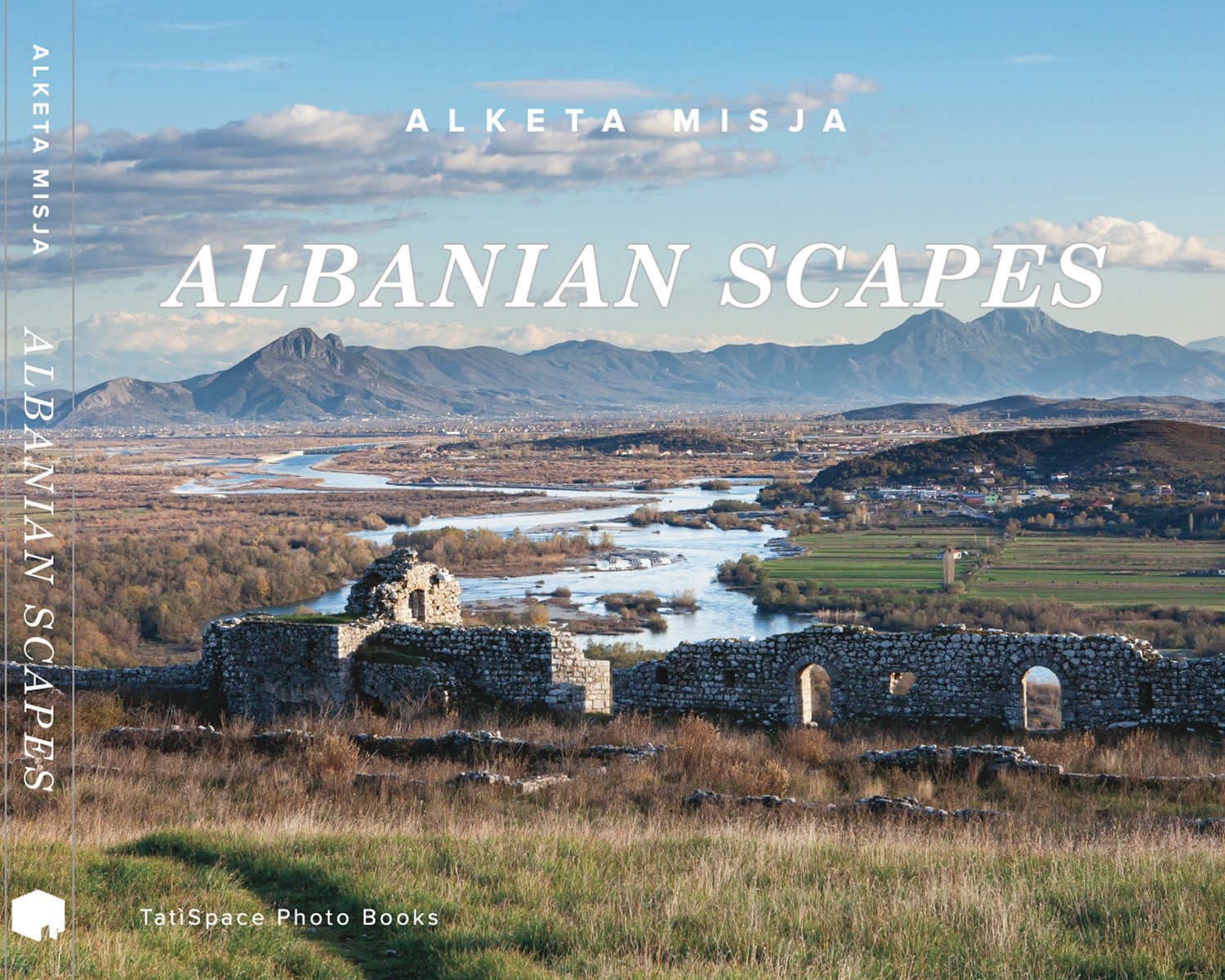
PhotoBook "Albanian Scapes"
The Photobook "Albanian Scapes" is the first publication of Tati Space, with photographs by Alketa Misja and foreword by Andi Papastefani and Falma Fshazi. Now available on Amazon and Blurb Bookstore. A photographic journey into Albanian Landscape as seen from an architect and urban planner. A Landscape in a constant transformation under the pressure of human activities and rapid urbanization. A fragile landscape that will not be the same.

Albanian Scapes, Alketa Misja
The Photobook "Albanian Scapes" is the first publication of Tati Space, with photographs by Alketa Misja and foreword by Andi Papastefani and Falma Fshazi.
Now available on Amazon and Blurb Bookstore
Amazon Store: ISBN Hardcover, ImageWrap: 9798881301958
Blurb Bookstore: ISBN Hardcover, ImageWrap: 9798881287856
Blurb Bookstore: ISBN Hardcover, Dust Jacket: 9798210988904
Language: English, Albanian
Standard Landscape, 10x8 inch, 25x20cm
100 pages, 87 photos, Premium Lustre Paper
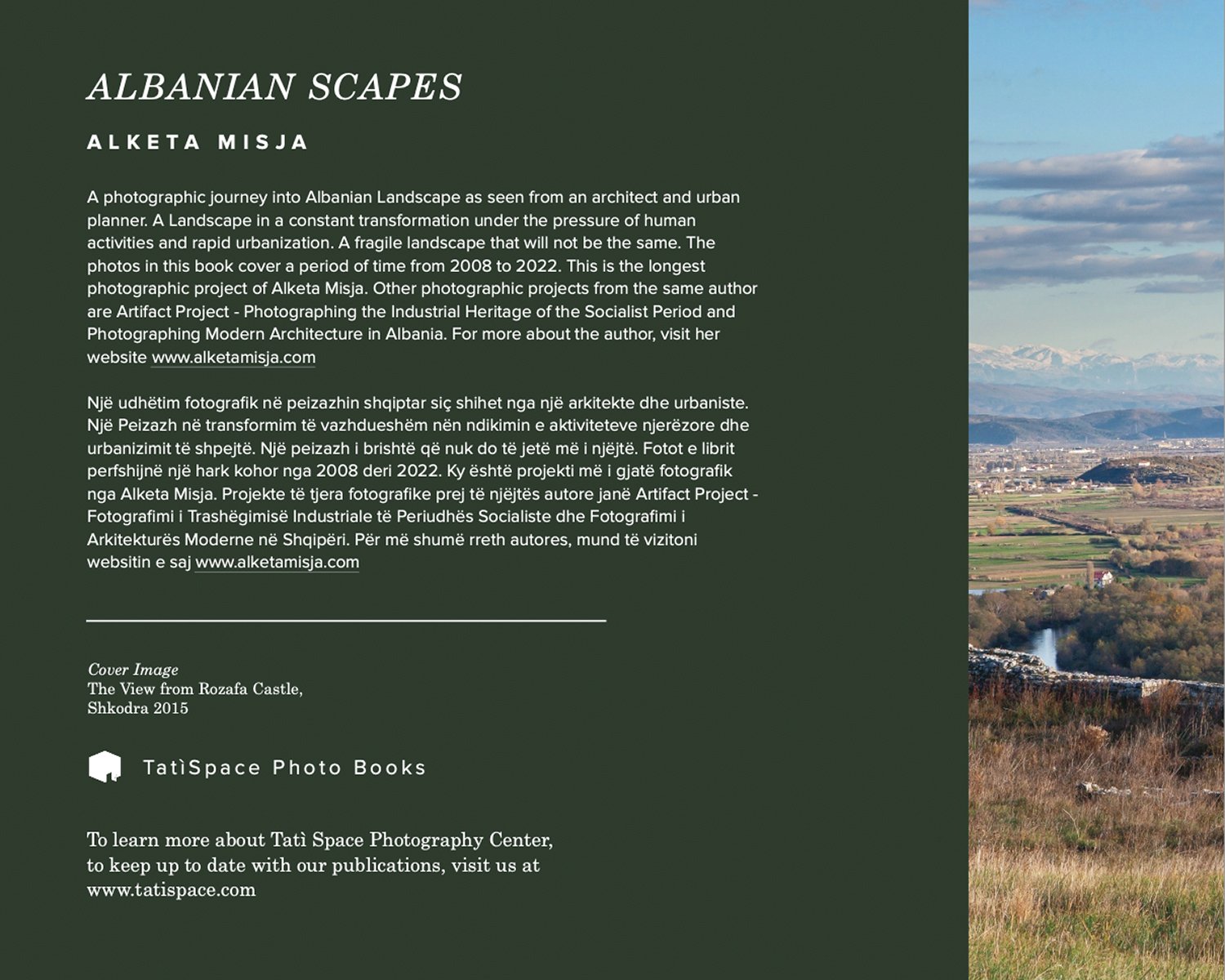
A photographic journey into Albanian Landscape as seen from an architect and urban planner. A Landscape in a constant transformation under the pressure of human activities and rapid urbanization. A fragile landscape that will not be the same. The photos in this book cover a period of time from 2008 to 2022. This is the longest photographic project of Alketa Misja. Other photographic projects from the same author are Artifact Project - Photographing the Industrial Heritage of the Socialist Period and Photographing Modern Architecture in Albania.
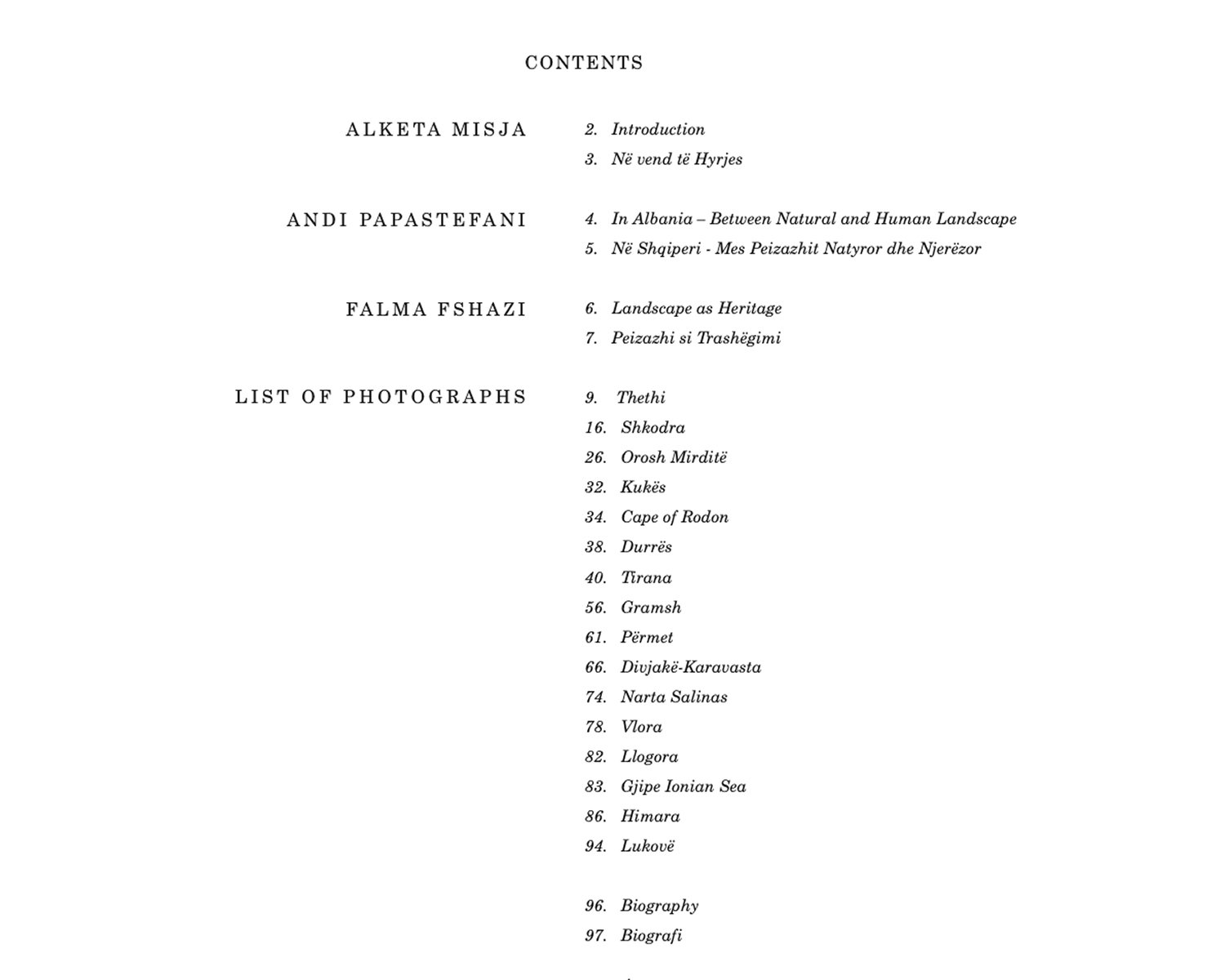
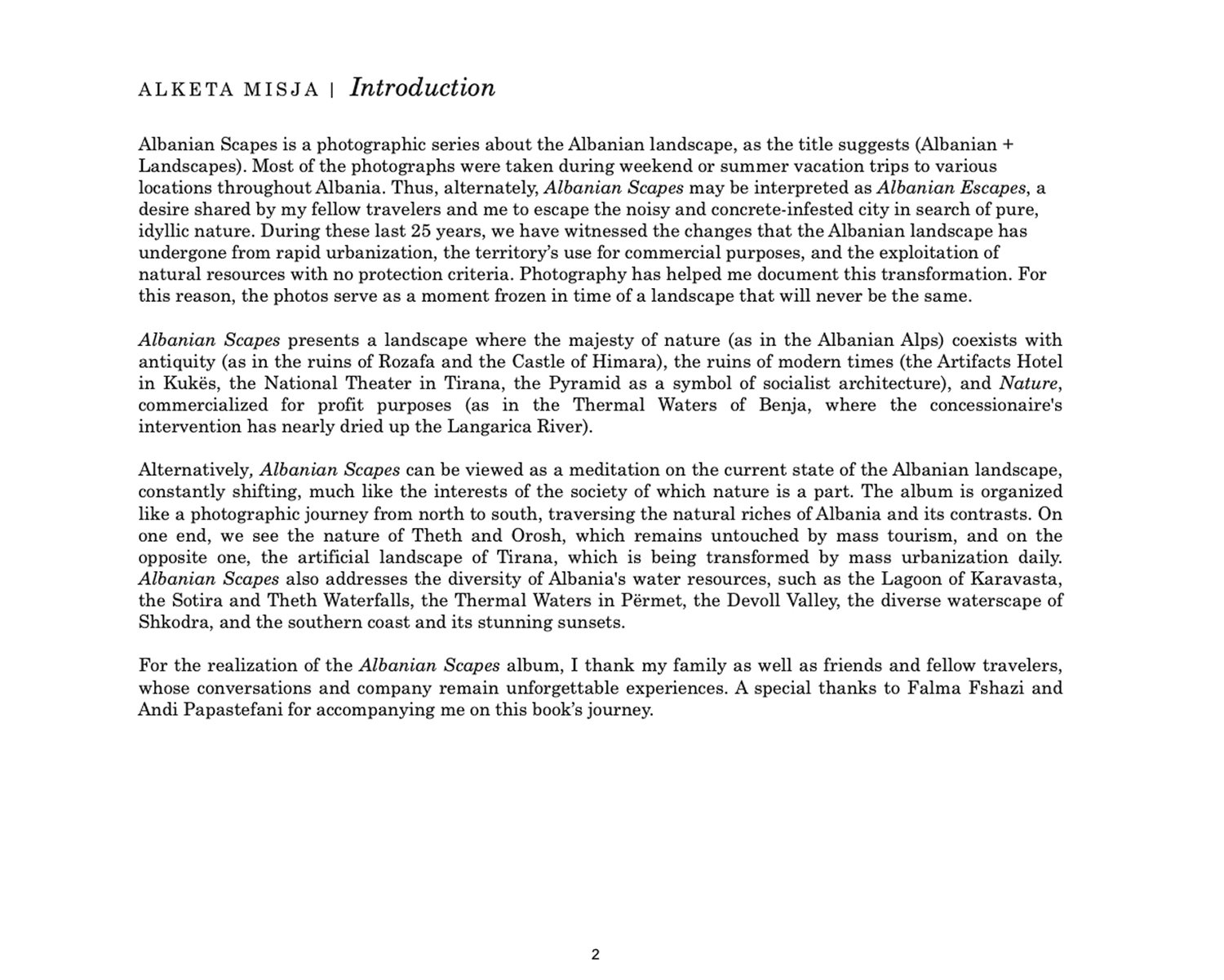
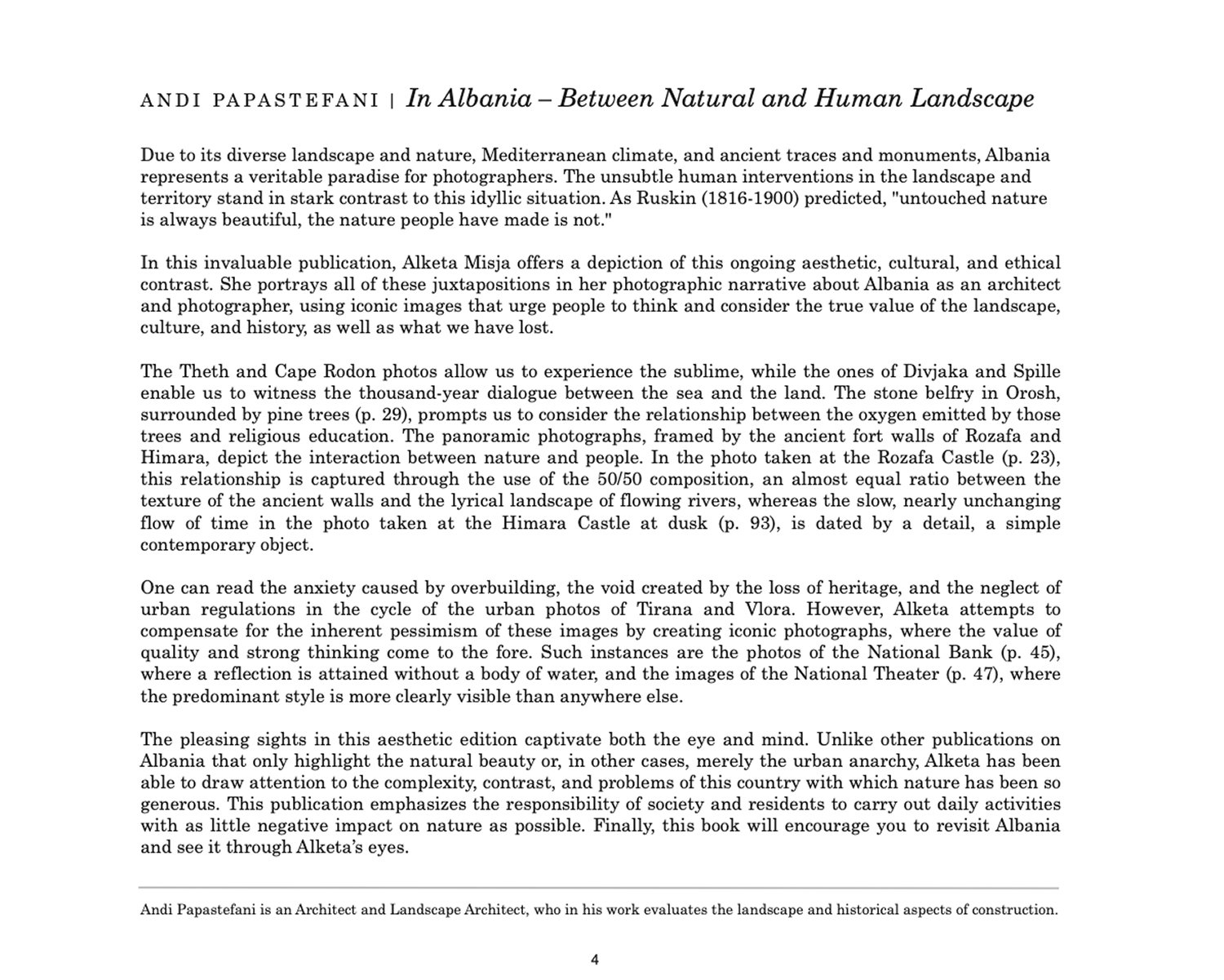
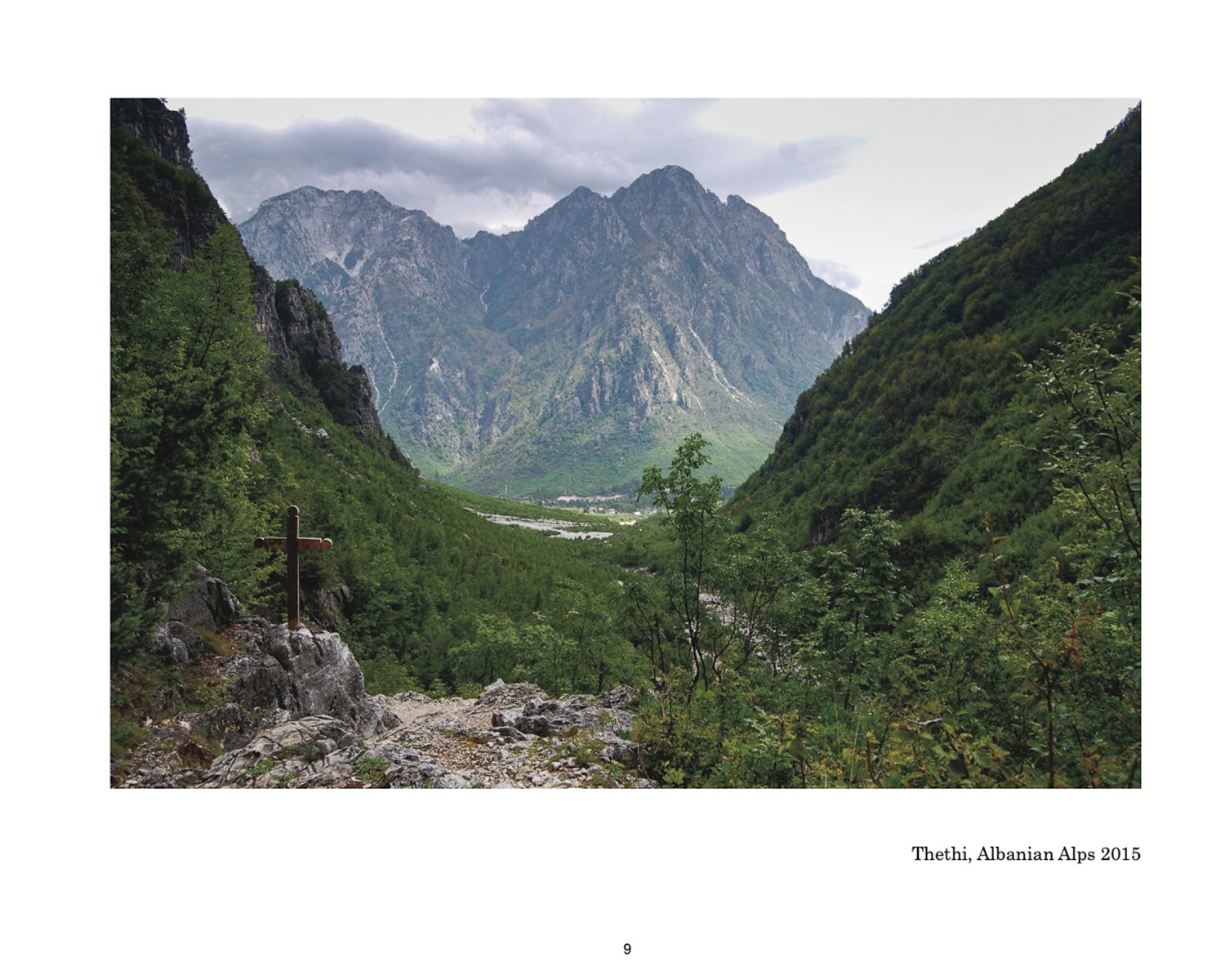
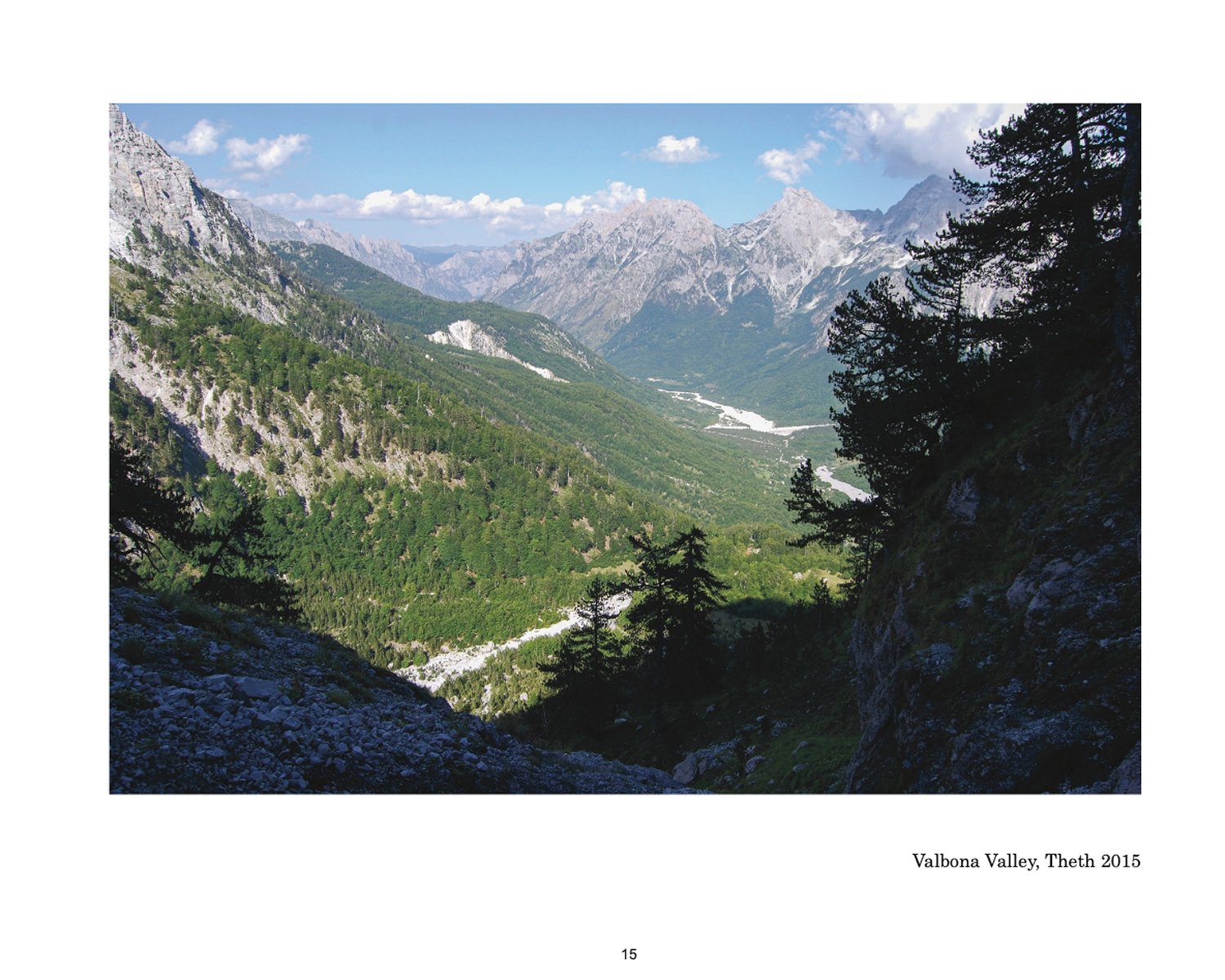
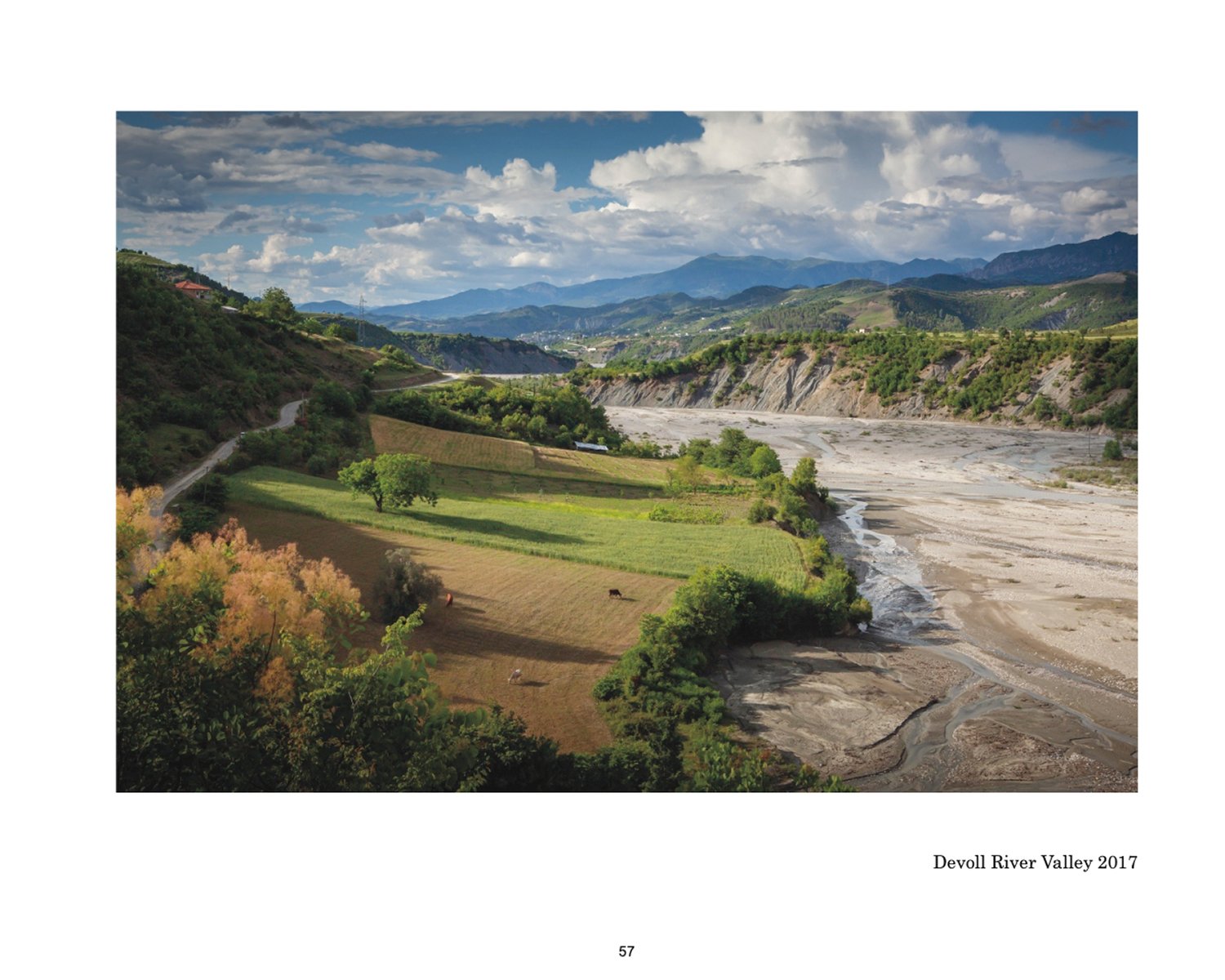
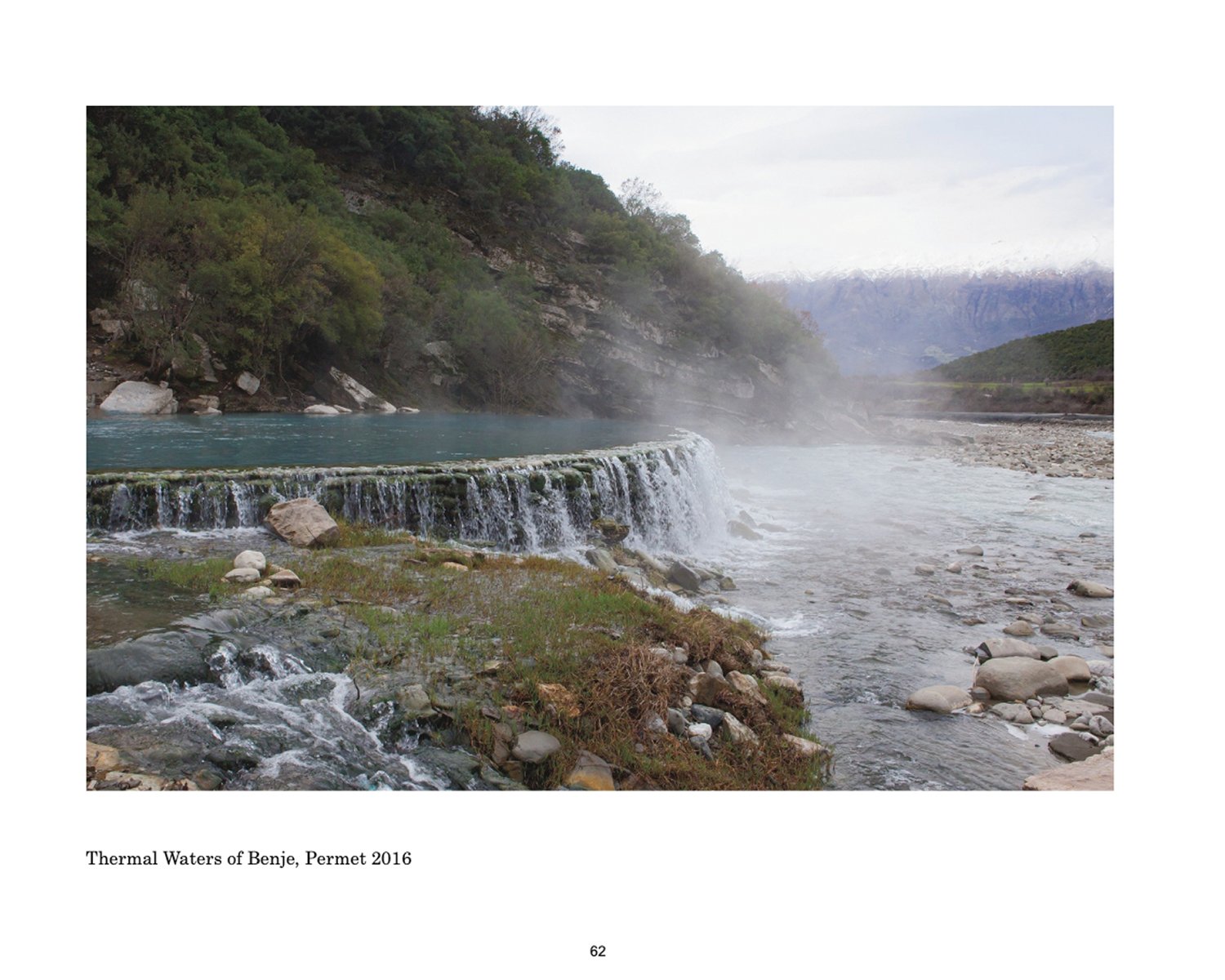
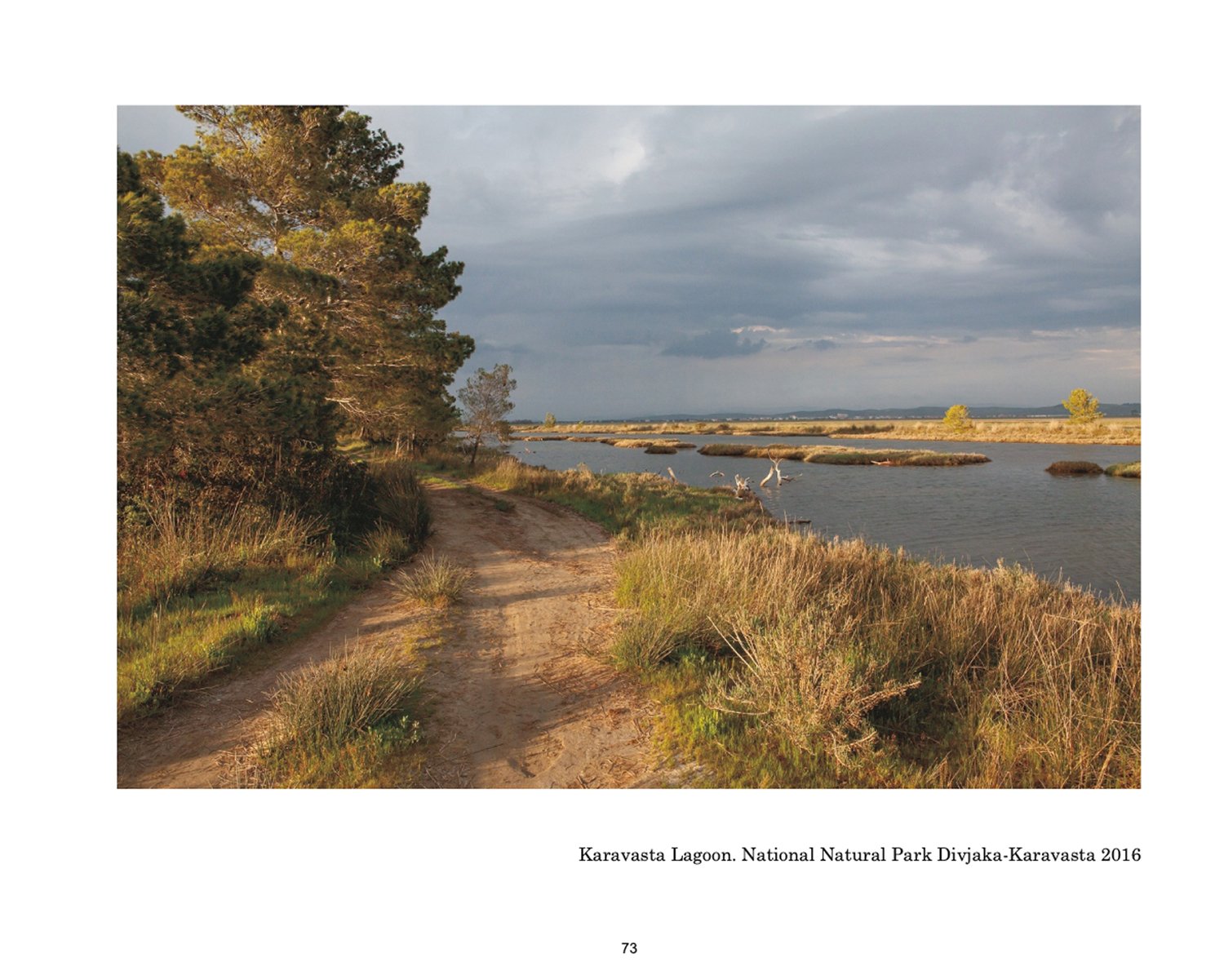
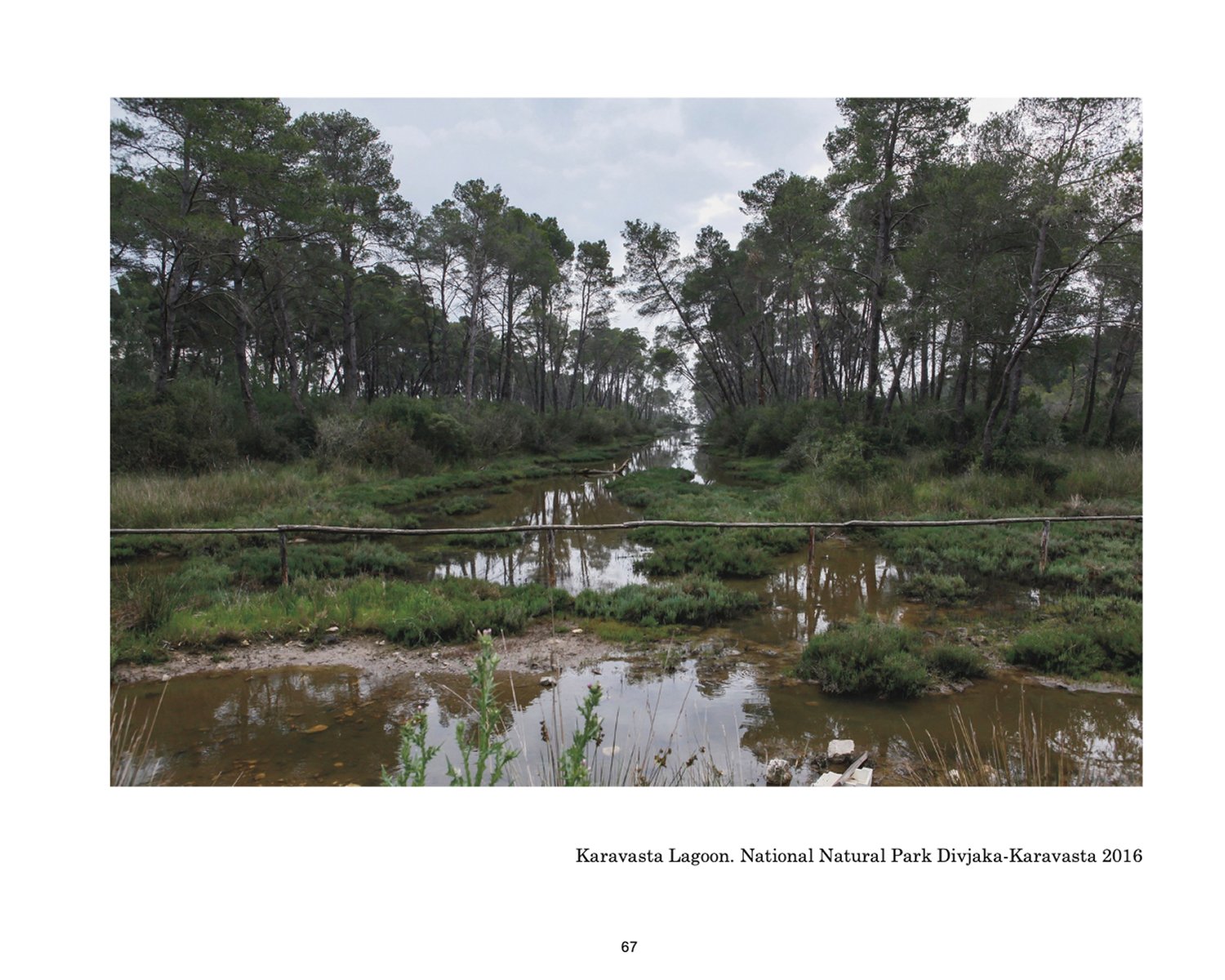
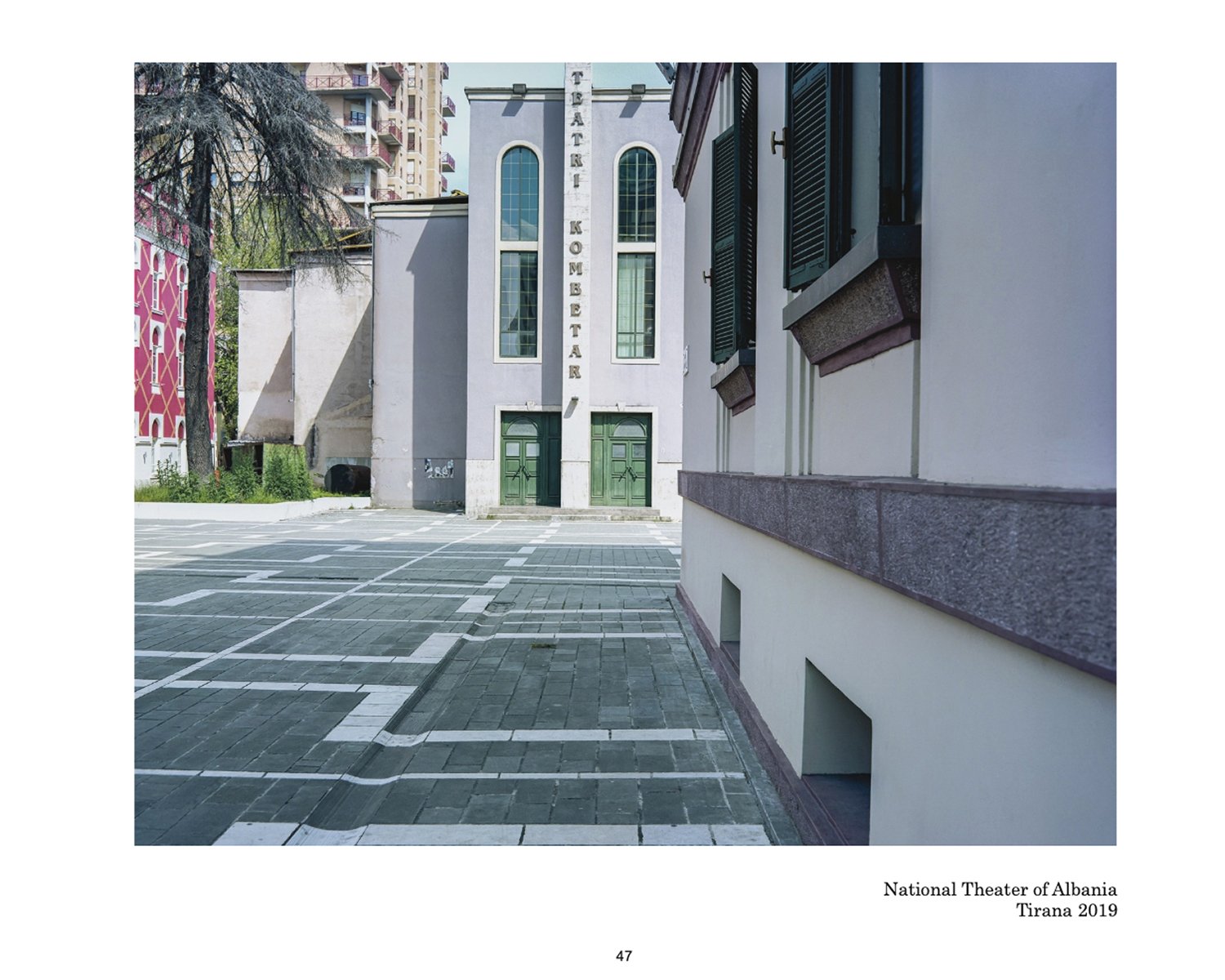
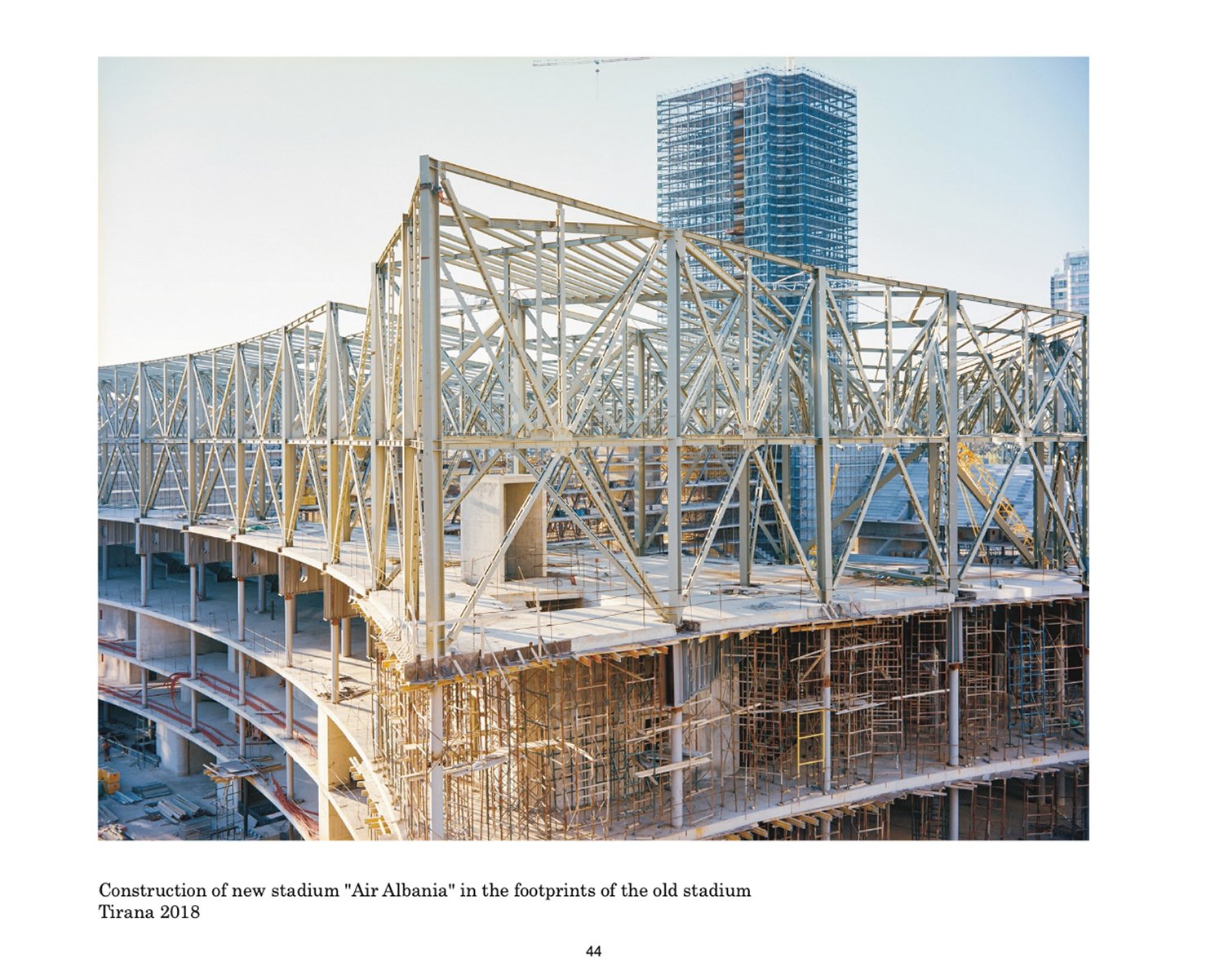
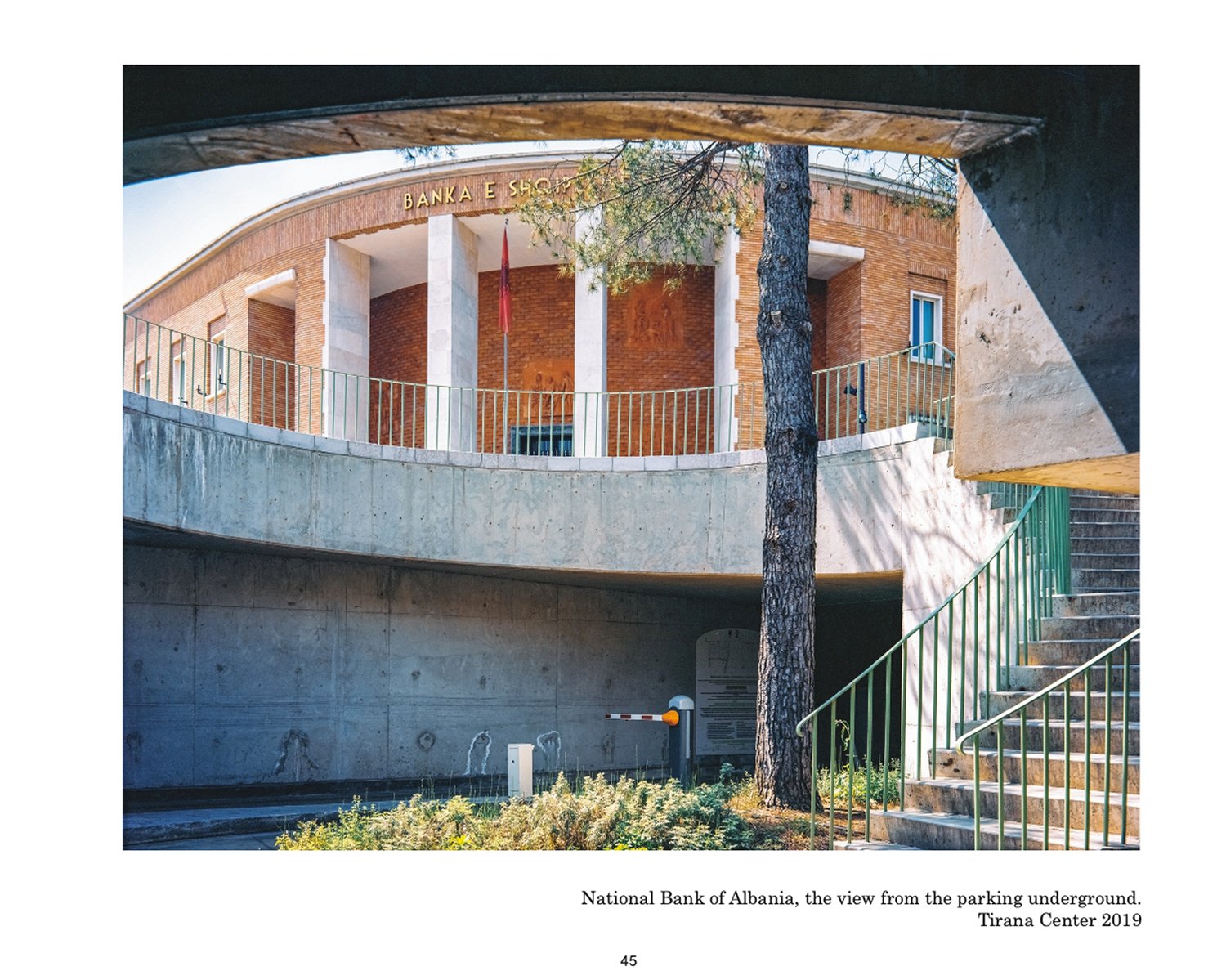
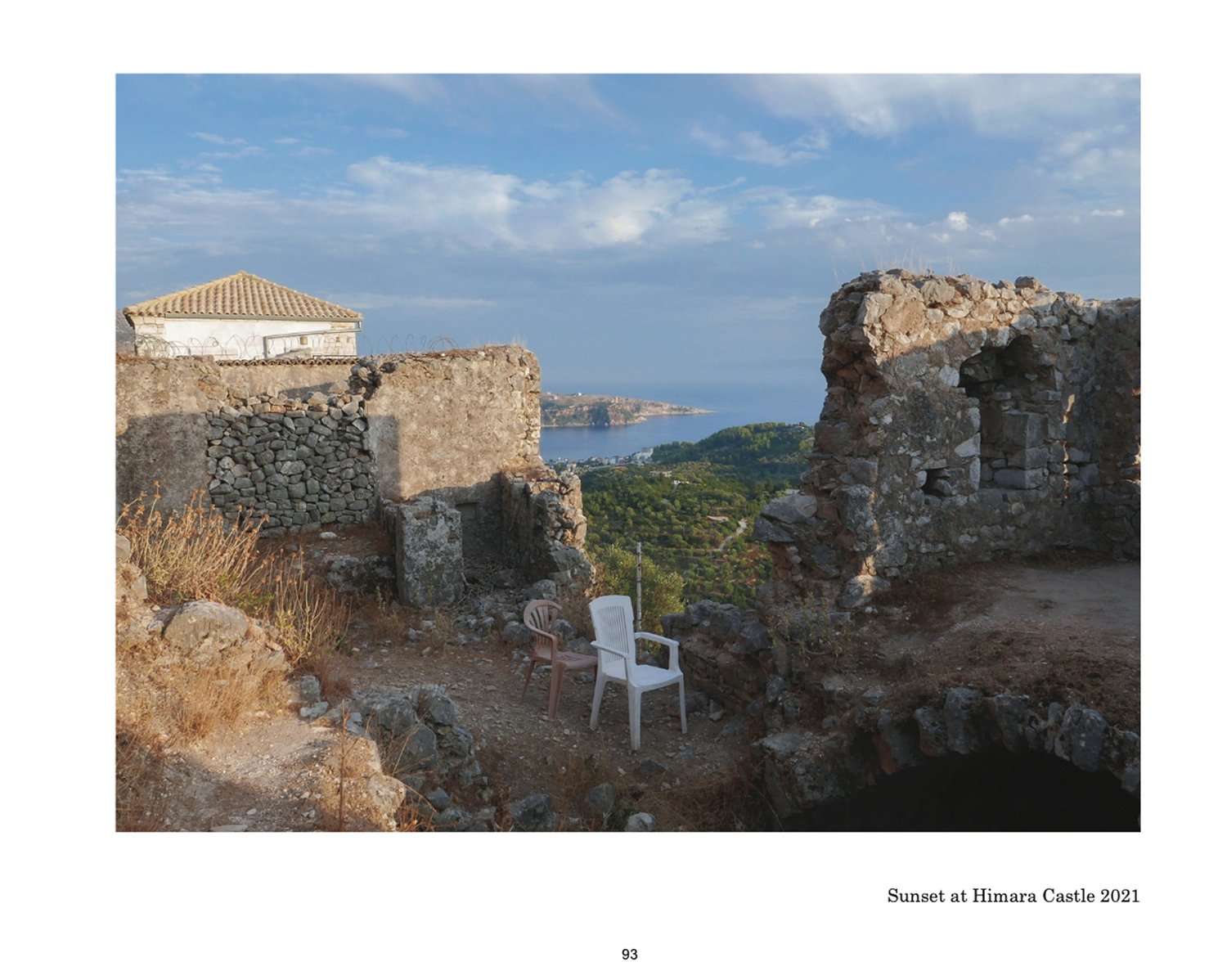
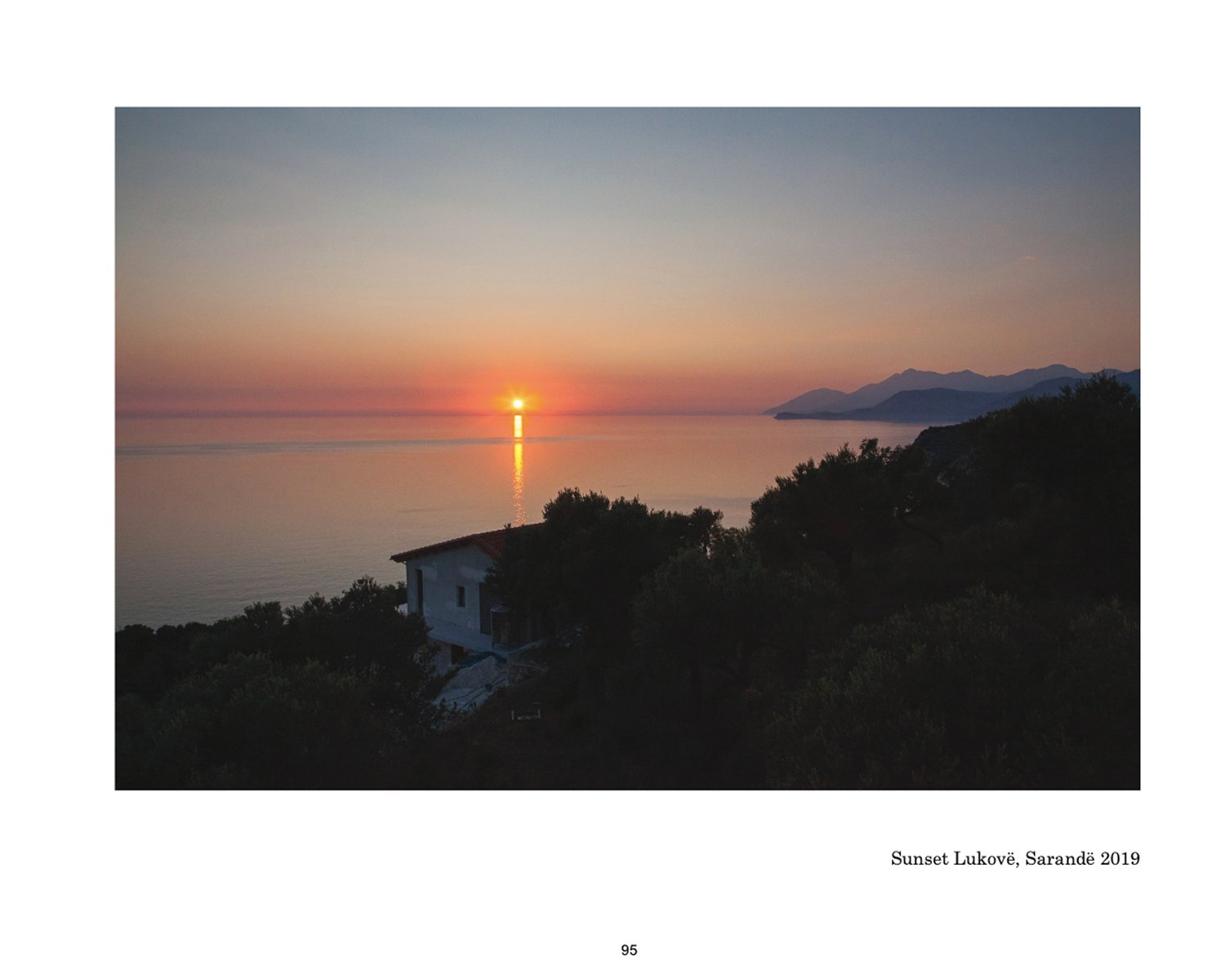
In her preface Landscape as Heritage, Falma Fshazi writes: “Through Alketa Misja's work, the landscape of Albania becomes an album made of hundreds of pages. Each photo is a small booklet of natural history, ecology, or urbanization. All together, the photographs document the Albanian heritage and landscape as heritage.
In the Albania of Albanian Scapes, we recall the cities that are permanently changing and increasingly occupied with tall buildings, bringing with it as many stories yet to be told. Many overlapping stories, managing to retain their individuality, much like the Albanian urban landscape whose transformation has continued with intensity toward the hills, plains and river banks, often entering where it does not belong, but unable to fundamentally alter the Mediterranean nature, the hospitable nature of the locals, or erase the traces of time.”
In his preface In Albania- Between Natural and Human Landscape, Andi Papastefani writes- “In this invaluable publication, Alketa Misja offers a depiction of this ongoing aesthetic, cultural, and ethical contrast. She portrays all of these juxtapositions in her photographic narrative about Albania as an architect and photographer, using iconic images that urge people to think and consider the true value of the landscape, culture, and history, as well as what we have lost.
The pleasing sights in this aesthetic edition captivate both the eye and mind. Unlike other publications on Albania that only highlight the natural beauty or, in other cases, merely the urban anarchy, Alketa has been able to draw attention to the complexity, contrast, and problems of this country with which nature has been so generous. This publication emphasizes the responsibility of society and residents to carry out daily activities with as little negative impact on nature as possible.”